

BCCI officially orders KKR to release Mustafizur Rahman before IPL 2026 amid India-Bangladesh tensions
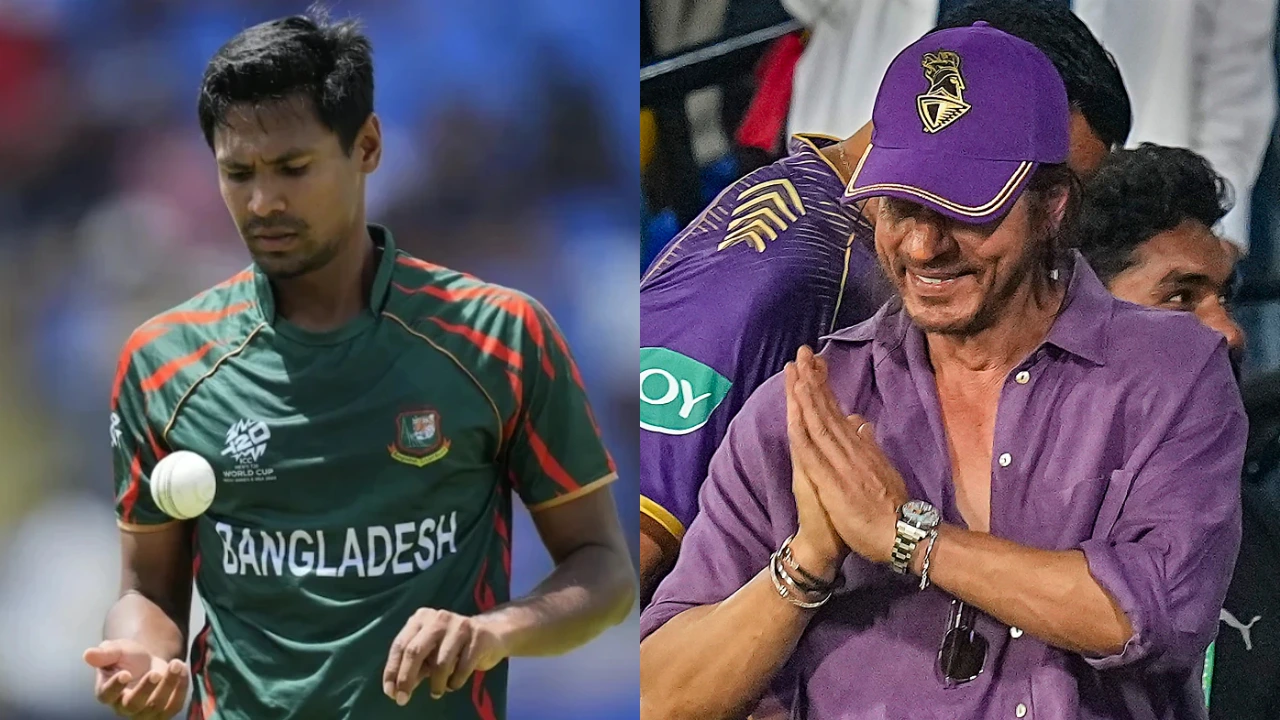
BCCI Orders KKR to Release Mustafizur Rahman from IPL Squad Amid Controversy
Background:
The Board of Control for Cricket in India (BCCI) recently made a decision regarding the participation of Bangladeshi players in the Indian Premier League (IPL), specifically focusing on the release of Mustafizur Rahman from the Kolkata Knight Riders (KKR) squad. This move comes amidst a growing controversy surrounding the involvement of the Bangladeshi fast bowler in the upcoming IPL season.
The Decision:
Devajit Saikia, the secretary of the BCCI, confirmed the directive to KKR, instructing them to release Mustafizur Rahman due to recent developments. Saikia also mentioned that the BCCI is open to allowing KKR to sign a replacement player to ensure the team is not left short-handed for the upcoming season.
“Due to the recent developments that are going on all across, BCCI has instructed the franchise KKR to release one of their players, Mustafizur Rahman of Bangladesh, from their squad and BCCI has also said that if they ask for any replacement, BCCI is going to allow that replacement,” Saikia stated.
Mustafizur Rahman’s IPL Journey:
Mustafizur Rahman has been a prominent figure in the IPL since 2016, having played for various franchises and showcasing his talent as a left-arm pacer. With 65 wickets in 60 matches and an economy rate of 8.13, Rahman has proven to be a valuable asset to any team he represents.
Throughout his IPL career, Rahman has donned the jerseys of teams like Sunrisers Hyderabad, Mumbai Indians, Rajasthan Royals, Delhi Capitals, and Chennai Super Kings. Last season, he made a return to Delhi Capitals as an injury replacement.
Controversy and Political Dispute:
However, Rahman’s signing by Kolkata Knight Riders stirred controversy, with spiritual leader Devkinandan Thakur criticizing the move, alleging that it hurt religious sentiments amidst reports of attacks on Hindus in Bangladesh. This criticism led to a series of mixed reactions from political leaders.
Bharatiya Janata Party leader Sangeet Som even directly accused Shah Rukh Khan, the co-owner of KKR, of supporting players from a country that he claimed was hostile to India. Som questioned Khan’s loyalty and emphasized that investments made in India should not be associated with countries that work against India’s interests.
“Despite all this, traitors like Shah Rukh Khan, I am calling him a traitor because everything he has is given by India, given by the people of India, but where do they invest this money? They invest it in players from a country that is working against India. I want to tell people like Shah Rukh Khan that they will not succeed,” Som remarked.
In conclusion, the decision by the BCCI to instruct KKR to release Mustafizur Rahman reflects the ongoing controversy and political tensions surrounding the involvement of Bangladeshi players in the IPL. The situation has sparked debates about the intersection of sports, politics, and international relations, highlighting the complexities that arise in the world of cricket.
Mustafizur Rahman’s Performance and Impact:
Mustafizur Rahman’s success in the IPL goes beyond his statistics on the field. Known for his deceptive slower balls and pinpoint accuracy, Rahman has often been a game-changer with his ability to pick up crucial wickets in crucial moments. His presence in any team brings a strategic advantage, as he can be relied upon to deliver under pressure.
His performances have not only earned him accolades from fans and experts but have also paved the way for other Bangladeshi cricketers to showcase their skills on a global platform like the IPL. Rahman’s journey in the league has inspired young bowlers from his country to dream big and work hard to make a mark in international cricket.
Impact of Controversy on Players and Teams:
The controversy surrounding Mustafizur Rahman’s participation in the IPL has not only affected the player himself but also the Kolkata Knight Riders franchise and the tournament as a whole. The directive from the BCCI to release Rahman has forced KKR to rethink their strategy and make adjustments to their squad composition, potentially disrupting team dynamics and planning.
For Rahman, being at the center of a political dispute can be mentally taxing and distracting, impacting his focus and performance on the field. The scrutiny and criticism he faces due to factors beyond his control can create a challenging environment for him to excel in. It also raises questions about the extent to which sports should be influenced by geopolitical tensions and ideological differences.
Sports Diplomacy and International Relations:
The involvement of Bangladeshi players like Mustafizur Rahman in the IPL highlights the broader theme of sports diplomacy and its role in shaping international relations. Sports have the power to transcend boundaries, bring people together, and foster goodwill between nations. However, instances like the current controversy underscore how political issues can seep into the realm of sports, complicating relationships and creating tensions.
In the context of cricket, where players from various countries come together to compete, it becomes essential to navigate sensitive issues with diplomacy and respect. The IPL, as a premier cricket league, serves as a platform for cultural exchange, talent showcase, and camaraderie among players from diverse backgrounds. Balancing sporting excellence with political sensitivities is a delicate task that requires nuanced decision-making and thoughtful engagement.
Looking Ahead:
As the IPL approaches and the situation surrounding Mustafizur Rahman unfolds, it is crucial for all stakeholders, including the BCCI, franchises, players, and fans, to handle the matter with sensitivity and professionalism. The decision to release Rahman should be seen as a step towards maintaining the integrity of the league and upholding principles of fairness and inclusivity.
Moving forward, it is essential for sports authorities to establish clear guidelines and protocols for addressing similar issues in the future, ensuring that players are not caught in the crossfire of political disputes. By promoting a culture of respect, diversity, and sportsmanship, the IPL can continue to thrive as a symbol of unity and excellence in the world of cricket.
By delving into the impact of the controversy, the significance of sports diplomacy, and the lessons for the future, we can gain a deeper understanding of the complexities involved in the intersection of sports and politics in events like the IPL.
Latest News
Punjab Kings penalised! Shreyas Iyer punished after win vs Gujarat Titans in IPL 2026
Shreyas Iyer injury update: Punjab Kings captain ruled out of IPL 2026?
LSG vs DC Match No. 5 Preview: Free Live Streaming, Pitch & Weather Report, Head-to-Head | IPL 2026
LSG vs DC Match Prediction – Who Will Win Match No.5? | IPL 2026
LSG Playing XI vs DC Playing XI – Match No. 5 | IPL 2026
Krunal Pandya breaks silence on India snub, opens up on Virat Kohli
Mohsin Naqvi enforces new social media rules for Pakistan players following Naseem Shah incident
Fakhar Zaman officially handed cricket ban after PSL 2026 ball-tampering controversy
Pat Cummins forces Cricket Australia to slash central contracts list to secure premium deal
CSK’s big promise to players revealed amid IPL 2026: “Whatever BCCI offers, we’ll double it”
Ravichandran Ashwin rules out Vaibhav Sooryavanshi’s India call-up
Rashid Latif claims PSL ball-tampering row was deliberately created for attention amid IPL rivalry
Mohammed Shami breaks silence on retirement buzz after India snub; has special message for LSG
Mohammed Shami reveals IPL 2026 Top 4, leaves out five-time champions

