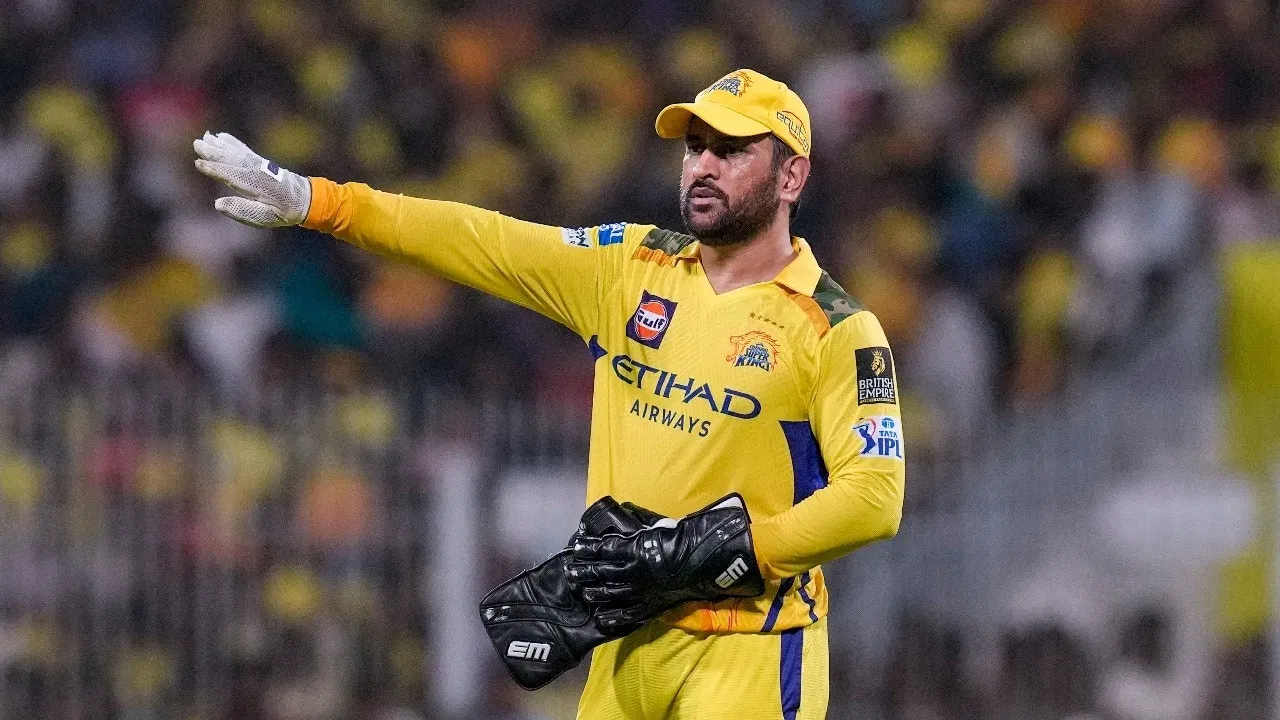
ICC accused of hypocrisy as Virat Kohli, Jasprit Bumrah entangled in Matthew Kuhnemann controversy
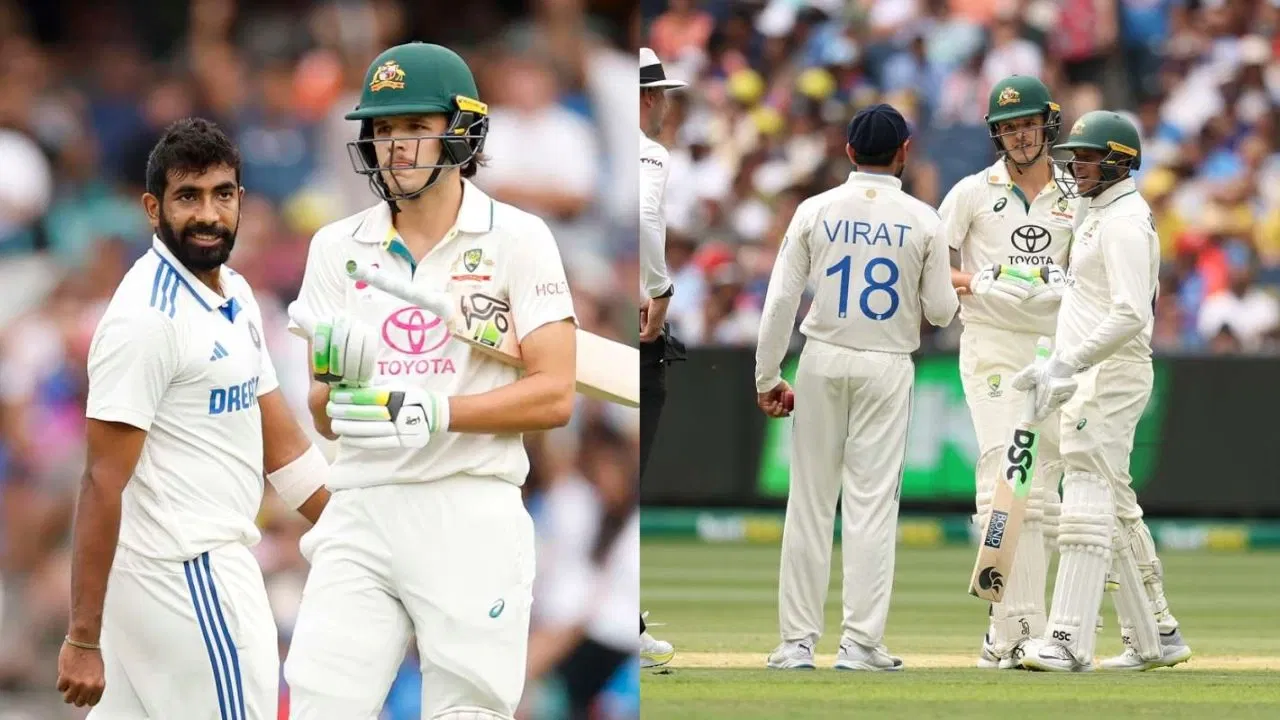
Virat Kohli and ICC Controversy Resurfaces in Australia
India’s cricket sensation, Virat Kohli, finds himself once again in the Australian media spotlight following the Border-Gavaskar Trophy 2024-25. This time, the International Cricket Council (ICC) is under fire for what many are calling hypocrisy in handling controversies involving Kohli and Australian spinner Matthew Kuhnemann.
Virat Kohli and Sam Konstas Incident
The recent controversy stems from an incident during the Boxing Day Test last year, where Kohli was involved in a heated altercation with Australian youngster Sam Konstas. The clash occurred when Kohli deliberately changed his direction between overs, leading to a shoulder barge with Konstas. The situation escalated to the point where Usman Khawaja had to intervene to calm things down.
Following the match, Kohli was fined 20% of his match fees and received a demerit point for his actions. While Kohli accepted the sanctions, former Australian cricketers criticized the match referee for what they perceived as leniency towards the star Indian player.
ICC’s Handling of the Situation
Australian cricket writer Ben Horne expressed his displeasure with the ICC’s decision, drawing comparisons between Kohli’s punishment and the recent controversy surrounding Kuhnemann. In an article for the Daily Telegraph, Horne criticized the ICC, referring to them as “sport’s biggest toothless tiger” for what he saw as a disproportionate response in the two cases.
Horne argued that while Kohli received a relatively light punishment for his altercation with Konstas, Kuhnemann was reported for a suspected bowling action despite bowling with an orthodox style. He highlighted the inconsistency in the ICC’s actions, questioning their authority and decision-making process.
Tim Paine’s Comparison of Kuhnemann and Bumrah
The controversy took an unexpected turn when former Australian captain Tim Paine compared Kuhnemann’s bowling action to that of Indian pace bowler Jasprit Bumrah. Paine suggested that Kuhnemann’s action had similarities to Bumrah’s, raising concerns about the legitimacy of both players’ techniques.
While Bumrah emerged as the highest wicket-taker in the Border-Gavaskar Trophy, his action has been a subject of debate among cricket experts. The ICC has defended Bumrah, stating that his action involves hyperextension rather than illegal bending, as some critics have suggested.
As the debate surrounding Kohli, Kuhnemann, and Bumrah continues, cricket fans are eagerly awaiting further developments in the ongoing saga. The ICC’s handling of these controversies has raised questions about consistency and fairness in the world of cricket, leaving many wondering about the future implications for players and the governing body.
The Impact of Social Media on Cricket Controversies
In the age of social media, controversies in cricket often spread like wildfire, with fans, pundits, and players alike sharing their opinions and reactions online. This instant connectivity has amplified the scrutiny on players and officials, making it challenging for governing bodies like the ICC to navigate through complex situations.
Virat Kohli, being one of the most followed cricketers on social media, faces immense pressure both on and off the field. His every move is scrutinized, dissected, and debated by a global audience, adding another layer of complexity to any controversy he finds himself embroiled in.
The Role of Technology in Umpiring Decisions
With the advent of technology like ball-tracking and ultra-motion cameras, umpiring decisions have become more precise and scrutinized than ever before. This has led to increased demands for consistent and fair officiating, especially in high-stakes matches like the Border-Gavaskar Trophy.
The reliance on technology has also raised questions about the interpretation of rules and regulations, as players and officials navigate through the nuances of the game. In the case of suspected bowling actions like Kuhnemann’s, the use of technology can either validate or dispute the claims, adding another layer of complexity to the controversy.
The Cultural and Historical Context of Cricket Controversies
Cricket has a long history of controversies, with players from different countries and cultures bringing their unique personalities and playing styles to the game. The rivalry between India and Australia, in particular, has seen its fair share of heated moments and confrontations, adding to the drama and intensity of matches between the two teams.
Understanding the cultural and historical context of cricket controversies can provide valuable insights into the underlying tensions and dynamics at play. Factors such as national pride, competitiveness, and the spirit of the game all contribute to the narratives that unfold both on and off the field.
The Future of Cricket Governance and Player Conduct
As cricket continues to evolve and grow as a global sport, the governance of the game and the conduct of players will come under increasing scrutiny. The ICC’s handling of controversies involving players like Virat Kohli and Matthew Kuhnemann will set a precedent for future incidents and how they are managed.
Cricket fans and stakeholders will be closely monitoring how the ICC adapts its policies and procedures to ensure consistency, fairness, and transparency in dealing with controversies. The integrity of the game and the reputation of players are at stake, highlighting the importance of clear guidelines and decisive actions from governing bodies.
In conclusion, the ongoing controversies surrounding Virat Kohli, Matthew Kuhnemann, and Jasprit Bumrah underscore the complex nature of cricket’s governance and player conduct. As the debates continue to unfold, cricket enthusiasts can expect more twists and turns in the saga, shaping the future of the sport and its stakeholders.
Latest News

NZ vs SA 5th T20I Preview: Free Live Streaming, Pitch & Weather Report, Head-to-Head | South Africa tour of New Zealand 2026
NZ vs SA Match Prediction – Who Will Win 5th T20I? | South Africa tour of New Zealand 2026
New Zealand Playing XI vs South Africa Playing XI – 5th T20I | South Africa tour of New Zealand 2026
PBKS spinner calls Virat Kohli his idol, makes bold dismissal claim ahead of IPL 2026

“Not stupid”: Adam Gilchrist, Mark Waugh break silence on ECB not sacking Brendon McCullum
Revealed: Why RCB players will wear black armbands and No.11 jersey in IPL 2026?
RCB boss breaks silence on Josh Hazlewood’s IPL 2026 status, drops big remark on Venkatesh Iyer
Rajasthan Royals sold! Kal Somani’s $1.63 billion deal backed by Walmart and Ford powerhouses
‘I’m not carrying that baggage, but Virat Kohli…’: RCB boss makes huge statement ahead of IPL 2026
MS Dhoni set to return as CSK captain for his last IPL season?
‘Rohit Sharma is good enough to be part of Indian T20I team’: MS Dhoni’s ex-teammate’s big remark
3 RCB players who could struggle in IPL 2026 – ft Venkatesh Iyer
3 RCB players who could struggle in IPL 2026 – ft Venkatesh Iyer
3 MI players who could struggle in IPL 2026 – ft Rohit Sharma