“Is Axar Patel Your Sacrificial Goat”- Twitter rips apart BCCI after Central Contracts List 2025-26
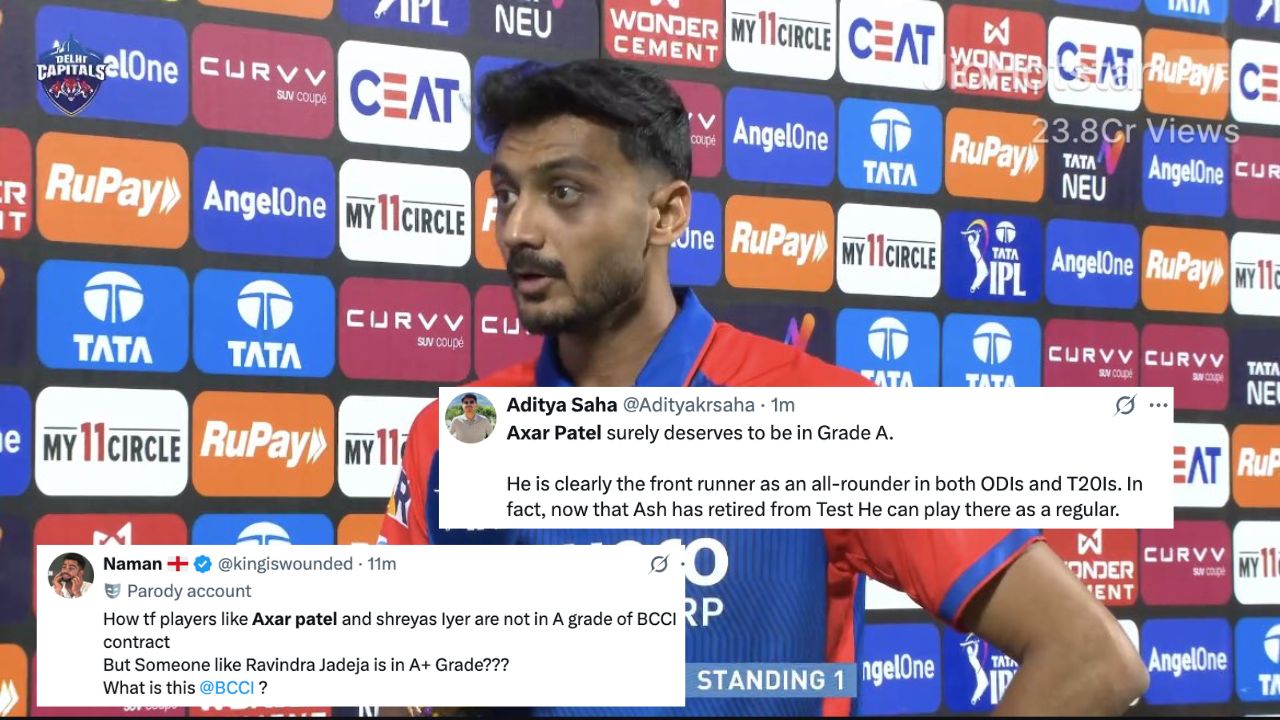
Indian Fans Outraged Over Axar Patel’s Grade B Central Contract by BCCI
Indian cricket fans were left fuming after the Board of Control for Cricket in India (BCCI) announced its Grade B central contracts for the 2025-26 season, with star all-rounder Axar Patel being placed in the Grade B category once again. This decision has sparked outrage among fans, who believe that Patel’s consistent performances across all formats deserved a higher recognition.
Fans Demand Justice for Axar Patel
Known for his exceptional performances with both bat and ball in all three formats of the game, Axar Patel has been a key player for the Indian National Cricket Team in recent years. Fans expressed their disappointment on social media platforms, questioning the BCCI’s decision to place Patel in Grade B despite his crucial contributions to India’s victories in the ICC T20 World Cup 2024 and 2025.
Many fans took to Twitter to express their frustration, comparing Patel’s Grade B contract to the Grade A contracts received by other players like Rishabh Pant and Shubman Gill. They called out the BCCI for what they perceived as injustice towards Patel, demanding his promotion to either Grade A+ or Grade A category.
Backlash Against BCCI’s Selection Criteria
Fans also criticized the inclusion of retired players like Rohit Sharma and Ravindra Jadeja in the Grade A+ category, questioning the logic behind their selections. They felt that players like Patel, who actively contribute to all three formats, should have been given priority in contract categorization.
Despite consistently performing well and playing across formats, Patel’s Grade B contract has left fans baffled and disappointed. The decision has raised questions about the transparency and fairness of the BCCI’s selection process for central contracts.
Axar Patel’s Contributions and International Record
Axar Patel, who has represented India in 14 Tests, 68 ODIs, and 71 T20Is, has an impressive international record with around 2000 runs and 200 wickets to his name. His all-round abilities and consistent performances have made him a valuable asset for the Indian team across formats.
Despite his significant contributions to Indian cricket, Patel’s contract status remains unchanged from the previous season, which has further fueled the fans’ outcry against the BCCI. Many believe that Patel deserves a higher contract grade based on his skillset and impact on the team’s success.
BCCI’s Central Contracts for 2024-25 Season
Along with Axar Patel, the BCCI announced central contracts for several other players for the 2024-25 season. The contracts are categorized into Grade A+, Grade A, Grade B, and Grade C, with varying annual salaries for players based on their contract grade.
Grade A+ players are set to receive INR 7 crore per annum, while Grade A players will get INR 5 crore. Grade B players receive INR 3 crore annually, and Grade C players are paid INR 1 crore. Rishabh Pant has been upgraded to Category A for the upcoming season.
As fans continue to voice their disappointment over Axar Patel’s Grade B contract, the BCCI faces scrutiny over its selection criteria and contract allocation process. The controversy surrounding Patel’s contract highlights the importance of transparency and fairness in recognizing players’ efforts and contributions to Indian cricket.
The Impact of Central Contracts on Player Morale
The BCCI’s decision regarding Axar Patel’s central contract not only affects the player himself but also has wider implications on the morale of the team. When a player like Patel, who has consistently performed well and proven his worth in multiple formats, is not given the recognition he deserves, it can create a sense of disillusionment among other players as well. The perceived lack of fairness in contract allocation can lead to resentment and demotivation within the team.
Moreover, the public outcry and fan backlash over Patel’s Grade B contract can put additional pressure on the player to prove his worth even more, potentially affecting his performance on the field. Players thrive on recognition and validation of their efforts, and when that acknowledgment is lacking, it can have a ripple effect on their confidence and motivation.
The Role of Player Agents and Negotiations
In situations like these, the role of player agents and their negotiations with the cricket board come into play. Player agents are responsible for representing the interests of their clients and ensuring that they receive fair treatment in terms of contracts and endorsements. In the case of Axar Patel, his agent’s negotiations with the BCCI could potentially lead to a reevaluation of his contract grade based on his performance and contributions to the team.
Player agents play a crucial role in advocating for their clients and securing the best possible deals for them. They can leverage players’ achievements, statistics, and impact on the team to make a case for an upgraded contract grade. In the current scenario, Patel’s agent could use the public outcry and fan support as additional leverage in negotiations with the BCCI.
The Need for Transparent Selection Criteria
The controversy surrounding Axar Patel’s central contract highlights the importance of having transparent and merit-based selection criteria for contract allocation. When players and fans perceive favoritism or bias in the process, it can erode trust in the system and lead to discontent among stakeholders. The BCCI needs to ensure that its selection criteria are clear, objective, and reflective of players’ performances across formats.
Transparency in contract allocation not only benefits the players by recognizing their efforts fairly but also enhances the credibility of the cricket board in the eyes of the public. When fans and players alike understand the rationale behind contract decisions, it fosters a sense of trust and respect for the governing body’s processes.
Looking Ahead: The Future of Central Contracts in Indian Cricket
As the debate over Axar Patel’s Grade B contract continues, it raises broader questions about the future of central contracts in Indian cricket. The BCCI may need to reassess its contract categorization system to ensure that it aligns with current player performances and contributions. Players like Patel, who have proven themselves across all formats, should be duly recognized and rewarded for their dedication to the sport.
Moving forward, the BCCI could consider incorporating feedback from fans, players, and experts to refine its contract allocation process and make it more equitable. By listening to the concerns raised by the cricketing community, the board can demonstrate its commitment to fairness and transparency in recognizing and rewarding the talent that drives Indian cricket forward.
In conclusion, the controversy surrounding Axar Patel’s Grade B contract serves as a reminder of the importance of acknowledging and valuing players’ contributions in a fair and transparent manner. As the cricketing landscape evolves, so too should the systems in place to recognize and support the athletes who bring glory to the nation on the field.
Latest News
Ben Duckett opts out from IPL 2026, set to face ban

“Players will prevail”: Sourav Ganguly’s drops big verdict on ‘Impact Player’ rule ahead of IPL 2026
“Players will prevail”: Sourav Ganguly’s drops big verdict on ‘Impact Player’ rule ahead of IPL 2026
3 LSG players who could struggle in IPL 2026 – ft Rishabh Pant
Rinku Singh gets major role for KKR ahead of IPL 2026
RCB gets new buyer ahead of IPL 2026, sold to…..

KKR take massive step to honour Andre Russell forever

“Mumbai Indians are winning it” – Ex-England captain makes bold prediction for IPL 2026

Mayank Yadav reveals real story behind his recovery and Sanjiv Goenka’s support
IPL 2026 ball change rule explained
Ottis Gibson reveals plan to revive Babar Azam’s confidence ahead of PSL 2026

Liam Livingstone survives as Rob Key confirms England spot after shocking interview claims
Kevin Pietersen credits RCB and IPL for career revival

Ottneil Baartman set to join CSK in IPL 2026 as replacement of….