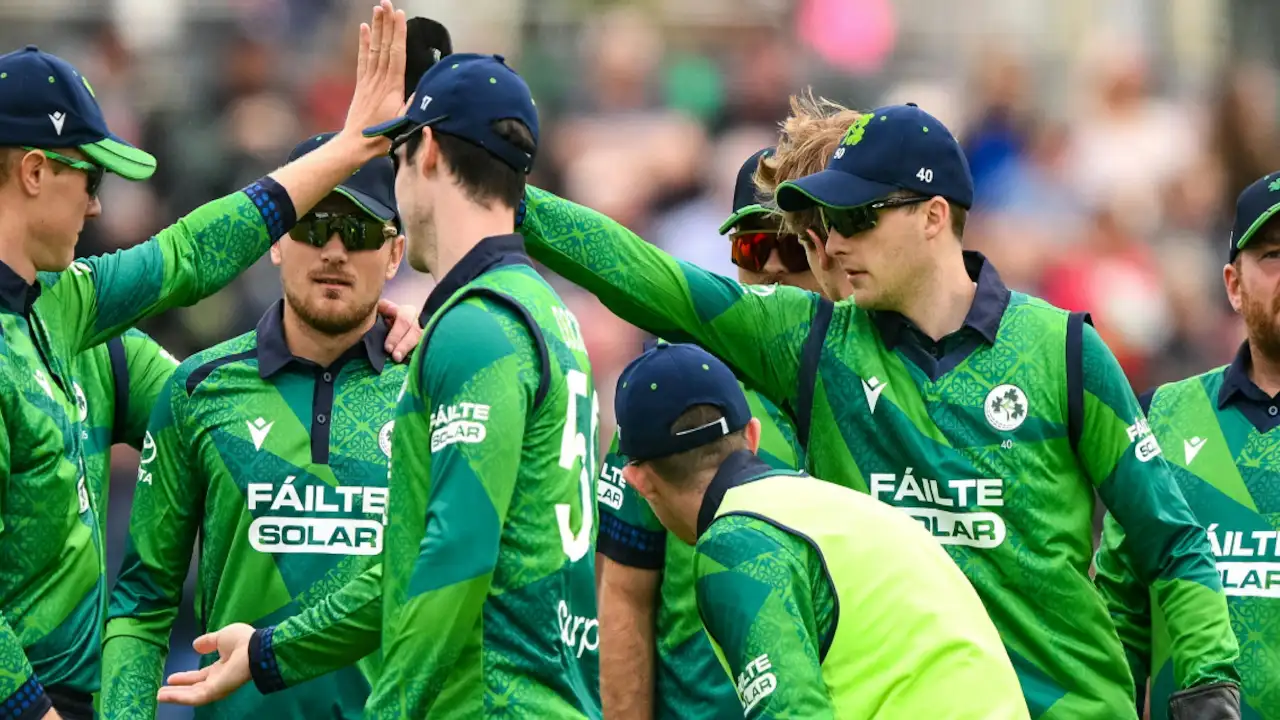
“Leave running Cricket”- Jason Gillespie to PCB after Pakistan’s Champions Trophy exit

Jason Gillespie Resigns as Pakistan’s Head Coach: Criticizes PCB and Reflects on India-Pakistan Rivalry
Jason Gillespie, who was appointed as Pakistan’s head coach in Test cricket in April 2024, has recently opened up about his time with the team and the challenges he faced during his tenure. Despite high hopes at the beginning, Gillespie resigned from his position just eight months after his appointment due to a series of disagreements with the Pakistan Cricket Board (PCB).
Gillespie’s Critique of PCB’s Handling of Pakistan Cricket
In a recent interview with TOI, Gillespie criticized the PCB for its lack of consistency and long-term planning. He pointed out that in the last three years, Pakistan cricket has seen 26 different selectors, four captains, and eight coaches, leading to instability within the team. Gillespie emphasized the need for the PCB to entrust the management of the team to individuals with a deep understanding of the sport.
“There is a fear of failure amongst players because changes are made at board level on players, coaches, and selectors constantly,” Gillespie explained. The constant chopping and changing within the team management has created a sense of uncertainty among the players, impacting their performance on the field.
Gillespie’s Views on the India-Pakistan Rivalry
When asked about the historic rivalry between India and Pakistan, Gillespie acknowledged the talent pool in Pakistan cricket and expressed his belief that the rivalry will always remain strong. He praised the quality of cricketers in Pakistan but stressed the importance of providing them with a platform to showcase their skills.
Gillespie noted that while India has continued to excel and improve in international cricket, Pakistan has struggled to keep up with the modern-day demands of the sport. He highlighted the need for Pakistan to focus on developing a consistent and stable team structure to compete effectively against top cricketing nations.
Gillespie’s Tenure as Pakistan’s Head Coach
During Gillespie’s time as head coach, Pakistan faced a series of ups and downs, including a disappointing home Test series loss to Bangladesh. However, the team managed to bounce back with a triumphant series win over England at home. Despite these successes, Gillespie decided to resign before Pakistan’s Test series in South Africa, citing a lack of authority to make significant changes.
Gillespie’s departure was also influenced by the dismissal of Pakistan’s assistant coach, Tim Nielsen, which further strained his relationship with the PCB. Despite the challenges faced during his tenure, Gillespie also served as Pakistan’s interim head coach for the ODI and T20I series in Australia, achieving a mixed bag of results.
Overall, Gillespie’s insights shed light on the complex dynamics within Pakistan cricket and the need for a more stable and long-term approach to team management. As the team navigates its future, addressing the issues raised by Gillespie could be crucial in revitalizing Pakistan’s cricketing fortunes on the international stage.
Gillespie’s Recommendations for Pakistan Cricket
Reflecting on his time as Pakistan’s head coach, Jason Gillespie has put forward several recommendations for the improvement of Pakistan cricket. One key aspect he highlighted was the need for a clear and consistent selection process. Gillespie emphasized the importance of stability in team selection to allow players to build confidence and form partnerships on the field. By reducing the frequent changes in personnel, Gillespie believes Pakistan can establish a more cohesive and competitive team.
Furthermore, Gillespie stressed the significance of investing in grassroots cricket development in Pakistan. He suggested that nurturing talent at the grassroots level is essential for ensuring a steady supply of skilled cricketers for the national team. By providing proper infrastructure, coaching, and opportunities for young players, Pakistan can enhance its cricketing depth and quality over time.
In addition, Gillespie underscored the importance of mental conditioning and resilience training for Pakistani players. He noted that the pressure of international cricket, especially in high-stakes matches like those against India, can be overwhelming. By implementing mental health and performance coaching programs, Pakistan can equip its players with the tools to cope with stress and perform at their best under pressure.
The Impact of Gillespie’s Resignation on Pakistan Cricket
Jason Gillespie’s resignation as head coach has undoubtedly left a void in Pakistan cricket. His departure raises questions about the stability and leadership within the team, particularly as Pakistan prepares for future competitions. The sudden exit of a seasoned coach like Gillespie may disrupt the team’s momentum and strategic planning, requiring the PCB to act swiftly to address the vacancy.
Moreover, Gillespie’s criticisms of the PCB’s management practices have drawn attention to the need for reforms within the organization. The PCB may face pressure to reassess its decision-making processes and improve its communication with coaches and players to foster a more collaborative and supportive environment. Addressing these issues could be crucial for rebuilding trust and stability within the Pakistan cricket setup.
The Future of Pakistan Cricket
As Pakistan navigates the aftermath of Gillespie’s resignation and looks ahead to upcoming series and tournaments, the team faces both challenges and opportunities for growth. By heeding Gillespie’s advice and implementing strategic changes, Pakistan cricket can strive for greater success on the global stage.
With a rich history of producing world-class cricketers and a passionate fan base, Pakistan has the potential to reclaim its position among the top cricketing nations. By fostering a culture of stability, consistency, and long-term planning, Pakistan can lay the foundation for sustained success in the years to come.
As the PCB evaluates its coaching staff and team management structure, the insights shared by Jason Gillespie serve as valuable lessons for shaping the future of Pakistan cricket. By learning from past experiences and embracing a forward-thinking approach, Pakistan can revitalize its cricketing fortunes and compete with confidence against the best teams in the world.
Latest News
Sanju Samson gets huge role as Ruturaj Gaikwad confirms CSK openers for IPL 2026
Prithvi Shaw declares his mission to return to team India begins from IPL 2026
Irfan Pathan questions Arshdeep Singh’s bowling ahead of IPL 2026
“Mind is somewhere else”: Yuvraj’s Father exposes Abhishek Sharma’s indiscipline lifestyle

EX-RCB pacer joins KKR as replacement of Harshit Rana ahead of IPL 2026

“Win our first trophy”: Sanjiv Goenka crowns LSG as champions ahead of IPL 2026

New catching rule? Captains warned over ‘Incomplete’ catches ahead of IPL 2026

Pat Cummins in awe of Ishan Kishan’s captaincy

Ex-India star accuses teammates of ‘Racism’, blames it for early international exit
“I love watching Shreyas Iyer bat” – PBKS all-rounder Cooper Connolly ahead of IPL 2026

Yograj Singh gives Ravichandran Ashwin belt treatment because of Arjun Tendulkar remarks
CSK legend advises Shubman Gill the best way to bounce back in T20I team
Jasprit Bumrah Injury Scare, reason behind visit to CoE revealed
“Didn’t invite me”: R Ashwin puts Kuldeep Yadav in spotlight over wedding snub