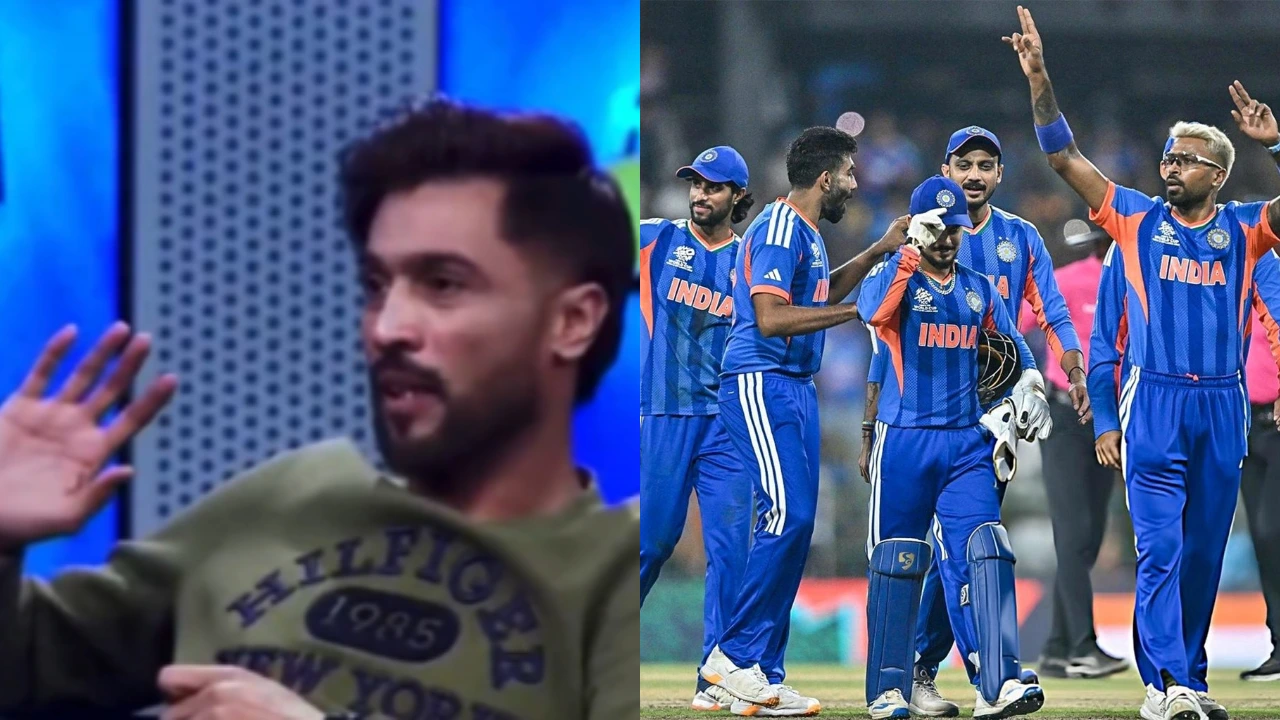
Michael Vaughan demands ECB action after Indian-owned Hundred teams refuse to sign Pakistan players

The India-Pakistan Cricket Conflict Intensifies Over ‘The Hundred’ Franchise Ownership
The ongoing tension between India and Pakistan has spilled over into the world of cricket once again, this time revolving around the ownership of ‘The Hundred’ franchises. Reports have emerged suggesting that some of the franchises in ‘The Hundred’ are owned by Indian stakeholders, leading to concerns that Pakistan cricketers may not be considered for the upcoming auction next month.
It is important to note that Pakistan players have been excluded from the Indian Premier League (IPL) since 2009 due to political tensions between the two countries. The recent reports have sparked controversy and uncertainty within the cricketing community.
Michael Vaughan’s Stance Against Anti-Pakistan Sentiment
Former England cricket captain Michael Vaughan has joined the conversation, expressing his dismay over the situation. Vaughan took to Twitter, stating, “The ECB need to act fast on this .. they own the league and this should not be allowed to happen .. the most inclusive sport in the country is not one that allows this to happen.”
Various agents representing Pakistani cricketers have also weighed in on the issue, highlighting the challenges faced by Pakistani players in securing opportunities in leagues with Indian ownership.
One agent mentioned, “It’s a given, they have been doing the same all around the world. Now that they are in the Hundred, I don’t see any difference.” Another agent reaffirmed the unofficial ban on Pakistani players in Indian-owned franchises.
Potential Impact on Pakistani Players in T20 Leagues
While only two Pakistani players participated in ‘The Hundred’ last year before the change in ownership, the looming presence of Indian stakeholders has raised concerns for Pakistani players in other T20 leagues as well.
Franchises such as Manchester Super Giants, MI London, Southern Brave, and Sunrisers Leeds, which have partial ownership by IPL franchises, may follow a similar path of excluding Pakistani players. This trend extends beyond ‘The Hundred’ to other leagues like SA 20, ILT20, and MLC, where IPL owners are predominant.
However, there is a glimmer of hope as the Knight Riders franchise group, known for owning Kolkata Knight Riders in the IPL, has expressed openness to signing Pakistani players despite the prevailing sentiments.
Future of Cricketing Leagues and Inclusivity
The monopolistic tendencies of the IPL and Indian-based owners have come under scrutiny as they expand their influence into various cricketing leagues globally. The power dynamics between the BCCI and Indian stakeholders have sparked debates on inclusivity and fair opportunities for players from all nations.
While the Indian business owners have yet to respond to the escalating tensions, the cricketing community awaits further developments in this unfolding saga. The future of Pakistani players in international T20 leagues hangs in the balance as the controversy continues to unfold.
It remains to be seen how the cricketing authorities will address the concerns raised by various stakeholders and ensure a level playing field for players of all nationalities.
Impact of Political Tensions on Cricketing Opportunities
The longstanding political tensions between India and Pakistan have often spilled over into the realm of sports, particularly cricket. The exclusion of Pakistani players from the IPL in 2009 marked a significant turning point in the relationship between the two cricketing nations. The current controversy surrounding ‘The Hundred’ franchise ownership further highlights the complexities of geopolitics impacting cricketing opportunities for players.
Not only do these tensions affect the participation of Pakistani players in lucrative leagues, but they also have broader implications for the sport’s global landscape. The exclusion of players based on nationality raises questions about fairness, inclusivity, and the spirit of sportsmanship in cricket.
Role of Cricketing Authorities in Promoting Diversity
As cricket continues to evolve as a global sport, it is imperative for cricketing authorities to uphold principles of diversity and inclusivity. The International Cricket Council (ICC) plays a crucial role in ensuring that all players, regardless of nationality, have equal opportunities to showcase their talent on the international stage.
In light of the recent controversy surrounding ‘The Hundred’ franchise ownership, there is a growing need for transparency, accountability, and fair play in the administration of cricket leagues. By fostering a culture of inclusivity and diversity, cricketing authorities can set a positive example for sports governance around the world.
Challenges and Opportunities for Pakistani Players
For Pakistani cricketers, navigating the complex landscape of international T20 leagues presents both challenges and opportunities. While political tensions may limit their access to certain leagues, there are also franchises and team owners who value talent over nationality.
The willingness of the Knight Riders franchise group to consider Pakistani players despite the prevailing sentiments reflects a commitment to merit-based selection and inclusivity. This presents a ray of hope for Pakistani players seeking to showcase their skills on a global platform.
Looking Ahead: The Evolution of Cricketing Leagues
As cricketing leagues continue to proliferate and attract a diverse range of stakeholders, the landscape of the sport is undergoing a profound transformation. The rise of Indian-owned franchises in various leagues signifies the growing influence of the Indian cricketing ecosystem on a global scale.
While this expansion presents opportunities for collaboration and cross-cultural exchange, it also underscores the need for a balanced and equitable playing field for all players. The future of cricketing leagues hinges on fostering a culture of inclusivity, respect, and fair competition among all participating nations.
In conclusion, the India-Pakistan cricket conflict over ‘The Hundred’ franchise ownership serves as a poignant reminder of the intricate interplay between sports, politics, and identity. As the cricketing community grapples with these challenges, it is essential to uphold the values of sportsmanship, unity, and mutual respect that lie at the heart of the game.
Latest News
Bowlers will have sleepless nights: Morne Morkel fires warning at South Africa ahead of Super 8 clash

India suffer big injury scare as Hardik Pandya’s shot injures Mohammed Siraj
After Abhishek Sharma, Australia star hails Yuvraj Singh as mentor
50+ Pakistan players defy ‘shadow ban’ to enter The Hundred auction; Babar Azam, Mohammad Rizwan missing
Michael Vaughan demands ECB action after Indian-owned Hundred teams refuse to sign Pakistan players
All not well in Pakistan camp? Salman Ali Agha clears the air ahead of Super 8 clash vs New Zealand
Out-of-form Abhishek Sharma to be dropped for Sanju Samson? India coach delivers huge update ahead of South Africa clash
Substance hunt or prank? Suryakumar Yadav checks Abhishek Sharma’s pockets during training
Virender Sehwag compares himself to struggling Abhishek Sharma, orders him to copy Suryakumar Yadav
Axar Patel snubbed as India Playing XI for South Africa clash announced by ex-cricketer
Shoaib Malik exposes Pakistan legend’s lies without fear in the middle of T20 World Cup 2026
South Africa’s ‘unfair advantage’ in T20 World Cup 2026 exposed by India batting coach
Yuzvendra Chahal insults Hardik Pandya, names South Africa star as the better finisher
Michael Vaughan snubs India, Australia to crown shocking World No.1 cricket team