Mike Hesson accused of taking “free ke paise” after Pakistan’s tactical blunders in T20 World Cup 2026
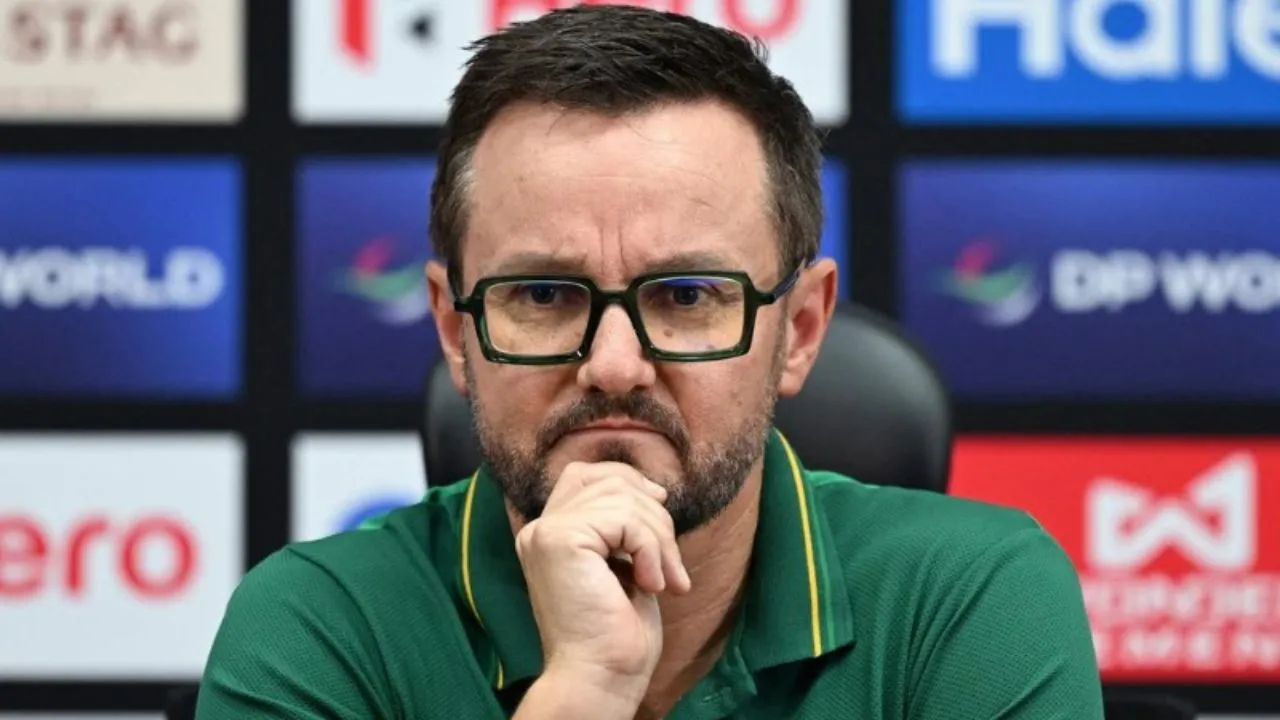
Pakistan head coach, Mike Hesson, is facing criticism following Pakistan’s recent defeat against India in the ongoing T20 World Cup. Despite qualifying for the Super 8s, the Men in Green suffered a 61-run loss to their arch-rivals, highlighting ongoing issues within the team. The team’s performance has been lackluster, with concerns arising even in their first game against the Netherlands.
Former India cricketer, Mohammad Kaif, has called out Hesson for what he perceives as poor coaching decisions. Kaif specifically criticized Hesson’s choice to field first after winning the toss in the crucial match against India. Hesson, who took on the role of head coach of Pakistan in May 2025, has previously coached the New Zealand team and the IPL franchise Royal Challengers Bangalore (RCB). Upon his appointment, Hesson made the controversial decision to remove Mohammad Rizwan from the T20I side.
In a scathing critique on his YouTube channel, Kaif questioned Hesson’s coaching tactics, particularly in the match against India. He expressed bewilderment at Hesson’s decision-making, suggesting that the coach’s strategies were questionable. Kaif highlighted specific instances during the game where he believed Hesson’s choices had a negative impact on Pakistan’s performance, ultimately leading to their defeat.
During the match, Pakistan relied heavily on spin bowlers, utilizing 18 overs of spin. While there were moments of success, particularly with Salman Ali Agha taking an early wicket, the overall performance of the spinners fell short. India managed to post a formidable total of 175 runs on a challenging pitch that offered grip and turn.
Kaif’s criticism extended beyond Hesson to foreign coaches in general, questioning their reliance on pre-planned strategies over on-field instincts. He emphasized the importance of adaptability in T20 cricket, citing players like Rohit Sharma and MS Dhoni as examples of leaders who prioritize in-the-moment decision-making over set plans dictated by coaches.
In his closing remarks, Kaif underscored the limitations of coaching strategies based on notes and pre-determined tactics, stressing the need for flexibility and intuition in high-stakes matches like the T20 World Cup. He contrasted this approach with the more instinctive and adaptable leadership styles of successful captains like Sharma and Dhoni.
The criticism directed at Hesson and foreign coaches serves as a reminder of the complexities and nuances of coaching in elite cricket tournaments. As Pakistan prepares for their Super 8 clash against New Zealand, the spotlight remains on Hesson and his ability to address the team’s shortcomings and lead them to success in the remainder of the tournament.
Challenges Facing Hesson and the Pakistani Team
As Pakistan navigates through the T20 World Cup, the pressure on Mike Hesson to deliver results is mounting. The recent defeat against India has exposed underlying issues within the team that need to be addressed promptly. While the decision to field first may have been questioned, it is imperative to analyze the team’s overall performance and identify areas for improvement.
Striking a Balance Between Strategy and Adaptability
The debate surrounding the role of coaches, particularly foreign coaches, in shaping team strategies is ongoing. While a well-thought-out game plan is crucial in cricket, the ability to adapt to changing circumstances on the field is equally essential. Finding the balance between structured tactics and improvisation is a delicate art that coaches like Hesson must master.
The Impact of Leadership in High-Pressure Situations
The T20 format demands quick thinking and decisive actions from both players and coaches. Captains who can read the game, assess the opposition, and make strategic decisions on the fly often have a significant advantage. As Pakistan faces tough competition in the Super 8s, the leadership qualities of both the coach and the captain will be put to the test.
Building Team Cohesion and Resilience
One of the key roles of a coach is to foster a sense of unity and resilience within the team. In high-stakes tournaments like the T20 World Cup, maintaining morale and instilling confidence in players is vital. Hesson’s ability to rally the team, address any internal issues, and keep the players motivated will play a crucial role in Pakistan’s performance moving forward.
Looking Ahead: Lessons Learned and Areas for Improvement
As Pakistan prepares to face New Zealand in the Super 8 stage, there is an opportunity for reflection and growth. Analyzing the shortcomings from past matches, identifying strengths to build upon, and making strategic adjustments are all part of the coaching process. Hesson’s ability to learn from mistakes, adapt his coaching style, and implement effective changes will be pivotal in Pakistan’s journey in the T20 World Cup.
Final Thoughts
While criticism may be inevitable in the world of cricket, it also presents an opportunity for growth and development. As Mike Hesson navigates through the challenges of coaching a talented but inconsistent Pakistani team, the spotlight remains on his ability to lead, inspire, and guide the players to success. The T20 World Cup is a platform where coaching acumen, player performance, and strategic decision-making converge, shaping the outcome of each match and defining the trajectory of a team’s campaign. Only time will tell how Hesson and Pakistan rise to the occasion and strive for glory in the world of cricket.
Latest News
RCB Playing XI vs SRH Playing XI – Match No. 1 | IPL 2026
Delhi Capitals IPL 2026 Full Schedule: DC Fixtures, Dates, Timings and Venues | Squad and Coaches
PSZ vs RWP Match Prediction, Pitch & Weather Report, Playing XIs, Head-to-Head, Free Live Streaming – PSL 2026 Match 3
Rajasthan Royals IPL 2026 Full Schedule: RR Fixtures, Dates, Timings and Venues | Squad and Coaches
Mumbai Indians add Akash Madhwal for IPL 2026 amid suspense over Jasprit Bumrah’s availability
Kolkata Knight Riders IPL 2026 Full Schedule: KKR Fixtures, Dates, Timings and Venues | Squad and Coaches
Sunrisers Hyderabad IPL 2026 Full Schedule: SRH Fixtures, Dates, Timings and Venues | Squad and Coaches
RCB vs SRH Match Prediction – Who Will Win Match No.1? | IPL 2026
KL Rahul will win the Orange Cap in IPL 2026 if…: Ravichandran Ashwin makes bold claim
RCB coach rules Josh Hazlewood out of IPL 2026 opener, Pat Cummins update arrives
Kamran Akmal trolls Pakistan Super League after Hyderabad Kingsmen jersey turns ball pink
Prithvi Shaw backed to dominate IPL 2026 by Irfan Pathan
Rohit Sharma loses cool! Hits car, ignores fans in shocking moment before IPL 2026
RCB vs SRH Match No. 1 Preview: Free Live Streaming, Pitch & Weather Report, Head-to-Head | IPL 2026