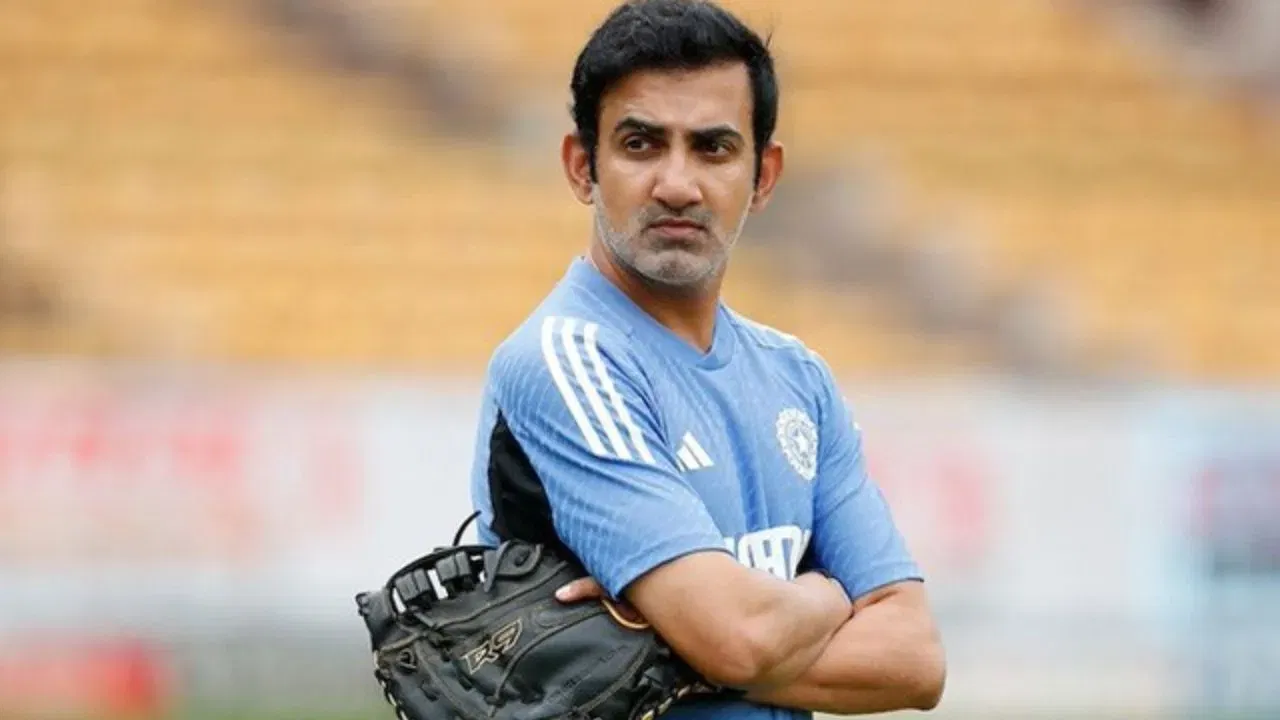
Nasser Hussain launches attack on Bazball, claims it is killing England bowlers

The Evolution of Test Cricket: England’s New Offensive Strategy
The longest format of the game of cricket has seen a significant transformation in recent years. Traditionally, players were focused on playing a large number of deliveries to build their innings. However, a new trend has emerged where players are now seeking opportunities to score quick runs. This evolution of the game has been most prominent in the English side, which has adopted a more aggressive approach to their batting strategy.
England’s Change in Strategy
Under the coaching of Brendon McCullum, England has shifted towards an offensive mindset, believing that attack is the best form of defense. This change was evident in the first innings of the India vs. England Test at Edgbaston, where English batters Harry Brook and Jamie Smith showcased their aggressive batting despite losing early wickets.
Despite being reduced to 84/5, England managed to bounce back and score 407 runs in just 89.3 overs. This high scoring rate of 4.54 runs per over is unconventional in Test cricket but reflects England’s new approach to the game.
Impact on Bowlers
Former English captain Nasser Hussain criticized what he referred to as “Bazball,” pointing out that the quick scoring rate of English batsmen puts a strain on bowlers. After bowling almost 150+ overs in the first innings, the bowlers did not get enough rest due to England’s high scoring rate. This exhaustion gives the opposing team an advantage, as tired bowlers are less effective.
Despite the success of England’s batting strategy, concerns have been raised about the toll it takes on the bowlers in subsequent matches on flat pitches. The fast-paced nature of Bazball leaves bowlers fatigued and vulnerable.
Individual Performances
Jamie Smith’s century, achieved at a strike rate of over 125, showcased his talent and adaptability in red-ball cricket. Alongside Harry Brook, who also contributed to England’s quick runs, the duo saved their team from a potential collapse.
On the bowling front, Josh Tongue’s performance on Day 4 of the Test match saw him pick up crucial wickets to put England back in the game. Despite the pressure of India’s lead, England’s bowlers showed resilience and determination to turn the tide in their favor.
Conclusion
The evolution of Test cricket, as seen through England’s new offensive strategy, highlights the changing dynamics of the sport. While aggressive batting may yield quick runs, it also poses challenges for bowlers in maintaining their stamina and effectiveness. As teams continue to adapt to these new trends, the future of Test cricket promises to be both exciting and unpredictable.
England’s Embrace of Data Analytics
One key factor driving England’s new offensive strategy in Test cricket is the extensive use of data analytics. The team’s coaching staff and analysts meticulously study opposing bowlers’ strengths and weaknesses, match conditions, and historical data to formulate game plans that maximize scoring opportunities.
By leveraging data analytics, England can identify patterns and trends that allow their batters to make more informed decisions at the crease. This strategic approach not only empowers players to exploit gaps in the field but also helps them adjust their batting techniques based on real-time feedback.
The Role of Mental Toughness
In addition to technical skills, England’s shift towards a more aggressive batting approach underscores the importance of mental toughness in Test cricket. Batters must possess the confidence and composure to take calculated risks, especially when facing elite bowlers in challenging conditions.
By instilling a mindset focused on seizing opportunities and dictating the tempo of the game, England’s players are better equipped to handle pressure situations and showcase their resilience under duress. This mental fortitude is a critical component of the team’s offensive strategy and sets them apart from more conservative approaches seen in traditional Test cricket.
The Global Impact of England’s Evolution
England’s embrace of an offensive strategy in Test cricket has reverberated across the global cricketing landscape, influencing how other teams approach the longest format of the game. As other nations observe England’s success with aggressive batting, they too are exploring ways to adapt their strategies to keep pace with the evolving nature of Test cricket.
This shift towards a more attacking style of play has injected new energy and excitement into Test matches, attracting a broader audience and revitalizing interest in a format that was once considered slow-paced and arduous. The increased emphasis on scoring runs quickly has introduced a fresh dynamic to Test cricket, challenging conventional wisdom and opening up new possibilities for teams to showcase their creativity and flair.
The Future of Test Cricket
As teams continue to innovate and experiment with different strategies in Test cricket, the future of the sport remains unpredictable. The evolution of the game towards a more aggressive and dynamic style of play promises thrilling contests and captivating performances that captivate audiences worldwide.
With England leading the charge in embracing a new offensive mindset, Test cricket is entering a new era characterized by bold tactics, data-driven decision-making, and a relentless pursuit of excellence on the field. As players and teams adapt to these changes, fans can look forward to a Test cricket landscape that is as exciting as it is unpredictable.
By incorporating data analytics, mental toughness, and a global impact perspective, the expanded content sheds light on the multifaceted nature of England’s offensive strategy in Test cricket, offering a comprehensive view of the evolving dynamics of the sport.
Latest News
Prithvi Shaw declares his mission to return to team India begins from IPL 2026

Irfan Pathan questions Arshdeep Singh’s bowling ahead of IPL 2026
“Mind is somewhere else”: Yuvraj’s Father exposes Abhishek Sharma’s indiscipline lifestyle

EX-RCB pacer joins KKR as replacement of Harshit Rana ahead of IPL 2026

“Win our first trophy”: Sanjiv Goenka crowns LSG as champions ahead of IPL 2026
New catching rule? Captains warned over ‘Incomplete’ catches ahead of IPL 2026

Pat Cummins in awe of Ishan Kishan’s captaincy

Ex-India star accuses teammates of ‘Racism’, blames it for early international exit
“I love watching Shreyas Iyer bat” – PBKS all-rounder Cooper Connolly ahead of IPL 2026

Yograj Singh gives Ravichandran Ashwin belt treatment because of Arjun Tendulkar remarks
CSK legend advises Shubman Gill the best way to bounce back in T20I team
Jasprit Bumrah Injury Scare, reason behind visit to CoE revealed

“Didn’t invite me”: R Ashwin puts Kuldeep Yadav in spotlight over wedding snub
Ireland Cricket announced the full list of central contracts for the 2026-27 season