

Nasser Hussain takes anti-India propaganda to next level; Aggressively backs Pakistan, Bangladesh
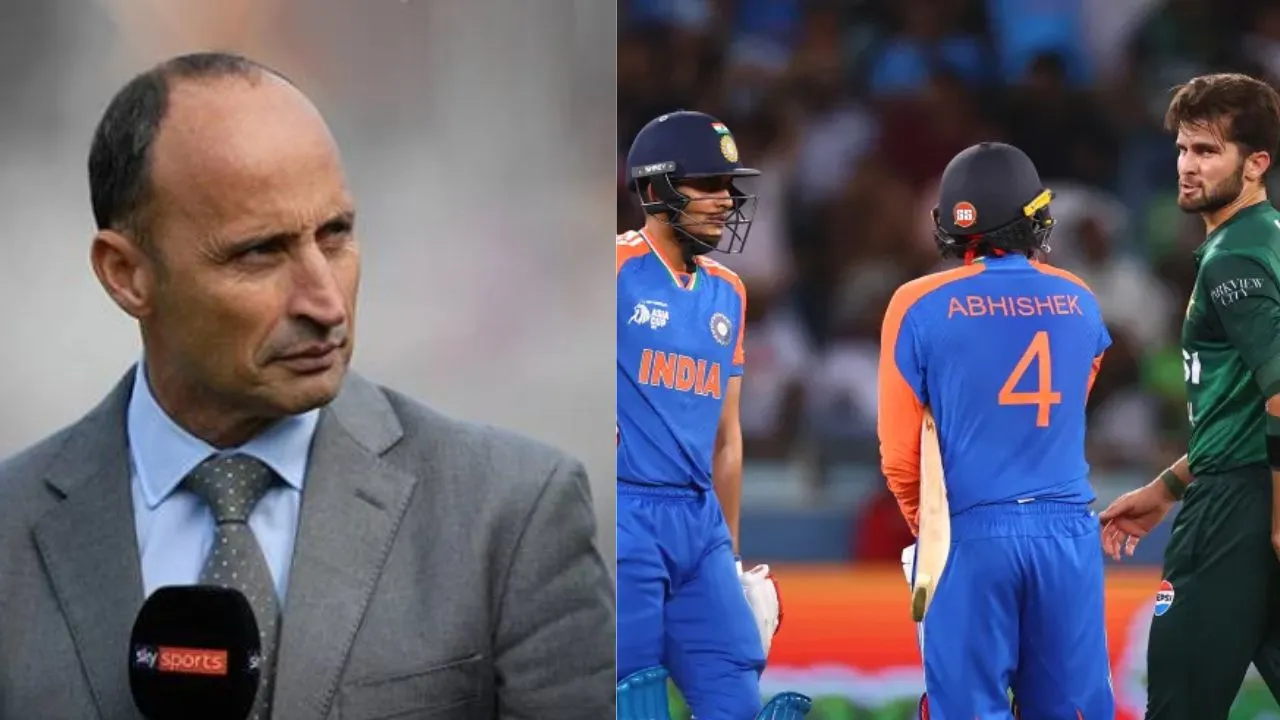
India-Pakistan T20 World Cup Controversy: Nasser Hussain Questions ICC Integrity
Former players and cricket pundits continue to weigh in on the ongoing row between India and Pakistan regarding the 2026 T20 World Cup match scheduled for 15th February. The latest voice to join the discussion is former England captain Nasser Hussain, who has criticized the International Cricket Council (ICC) and the Board of Control for Cricket in India (BCCI) for their handling of the situation.
In a recent episode of a Sky Sports podcast alongside his former teammate Michael Atherton, Hussain raised concerns about the perceived bias towards powerful cricket boards, particularly the BCCI. He highlighted the disparities in world cricket and the implications of recent events surrounding the match between India and Pakistan.
The controversy began when the BCCI terminated the contract of Bangladeshi fast bowler Mustafizur Rahman with the Kolkata Knight Riders franchise in the Indian Premier League. This decision led to the Bangladesh Cricket Board (BCB) expressing security concerns and opting not to travel to India for the World Cup. Despite their stance, the BCB was replaced by Scotland in the tournament lineup.
In a show of solidarity, the Pakistan Cricket Board (PCB) announced a boycott of the match against India, further escalating tensions between the two cricketing nations.
Hussain questioned the integrity of the ICC and raised doubts about whether the same actions would have been taken if India were in a similar situation. He emphasized the need for consistency in the ICC’s decision-making process and called for equal treatment of all cricket-playing nations.
The former England captain’s comments have sparked debate among fans and cricket enthusiasts, with many acknowledging the complexities involved in balancing power dynamics in the sport.
Hussain commended Bangladesh and Pakistan for standing up for their players and asserted the importance of resolving the political tensions to focus on the game of cricket. He expressed his support for teams that prioritize player welfare and uphold principles of fair play.
The controversy surrounding the India-Pakistan match has once again highlighted the influence of major cricketing boards in shaping the future of the sport. Former PCB chairman Najam Sethi has also criticized the “Big Three” model, which gives undue power to India, Australia, and England in international cricket decisions.
As the dispute continues to unfold, both India and Pakistan face potential consequences, including fines, sanctions, and even the possibility of a ban from playing cricket. The outcome of the situation remains uncertain, with fans eagerly awaiting a resolution that allows the focus to shift back to the game itself.
In conclusion, Hussain’s remarks serve as a reminder of the challenges faced by cricket’s governing bodies in maintaining fairness and transparency in a sport that holds immense cultural and emotional significance for millions of fans worldwide.
The Impact of the India-Pakistan T20 World Cup Controversy on Global Cricket
The ongoing controversy surrounding the India-Pakistan T20 World Cup match has sent shockwaves through the cricketing world, sparking discussions about fairness, integrity, and the power dynamics at play in international cricket. The comments made by former England captain Nasser Hussain have brought to light the complexities of balancing the interests of powerful cricket boards with the principles of equality and fairness in the sport.
One key aspect of this controversy is the role of the International Cricket Council (ICC) in mediating disputes and ensuring a level playing field for all cricket-playing nations. The perceived bias towards certain boards, such as the Board of Control for Cricket in India (BCCI), has raised questions about the transparency and accountability of the ICC in its decision-making processes.
The termination of Mustafizur Rahman’s contract with the Kolkata Knight Riders and the subsequent withdrawal of the Bangladesh Cricket Board (BCB) from the World Cup lineup have highlighted the far-reaching consequences of actions taken by major cricketing boards. The replacement of the BCB with Scotland in the tournament has further fueled concerns about the unequal treatment of smaller cricketing nations.
The solidarity shown by the Pakistan Cricket Board (PCB) in boycotting the match against India underscores the deep-rooted political tensions that often overshadow the game of cricket. The need to separate politics from sport has never been more apparent, as players and fans alike grapple with the ramifications of decisions made by cricketing authorities.
Former PCB chairman Najam Sethi’s criticism of the “Big Three” model, which favors India, Australia, and England in international cricket governance, sheds light on the power struggles that shape the future of the sport. The need for a more inclusive and equitable system that gives voice to all cricket-playing nations is increasingly evident in light of recent events.
As the dispute between India and Pakistan unfolds, the potential consequences for both teams loom large, with fines, sanctions, and even a ban from playing cricket on the table. The resolution of this controversy will not only impact the teams involved but also have broader implications for the future of cricket and the efforts to promote fairness and equality in the sport.
In conclusion, the India-Pakistan T20 World Cup controversy serves as a poignant reminder of the challenges faced by cricket’s governing bodies in navigating the intricate web of politics, power, and passion that defines the sport. As fans eagerly await a resolution, one can only hope that the focus will soon return to what truly matters – the game of cricket itself.
Latest News
Punjab Kings penalised! Shreyas Iyer punished after win vs Gujarat Titans in IPL 2026
Shreyas Iyer injury update: Punjab Kings captain ruled out of IPL 2026?
LSG vs DC Match No. 5 Preview: Free Live Streaming, Pitch & Weather Report, Head-to-Head | IPL 2026

LSG vs DC Match Prediction – Who Will Win Match No.5? | IPL 2026
LSG Playing XI vs DC Playing XI – Match No. 5 | IPL 2026
Krunal Pandya breaks silence on India snub, opens up on Virat Kohli
Mohsin Naqvi enforces new social media rules for Pakistan players following Naseem Shah incident
Fakhar Zaman officially handed cricket ban after PSL 2026 ball-tampering controversy
Pat Cummins forces Cricket Australia to slash central contracts list to secure premium deal
CSK’s big promise to players revealed amid IPL 2026: “Whatever BCCI offers, we’ll double it”
Ravichandran Ashwin rules out Vaibhav Sooryavanshi’s India call-up
Rashid Latif claims PSL ball-tampering row was deliberately created for attention amid IPL rivalry
Mohammed Shami breaks silence on retirement buzz after India snub; has special message for LSG
Mohammed Shami reveals IPL 2026 Top 4, leaves out five-time champions

