PCB issues official clarity on Asia Cup 2025 future
Pakistan Cricket Board to Decide on Asia Cup Participation
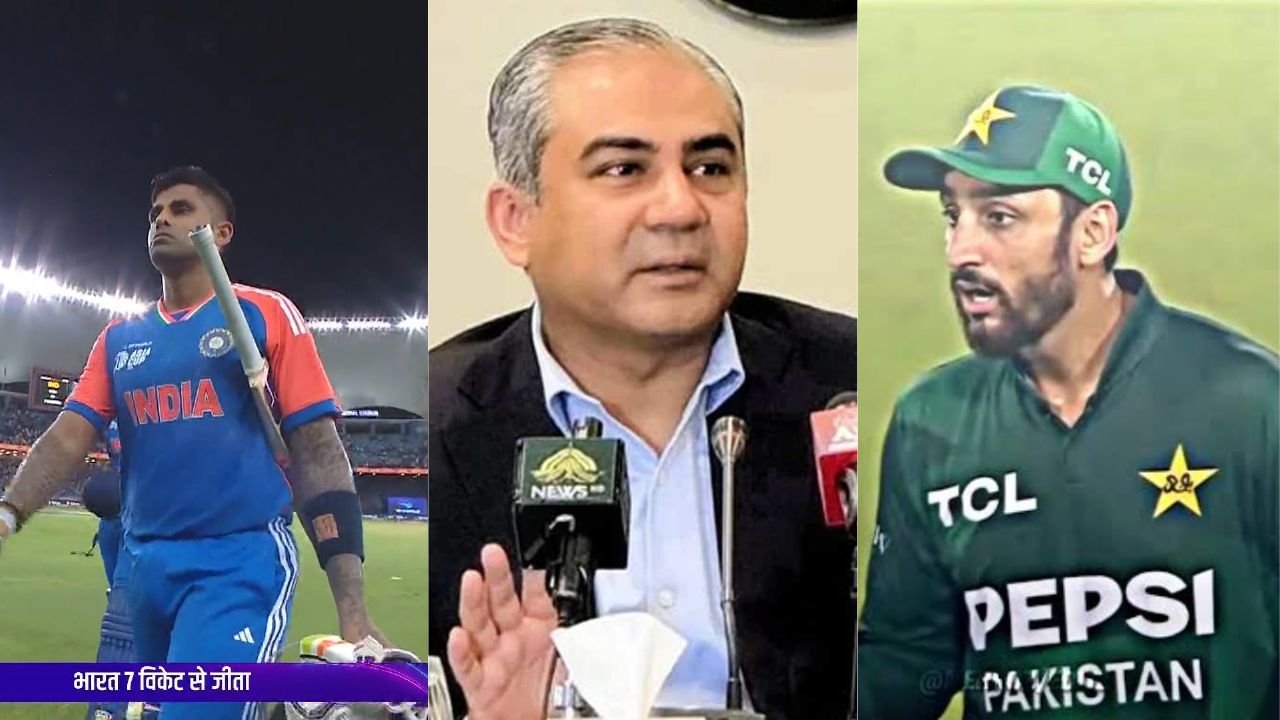
The Pakistan Cricket Board (PCB) has announced that a final decision on Pakistan’s participation in the ongoing Asia Cup will be made on Wednesday (September 17). The controversy arose after the recent match against India where the Indian team refused to shake hands due to the Pahalgam terror attack earlier this year.
PCB Threatens Withdrawal
During the match, India’s captain Suryakumar Yadav did not shake hands with Pakistan’s captain Salman Ali Agha at the toss. Furthermore, the entire Indian team walked back to the dressing room without the customary handshake at the end of the match. The PCB expressed their disappointment over the incident and blamed match referee Andy Pycroft for the situation.
PCB Accusations Against Andy Pycroft
The PCB accused Andy Pycroft, a former Zimbabwe cricketer and the match referee of violating the code of conduct by allegedly informing Agha that there would be no handshakes at the toss. The board took their grievances to the ICC, stating that Pycroft’s actions went against the laws of the MCC. They demanded his removal from the remainder of the Asia Cup, threatening to withdraw from the tournament if their demand was not met.
Uncertainty Over Pakistan’s Participation
With Pakistan set to face the UAE in a crucial match on Wednesday, the PCB released a statement indicating that consultations were ongoing regarding their participation. The decision will be made on the same day, keeping in mind the best interests of Pakistan. Despite cancelling the pre-match press conference, the team proceeded with their training session.
Pakistan’s hopes of advancing to the Super 4s are now uncertain after their defeat against India. They must win the upcoming match against the UAE to progress in the tournament. In contrast, India secured their spot in the next round with a convincing 7-wicket victory over Pakistan. If Pakistan advances to the Super 4s, they are likely to face India again in the tournament.
Final Considerations
The PCB’s decision on Pakistan’s participation in the remaining Asia Cup matches is eagerly awaited by fans and officials alike. The outcome will not only impact the team’s future in the tournament but also reflect on the ongoing tensions between the cricketing rivals. As the cricketing world watches closely, the final call by the PCB on Wednesday will determine the course of events in the Asia Cup.
Pakistan Cricket Board’s History of Controversies
The Pakistan Cricket Board (PCB) has had its fair share of controversies and disputes in the past, often leading to uncertainty and tension surrounding the team’s participation in international tournaments. This recent incident involving the refusal of handshakes by the Indian team is just the latest in a series of events that have put the PCB under scrutiny.
One of the most notable controversies involving the PCB was the spot-fixing scandal that rocked international cricket in 2010. Several Pakistani players were implicated in spot-fixing during a Test match against England, leading to bans and tarnishing the reputation of Pakistani cricket. The PCB’s handling of the scandal and its aftermath came under severe criticism, further adding to the board’s troubled history.
Political and Cultural Complexities in Indo-Pak Cricket Relations
The cricketing rivalry between India and Pakistan is not just about sports but is deeply intertwined with political and cultural complexities. The long-standing tensions between the two nations often spill over into cricket matches, adding an extra layer of intensity and emotion to the contests.
Issues such as territorial disputes, historical conflicts, and cross-border terrorism have all influenced the Indo-Pak cricket relations over the years. Every match between India and Pakistan is not just a game but a reflection of the broader geopolitical landscape in the region. The recent incident during the Asia Cup match is a stark reminder of how these underlying tensions can manifest on the cricket field.
The Role of ICC in Resolving Cricketing Disputes
As the governing body of international cricket, the International Cricket Council (ICC) plays a crucial role in resolving disputes and maintaining the spirit of the game. The PCB’s decision to raise their grievances against the match referee to the ICC highlights the need for a fair and impartial adjudication process in cricket.
Cricketing disputes, whether on-field incidents or off-field controversies, often require the intervention of the ICC to ensure a just resolution. By holding match officials accountable and upholding the integrity of the game, the ICC plays a vital role in safeguarding the spirit of cricket and promoting fair play among all member nations.
The Impact of Pakistan’s Decision on Asia Cup Dynamics
Regardless of the outcome of the PCB’s decision on Pakistan’s participation in the Asia Cup, the repercussions will be felt across the tournament. If Pakistan decides to withdraw, it will not only affect their own prospects but also alter the dynamics of the competition, especially in the Super 4s stage.
A potential withdrawal by Pakistan could lead to changes in the match schedules, points table, and overall tournament structure, creating a ripple effect on the remaining teams. On the other hand, if Pakistan chooses to continue playing, it will be a test of their resilience and ability to focus amidst external distractions and controversies.
Conclusion
As the cricketing world waits for the PCB’s final decision on Pakistan’s participation in the Asia Cup, the implications of this incident extend beyond the boundaries of the cricket field. It serves as a reminder of the delicate balance between sportsmanship, politics, and national pride in the realm of international cricket. The outcome of this saga will not only shape the future of Pakistan’s campaign in the tournament but also leave a lasting impact on the broader narrative of Indo-Pak cricketing relations.
Overall, the PCB’s handling of this situation will be closely scrutinized, highlighting the challenges and complexities faced by cricket boards in managing the intricate web of sports, diplomacy, and history that define the game of cricket in the subcontinent.
Latest News
Shubman Gill out? Virat Kohli’s Test comeback as captain suggested by CSK legend
Jason Gillespie gives major update on Glenn Maxwell’s availability for PSL 2026
‘I’m a big fan but…’: Ravichandran Ashwin criticises Abhishek Sharma after failure vs RCB.

LHQ vs KRK Match Prediction, Pitch & Weather Report, Playing XIs, Head-to-Head, Free Live Streaming – PSL 2026 Match 6
IPL teams on alert!: Sri Lanka fitness crisis sees almost 50% players fail tests
Ben Duckett in trouble? Sunil Gavaskar pushes BCCI for tougher punishment
MS Dhoni faking injury? Michael Vaughan suspects ‘strategic manoeuvre’ in CSK camp for IPL 2026
KKR coach criticises Impact Player rule, provides huge Matheesha Pathirana update

Sam Curran reveals private chat with Brendon McCullum after England axing
Ravichandran Ashwin brutally teased by Virender Sehwag on IPL 2026 debut
Virat Kohli’s ego under spotlight! Ex-KKR star makes bold claim after heroics vs SRH
Jay Shah rises to No. 22 among most powerful people in India in 2026; Virat Kohli, Gautam Gambhir included

SRH suffer huge blow! Daniel Vettori confirms another overseas pacer injured amid crisis
IPL Points Table 2026: Updated Standings, Orange Cap, Purple Cap After RCB vs SRH Match 1