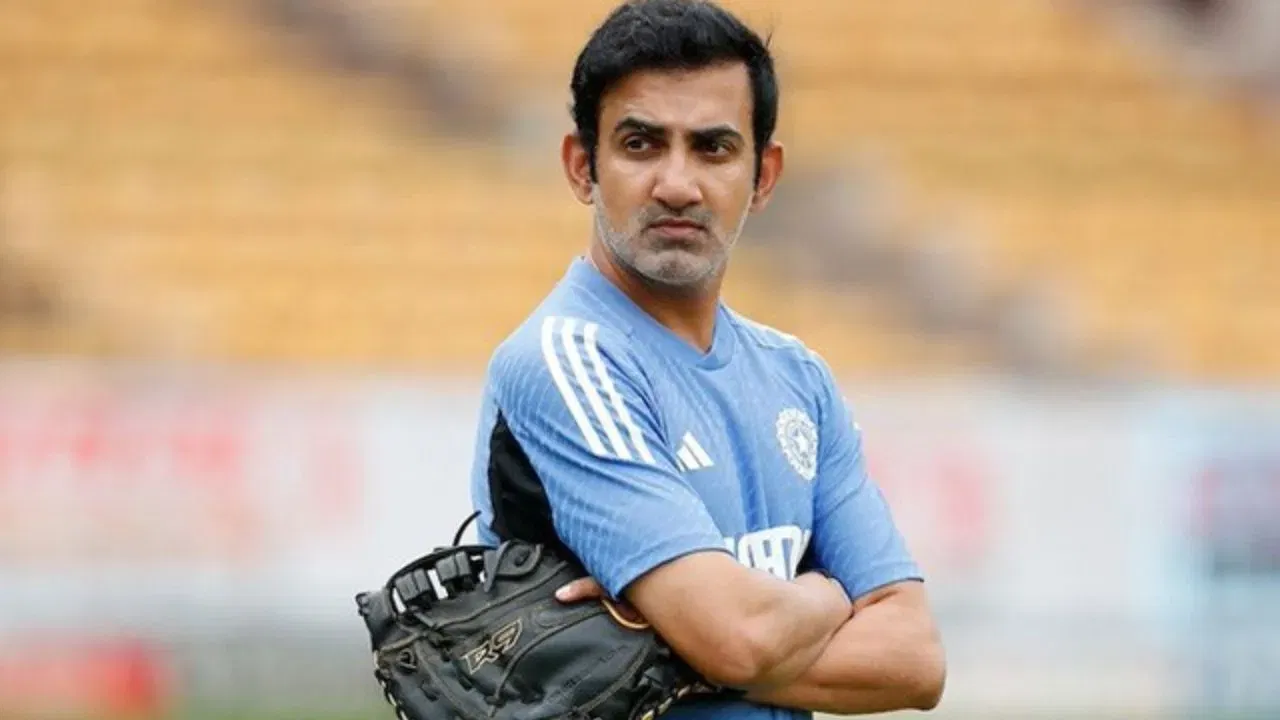
Ravi Shastri unleashes fury at Indian pacer after lack of support for Jasprit Bumrah

India’s Overreliance on Jasprit Bumrah Exposed in Test Series Opener Against England
All eyes were on Jasprit Bumrah heading into the five-match Test series opener between England and India in Leeds. On Day 2, Bumrah showcased why he is considered one of the fiercest bowlers in the world by taking all three wickets to fall on the day, proving his mettle on the pitch.
Bumrah Shines, but Team’s Weakness Exposed
India’s pace attack came under scrutiny after Day 2 as Bumrah stood out with his exceptional performance. In reply to India’s massive total of 471 runs, England struggled at the start, with Bumrah making an immediate impact by dismissing Zak Crawley and Ben Duckett with his clever variations. He then claimed the crucial wicket of Joe Root, showing his dominance on the field.
Despite Bumrah’s brilliance, concerns were raised about the team’s overreliance on the ace fast bowler. Former Indian head coach Ravi Shastri and ex-England captain Nasser Hussain pointed out the glaring gap in quality between Bumrah and the rest of the Indian bowling attack, emphasizing the need for other bowlers to step up.
Worries Over Indian Bowling Attack
While Bumrah delivered exceptional figures on Day 2, the performance of other Indian bowlers like Mohammed Siraj, Prasidh Krishna, and Shardul Thakur fell short as they failed to make an impact against England. This lack of support for Bumrah raised concerns among cricket experts like Nasser Hussain, who highlighted the dangers of overdependence on one bowler.
Hussain noted that India missed opportunities to capitalize on Bumrah’s bowling due to dropped catches and highlighted the significant difference in quality between Bumrah and the rest of the bowling lineup. The former England captain stressed the importance of other bowlers stepping up to support Bumrah to maintain a competitive edge in the ongoing Test series.
Ravi Shastri’s Call for Support
Former India head coach Ravi Shastri echoed concerns over India’s pace attack, urging Shardul Thakur, Mohammed Siraj, and Prasidh Krishna to provide solid support to Bumrah. Shastri emphasized the need for a collective effort from the bowling unit to relieve pressure off Bumrah and ensure a balanced attack against England.
As the Test series progresses, the spotlight remains on how India’s bowling lineup will cope with the challenges posed by the English conditions. Shastri’s call for support for Bumrah reflects the team’s strategy to address the overreliance on their star bowler and enhance the overall effectiveness of the pace attack.
With the series finely poised, all eyes will be on how India’s bowling unit responds to the demands of the remaining matches and whether they can overcome the overreliance on Jasprit Bumrah to secure success against England.
The Impact of Overreliance on Bowlers in Test Cricket
India’s overreliance on Jasprit Bumrah in the Test series opener against England sheds light on a common issue faced by cricket teams worldwide – the risk of depending too heavily on one key player. In the high-pressure environment of Test cricket, teams often look to their star bowlers to deliver match-winning performances consistently. While having a standout bowler like Bumrah can be a significant advantage, it also exposes vulnerabilities in the team’s overall bowling strategy.
When a team becomes overly dependent on one bowler, it not only puts excessive pressure on that player but also limits the effectiveness of the bowling unit as a whole. Opposing teams can exploit this imbalance by focusing their strategies on neutralizing the key bowler, knowing that the rest of the bowling lineup may not pose as much of a threat. This can lead to missed opportunities, increased burden on the star player, and ultimately, suboptimal performance by the team.
The Need for a Balanced Bowling Attack
To succeed in Test cricket, teams must cultivate a balanced bowling attack that features multiple threats capable of taking wickets consistently. While having a world-class bowler like Bumrah is undoubtedly valuable, it is essential for other bowlers to step up and contribute significantly to the team’s success. A diverse bowling lineup with different styles of bowlers can create challenges for opposition batsmen, making it harder for them to settle and score freely.
Teams must prioritize developing the depth and quality of their bowling resources to ensure that they are not overly reliant on any single player. This involves nurturing young talent, providing opportunities for bowlers to gain experience in different conditions, and fostering a culture of collaboration and support within the bowling unit. By building a strong and versatile bowling attack, teams can enhance their resilience and adaptability in varied match situations.
Strategies for Mitigating Overreliance on Key Bowlers
To address the issue of overreliance on key bowlers like Jasprit Bumrah, teams can implement several strategies to distribute the workload and maximize the effectiveness of their bowling unit. Rotation policies, where bowlers are rested strategically to prevent burnout and maintain peak performance, can help manage the workload of star players and provide opportunities for others to shine.
Coaches and team management can also focus on enhancing the skills and confidence of secondary bowlers through specialized training programs and mentoring. Encouraging a competitive yet supportive environment within the bowling unit can motivate bowlers to elevate their performances and contribute more consistently to the team’s success.
Conclusion
India’s experience in the Test series opener against England serves as a valuable lesson on the dangers of overreliance on a single bowler in cricket. While Jasprit Bumrah’s exceptional talent is undeniable, it is crucial for the Indian team to address the deficiencies in their bowling lineup and cultivate a more balanced and resilient unit. By fostering a culture of teamwork, collaboration, and continuous improvement, India can mitigate the risks of overdependence on Bumrah and enhance their competitiveness in future Test matches.
As the series unfolds, the challenge for India lies in transforming their bowling unit into a cohesive and multifaceted force capable of challenging England’s batsmen effectively. By embracing the principles of teamwork and strategic planning, India can overcome the pitfalls of overreliance and establish themselves as a formidable force in Test cricket.
Latest News
Prithvi Shaw declares his mission to return to team India begins from IPL 2026

Irfan Pathan questions Arshdeep Singh’s bowling ahead of IPL 2026
“Mind is somewhere else”: Yuvraj’s Father exposes Abhishek Sharma’s indiscipline lifestyle

EX-RCB pacer joins KKR as replacement of Harshit Rana ahead of IPL 2026

“Win our first trophy”: Sanjiv Goenka crowns LSG as champions ahead of IPL 2026
New catching rule? Captains warned over ‘Incomplete’ catches ahead of IPL 2026

Pat Cummins in awe of Ishan Kishan’s captaincy

Ex-India star accuses teammates of ‘Racism’, blames it for early international exit

“I love watching Shreyas Iyer bat” – PBKS all-rounder Cooper Connolly ahead of IPL 2026

Yograj Singh gives Ravichandran Ashwin belt treatment because of Arjun Tendulkar remarks

CSK legend advises Shubman Gill the best way to bounce back in T20I team

Jasprit Bumrah Injury Scare, reason behind visit to CoE revealed

“Didn’t invite me”: R Ashwin puts Kuldeep Yadav in spotlight over wedding snub

Ireland Cricket announced the full list of central contracts for the 2026-27 season