Rishabh Pant tightly slapped by ICC after Umpire altercation
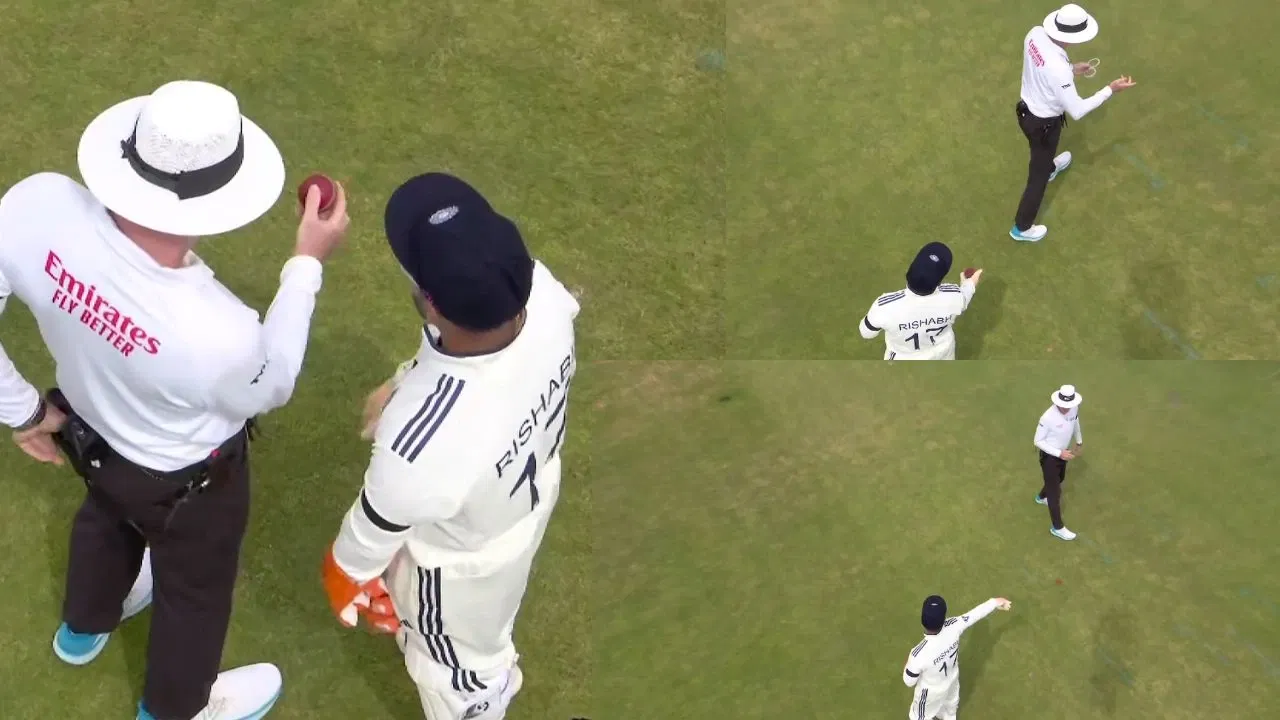
Rishabh Pant Receives Sanction for Breaching ICC Code of Conduct
Team India’s talented wicketkeeper-batter, Rishabh Pant, has found himself in hot water after breaching the ICC Code of Conduct during the ongoing first Test of the five-match series against England. The incident occurred during Team India’s second innings at Leeds on Monday, June 23, where Pant scored a brilliant 118 off 140 balls, which included 15 fours and three sixes. This impressive performance came after Pant had already scored 134 runs in the first innings, making him the first Indian wicketkeeper to achieve centuries in both innings of a Test match.
Article 2.8 Violation and Sanctions Imposed
On June 24, the ICC confirmed that Rishabh Pant had breached Article 2.8 of the ICC Code of Conduct by showing dissent to on-field umpire Chris Gaffaney regarding a ball change. As a result, Pant received one demerit point on his disciplinary record, which is his first offense in the last 24 months.
According to a statement from the ICC, “Pant was found to have breached Article 2.8 of the ICC Code of Conduct for Players and Player Support Personnel, which relates to showing dissent at an Umpire’s decision during an International Match.” The statement also added, “In addition to this, one demerit point has been added to Pant’s disciplinary record, for whom it was the first offense in 24 months.”
Rishabh Pant Accepts Sanctions
Rishabh Pant accepted the charges of dissent without contest and agreed to the penalty proposed by Richie Richardson, a member of the Emirates ICC Elite Panel of Match Referees. The ICC confirmed that there was no disciplinary hearing as Pant admitted to the offense and accepted the sanction.
The charges were brought in by the on-field umpires, Chris Gaffaney and Paul Reiffel, along with the third umpire Sharfuddoula Ibne Shahid and the fourth umpire, Mike Burns. Level 1 breaches carry a minimum penalty of an official reprimand, a maximum penalty of 50 per cent of a player’s match fee, and one or two demerit points.
On-Field Incident Leading to Sanctions
During the 61st over of England’s first innings, Rishabh Pant’s frustration boiled over after the on-field umpires declined the request to change the ball. With the English batsmen Harry Brook and Ben Stokes looking settled, Jasprit Bumrah had raised concerns about the ball’s condition after 60 overs.
Despite conducting a gauge test that found the ball within acceptable limits, Pant approached the umpires again after Brook hit a boundary. When the officials refused to authorize a ball change, Pant flung the ball to the ground in front of them. This incident occurred amidst growing frustration within the Indian camp as they struggled to make an impact with the old ball.
Overall, Rishabh Pant’s actions on the field have resulted in him receiving a demerit point and facing sanctions from the ICC. It serves as a reminder to all players to uphold the spirit of the game and respect the decisions made by match officials.
Impact of Rishabh Pant’s Behavior on Team Dynamics
Rishabh Pant’s breach of the ICC Code of Conduct not only has consequences for him individually but can also impact the team dynamics within the Indian cricket squad. Pant’s actions on the field could create a sense of unease or discord among his teammates, as his behavior reflects on the team as a whole. In high-stakes matches like the ongoing Test series against England, maintaining unity and discipline within the team is crucial for success.
It is imperative for players to handle their emotions and frustrations in a professional manner, especially in intense situations during a match. By accepting the sanctions and acknowledging his mistake, Rishabh Pant demonstrates accountability for his actions, which is a step towards rebuilding team harmony and trust.
Importance of Player Conduct in International Cricket
The incident involving Rishabh Pant underscores the significance of player conduct and adherence to the ICC Code of Conduct in international cricket. The rules and regulations set by the ICC are in place to uphold the integrity and spirit of the game, as well as to ensure fair play and respect among players, officials, and spectators.
Players are not only ambassadors for their respective teams but also for the sport of cricket as a whole. Their behavior on and off the field sets an example for aspiring cricketers and fans worldwide. By maintaining a high standard of conduct, players contribute to the positive image of cricket and uphold its values of sportsmanship and integrity.
Lessons Learned for Rishabh Pant
As a young and talented cricketer, Rishabh Pant can learn valuable lessons from this incident to further develop his maturity and professionalism. Handling pressure situations with composure, communicating effectively with teammates and officials, and accepting responsibility for his actions are essential aspects of a player’s growth both on and off the field.
By reflecting on his behavior and understanding the impact of his actions, Rishabh Pant can emerge from this incident as a stronger and more disciplined player. The experience of facing sanctions from the ICC serves as a learning opportunity for Pant to improve his decision-making and emotional control in future matches.
Conclusion
In conclusion, Rishabh Pant’s breach of the ICC Code of Conduct during the first Test against England highlights the importance of maintaining professionalism and respect in international cricket. While facing sanctions for his actions, Pant can use this experience as a stepping stone for personal growth and development as a cricketer.
Moving forward, it is crucial for all players to uphold the principles of fair play, sportsmanship, and integrity in the game of cricket. By demonstrating accountability, learning from mistakes, and striving for improvement, players like Rishabh Pant can continue to contribute positively to the sport and inspire the next generation of cricketers.
Latest News
Prithvi Shaw declares his mission to return to team India begins from IPL 2026
Irfan Pathan questions Arshdeep Singh’s bowling ahead of IPL 2026
“Mind is somewhere else”: Yuvraj’s Father exposes Abhishek Sharma’s indiscipline lifestyle

EX-RCB pacer joins KKR as replacement of Harshit Rana ahead of IPL 2026

“Win our first trophy”: Sanjiv Goenka crowns LSG as champions ahead of IPL 2026
New catching rule? Captains warned over ‘Incomplete’ catches ahead of IPL 2026
Pat Cummins in awe of Ishan Kishan’s captaincy

Ex-India star accuses teammates of ‘Racism’, blames it for early international exit
“I love watching Shreyas Iyer bat” – PBKS all-rounder Cooper Connolly ahead of IPL 2026
Yograj Singh gives Ravichandran Ashwin belt treatment because of Arjun Tendulkar remarks
CSK legend advises Shubman Gill the best way to bounce back in T20I team
Jasprit Bumrah Injury Scare, reason behind visit to CoE revealed
“Didn’t invite me”: R Ashwin puts Kuldeep Yadav in spotlight over wedding snub
Ireland Cricket announced the full list of central contracts for the 2026-27 season