Rohit Sharma’s vulnerability exposed by Aussie great as Shubman Gill’s captaincy move labelled “insurance policy”
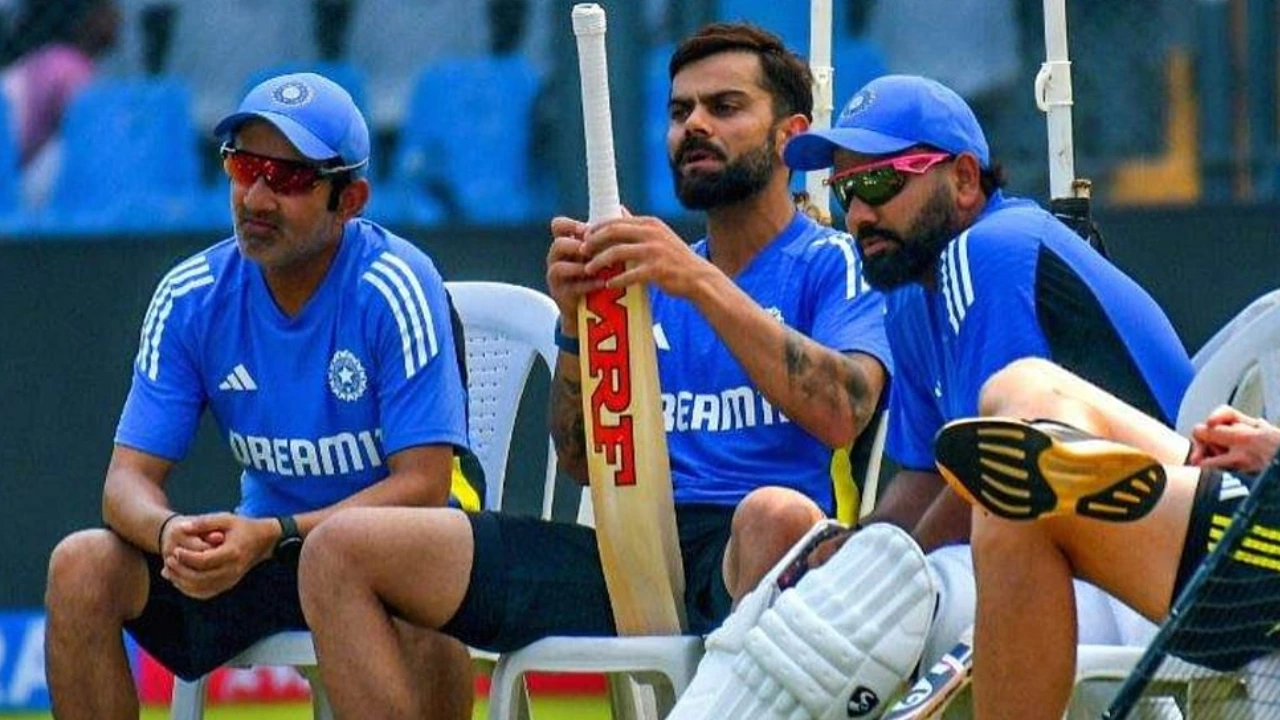
Australia Legend Matthew Hayden Weighs in on India’s Decision to Sack Rohit Sharma as ODI Captain
Former Australia National Cricket Team star, Matthew Hayden, has shared his thoughts on India’s surprising move to remove Rohit Sharma as the ODI captain and appoint Shubman Gill in his place. Hayden described the decision as an “interesting move” by the Board of Control for Cricket in India (BCCI).
Rohit Sharma’s Age Factor
Hayden speculated that Rohit Sharma’s removal as captain was likely due to his age, as he is 38 years old with a few years left before the next World Cup. Despite Rohit’s exceptional leadership skills and achievements, including back-to-back ICC trophies, the BCCI opted for a change in leadership with Shubman Gill taking over.
“After such a great win in the Champions Trophy, I suppose the selectors are purely looking at the numbers. At 38, with a couple of years to go before the World Cup, he becomes a bit vulnerable purely because of his age,” Hayden remarked.
Shubman Gill’s Ascension and Rohit Sharma’s Potential Role
According to Hayden, appointing Shubman Gill as the ODI captain could be seen as an “insurance policy” by the BCCI to groom the young talent for future leadership roles. He emphasized that having Rohit Sharma in the dressing room could benefit Gill’s learning curve as a leader.
“It would just be a bonus if Rohit makes it to the next World Cup. The talent and class are always on display, very similar to the Virat and Dhoni eras, lots of success,” Hayden stated.
Rohit Sharma and Virat Kohli as Mentors
Hayden highlighted the importance of having experienced players like Rohit Sharma and Virat Kohli as mentors in the Indian dressing room. He referred to them as invaluable assets who not only contribute on the field but also impart wisdom and guidance to the younger generation of players.
“Having Rohit in the house, having Virat in the house, that’s gold. They’re not just players; they’re mentors in the dugout. I hope it’s not their last [tour], but you can’t play forever, unfortunately,” Hayden expressed.
Looking Ahead to the 2027 World Cup
While acknowledging the transition in leadership within the Indian team, Hayden also pointed out that the focus for players like Rohit Sharma and Virat Kohli should be on preparing for the 2027 World Cup. He emphasized the importance of grooming future leaders like Shubman Gill while benefiting from the experience and expertise of senior players.
Overall, Matthew Hayden’s insights shed light on the strategic decisions made by the BCCI in reshaping the leadership dynamics within the Indian cricket team, aiming towards sustained success in the upcoming years.
Analysis of Rohit Sharma’s Captaincy
One aspect that could have influenced the BCCI’s decision to replace Rohit Sharma as the ODI captain is his record in major ICC tournaments. Despite his success in leading the team to victory in the Champions Trophy, Rohit Sharma’s captaincy in the 50-over World Cup has been under scrutiny. The BCCI may have felt the need for a fresh approach to leadership in ODI cricket to improve India’s chances in future tournaments.
Shubman Gill’s Leadership Qualities
Shubman Gill’s appointment as the ODI captain signifies the BCCI’s confidence in his leadership qualities and potential. As a young and talented player, Gill has already showcased his ability to perform under pressure and make crucial contributions to the team. By entrusting him with the captaincy, the BCCI is investing in the future of Indian cricket and grooming Gill to take on a more significant role in the team.
Hayden’s observation about Gill being an “insurance policy” suggests that the BCCI is thinking long-term and planning for succession in leadership. This strategic move could prove beneficial for India in the years to come, as Gill learns from experienced players like Rohit Sharma and Virat Kohli to develop his captaincy skills.
The Evolution of Team Dynamics
With the changing of the guard in leadership, the dynamics within the Indian cricket team are likely to undergo a transformation. The presence of senior players like Rohit Sharma and Virat Kohli as mentors can help create a harmonious transition and ensure continuity in teamwork and performance. Their guidance and experience will be invaluable in shaping the next generation of Indian cricketers.
2027 World Cup Preparations
Looking ahead to the 2027 World Cup, the BCCI’s decision to introduce new leadership could be part of a broader strategy to build a competitive team for the tournament. By focusing on grooming young leaders like Shubman Gill and providing them with exposure and guidance from seasoned players, India aims to be well-prepared for future international competitions.
Overall, Matthew Hayden’s insights offer a nuanced perspective on the implications of India’s decision to replace Rohit Sharma as the ODI captain. The move reflects a strategic approach towards team development and long-term success, highlighting the importance of balancing experience with youth in shaping the future of Indian cricket.
Latest News
Mohsin Naqvi totally angry and stressed as PSL 2026 controversies escalate
Mohsin Naqvi saves Naseem Shah from two-year ban, shocking claim emerges after controversy
Michael Vaughan claims Vaibhav Sooryavanshi’s India call-up for England tour is confirmed
Ravindra Jadeja’s teary-eyed reaction goes viral after RR demolish CSK in IPL 2026 clash
New Zealand ODI and T20I squads for Bangladesh tour officially announced
Naseem Shah breaks silence on PCB punishment, issues public apology following massive controversy
Australia coach drops big hint on Cameron Green’s Test future amid IPL 2026 drama
Ajit Agarkar told to fast-track Vaibhav Sooryavanshi into Indian Team
CSK declared useless without MS Dhoni by Ex-England captain
Shocking! Fakhar Zaman tampered with ball vs USA in T20 World Cup, ICC did not act
“Don’t get banned”: Digvesh Rathi reveals Sanjiv Goenka and Rishabh Pant’s warning over fiery celebrations
MS vs HYDK Match Prediction, Pitch & Weather Report, Playing XIs, Head-to-Head, Free Live Streaming – PSL 2026 Match 8
ISU vs PSZ Match Prediction, Pitch & Weather Report, Playing XIs, Head-to-Head, Free Live Streaming – PSL 2026 Match 7
Ravindra Jadeja breaks silence on fiery send-off to Shivam Dube in RR vs CSK IPL 2026 clash