Salman Ali Agha was NOT OUT? MCC breaks silence on run-out controversy involving Mehidy Hasan Miraz
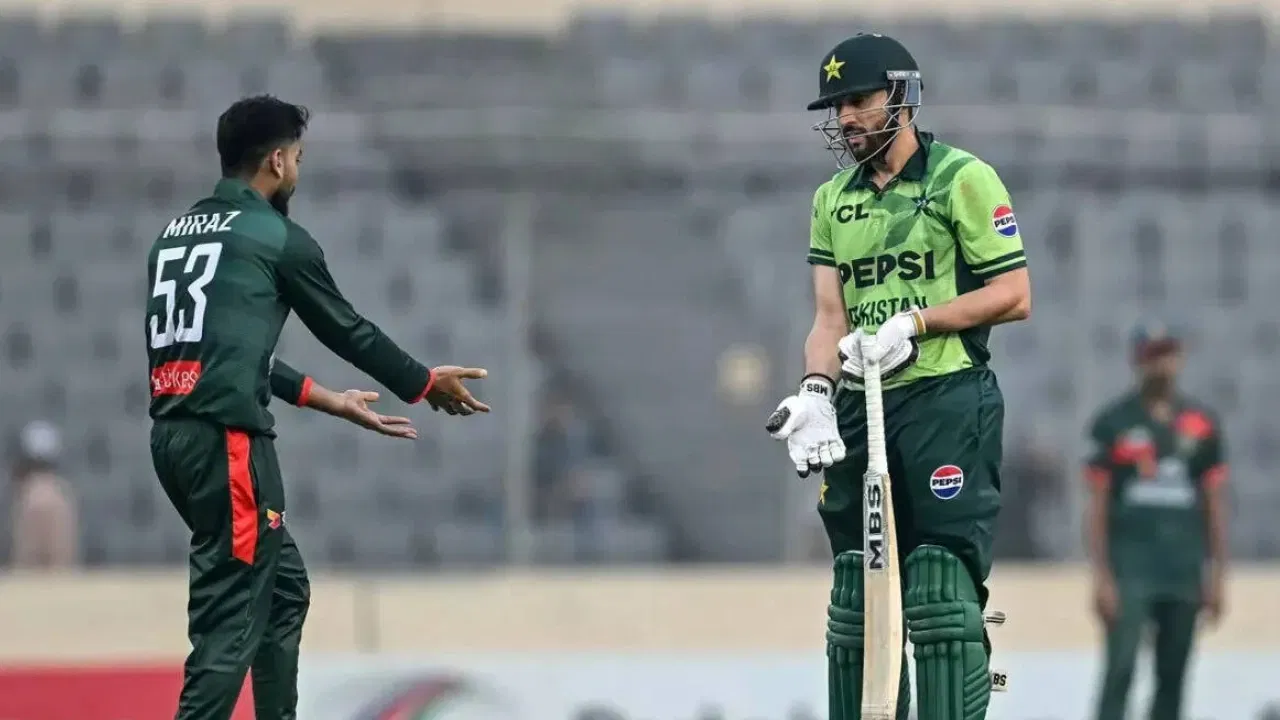
**MCC Weighs In on Controversial Run-Out Incident Involving Salman Ali Agha**
The recently concluded Bangladesh vs Pakistan three-match ODI series had its fair share of drama and excitement, with the hosts ultimately emerging victorious with a 2-1 series win over an inexperienced Pakistani side. However, one incident that caught everyone’s attention was the controversial run-out of Salman Ali Agha in the second ODI.
**The Controversial Run-Out Incident**
In the second ODI between Bangladesh and Pakistan, a contentious incident unfolded involving Salman Ali Agha and Mehidy Hasan Miraz. During the match, after a delivery by Miraz, Pakistani batsman Mohammad Rizwan hit the ball to mid-on. As Rizwan attempted to stop the ball, he collided with non-striker Salman Ali Agha, who was some distance away from the crease. Agha, in an attempt to stop the ball and pick it up, found himself at the receiving end of a run-out.
The decision to declare Agha run out left the Pakistani batter visibly furious, with gestures and remarks that caught the attention of the International Cricket Council (ICC). Agha was subsequently reprimanded for his actions during the incident.
**MCC’s Perspective on the Run-Out**
In the aftermath of the controversial run-out, the Marylebone Cricket Club (MCC), the custodians of cricket’s laws, released a statement shedding light on the incident. According to the MCC, the umpires made the correct decision based on the laws of the game.
Under the laws of cricket, the non-striker was clearly out of his ground when the wicket was broken, and the ball was in play. The MCC emphasized that no batter should attempt to pick the ball up without the fielding side’s consent, as it could result in obstructing the field dismissal.
**New Laws Introduced by MCC**
Additionally, the MCC discussed the introduction of new laws set to take effect in October. According to the MCC, under the new laws, only the on-field umpire will have the authority to determine if and when the ball is finally settled.
The MCC clarified that in situations where a fielder is attempting to run the non-striker out while the ball is still in play, there is no case to be made that the incident should not be considered out under the law.
**Conclusion**
The controversial run-out incident involving Salman Ali Agha during the Bangladesh vs Pakistan ODI series sparked debates and discussions among cricket fans and experts. While the decision to declare Agha run out was deemed correct by the MCC, the incident highlighted the need for clarity and understanding of the laws of the game among players and officials.
As cricket continues to evolve, it is essential for all stakeholders to stay informed about the rules and regulations governing the sport to ensure fair play and sportsmanship on the field.
**Analysis of the Controversial Run-Out Incident**
The run-out incident involving Salman Ali Agha during the Bangladesh vs Pakistan ODI series served as a reminder of the intricacies and nuances of the laws of cricket. While the decision was met with mixed reactions from fans and players alike, it underscored the importance of understanding the rules to prevent similar controversies in the future.
In cricket, run-out incidents can often be contentious, especially when they involve collisions between players or actions that may be perceived as unsportsmanlike. The role of the MCC in clarifying the laws and providing guidance on such incidents is crucial in maintaining the integrity and spirit of the game.
**Impact of Technology on Umpiring Decisions**
With advancements in technology, cricket has seen an increase in the use of tools such as the Decision Review System (DRS) to aid umpires in making accurate decisions. However, the run-out incident in question highlighted the limitations of technology in certain situations where the laws of the game come into play.
While technology can assist in determining factors like lbw or caught behind, run-out decisions often require a clear interpretation of the laws by the on-field umpires. This emphasizes the need for umpires to have a deep understanding of the rules and the ability to make quick and decisive judgments on the field.
**Fair Play and Sportsmanship in Cricket**
The incident involving Salman Ali Agha also brings to light the broader issue of fair play and sportsmanship in cricket. While the game is competitive by nature, it is essential for players to uphold the spirit of cricket and respect the laws that govern it.
Players must be aware of their responsibilities on the field, including refraining from actions that could be deemed as obstructing the field or deliberately interfering with play. Clear communication between players, umpires, and officials is key to avoiding misunderstandings and contentious situations like the run-out incident in the Bangladesh vs Pakistan series.
**Looking Ahead: The Evolution of Cricket Rules**
As cricket continues to evolve, so do the rules and regulations that govern the game. The introduction of new laws by the MCC is a testament to the ongoing efforts to clarify and adapt to the changing dynamics of modern cricket.
Players, coaches, and officials must stay abreast of these developments to ensure a smooth and fair playing experience for all involved. By understanding and following the rules, cricket can maintain its status as a gentleman’s game while embracing innovation and progress in the sport.
In conclusion, the controversial run-out incident involving Salman Ali Agha served as a learning opportunity for all stakeholders in cricket. By promoting a deeper understanding of the laws, fostering fair play, and embracing technological advancements judiciously, the sport can continue to thrive and captivate audiences worldwide.
Latest News
MS Dhoni without No.7 jersey in IPL 2026? Official Facebook post triggers chaos

Virat Kohli labelled ‘torchbearer of Test cricket’ as Gautam Gambhir’s reality exposed by R Ashwin

AB de Villiers betrays Virat Kohli and Chris Gayle while naming all time best T20 player
Shocking! Marnus Labuschagne officially named Hyderabad captain ahead of 2026 season
“Very important player for RR” – Ex-CSK player backs Ravindra Jadeja ahead of IPL 2026
IPL 2026 Injury Updates Live: Full List of Injured Players, Replacements and Latest News
Salman Ali Agha was NOT OUT? MCC breaks silence on run-out controversy involving Mehidy Hasan Miraz

Liam Livingstone exposes Rob Key, Brendon McCullum over communication breakdown and cold treatment
Bangladesh cricket to be banned? Government intervention sparks total chaos
“I was asking for help…” – Liam Livingstone reveals frustration with England setup after CT 2025
CSK go full attack mode on Kavya Maran’s Sun TV after shocking court drama before IPL 2026
Josh Hazlewood, Pat Cummins out of IPL 2026; Australia stars rattled by Pakistan security concerns before PSL
After Liam Livingstone, Tabraiz Shamsi detonates brutal allegations against BCCI, CSA & global boards

Yuzvendra Chahal reignites Dhanashree Verma controversy, drags Kuldeep Yadav-Vanshika Chadha marriage into spotlight