Sana Mir deliberately brought Azad Kashmir on Mohsin Naqvi’s instructions
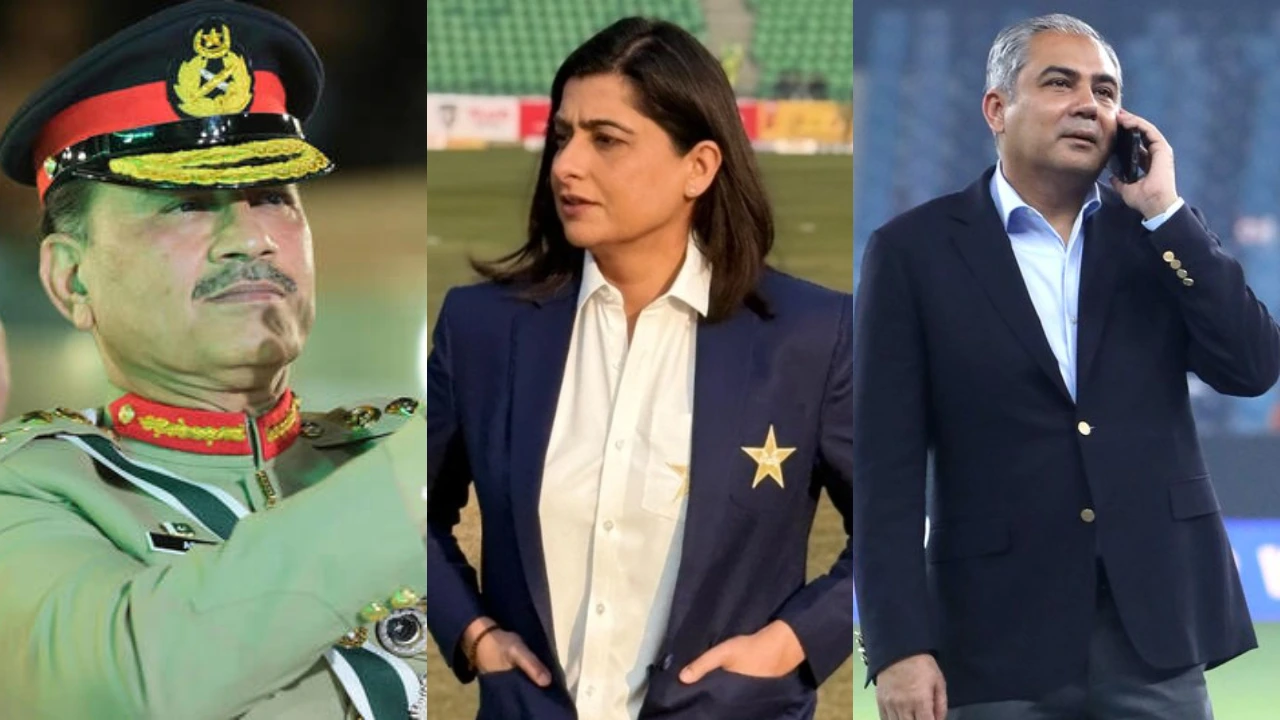
Controversy Erupts in ICC Women’s World Cup 2025: Sana Mir’s “Azad Kashmir” Remark Sparks Tensions
Just days after the intense Asia Cup 2025, which was marked by soaring tensions between India and Pakistan, another controversy has erupted in the ongoing ICC Women’s World Cup 2025. The former Pakistan women’s captain, Sana Mir, has further escalated tensions with her recent on-air comment referencing “Azad Kashmir.”
Sana Mir’s Provocative Remark
During Pakistan’s match against Bangladesh in Colombo, Sana Mir made a controversial statement referring to batter Natalia Pervaiz’s hometown as “Azad Kashmir.” This remark has not only reignited the longstanding tensions between India and Pakistan but has also garnered significant attention and criticism from various quarters.
Sana Mir stated during the broadcast, “A lot of these players are new; Natalia comes from Kashmir… Azad Kashmir, but has played most of her cricket in Lahore.” Notably, Natalia Pervaiz hails from Bandala in Pakistan-occupied Kashmir (PoK).
Escalating India-Pakistan Relations
The timing of Sana Mir’s comment is particularly sensitive given the recent Pahalgam attack on April 22, which claimed 26 lives and led India to respond with Operation Sindoor. With border tensions still running high, Mir’s statement has only added to the existing unease between the two nations.
There are speculations that Sana Mir may have been compelled to make the “Azad Kashmir” remark on live TV under pressure from the Pakistan Cricket Board (PCB) chief, Mohsin Naqvi. The Board of Control for Cricket in India (BCCI) is yet to respond to this latest development influenced by Naqvi.
BCCI’s Directive to Indian Women’s Team
Following Sana Mir’s controversial comment and amidst rising tensions, the BCCI has issued instructions to the Indian women’s cricket team to refrain from engaging with the Pakistan women’s team during their upcoming clash in the ICC Women’s World Cup 2025 on October 5 at the R. Premadasa International Cricket Stadium in Colombo.
As per reports by journalist Rohit Juglan, the Indian players have been directed to adopt a similar approach to the men’s team during the Asia Cup 2025, avoiding all on-field and off-field interactions with the Pakistani players. Additionally, Pakistan’s national teams have allegedly been instructed to take provocative actions against India at any level of competition.
Asim Munir’s Role in Escalating Tensions
The escalating tensions in the cricketing arena have been attributed to Pakistan Army Chief General Asim Munir, who is believed to be driving provocative actions against India. Munir’s influence has reportedly led to heightened pressure on PCB chief Mohsin Naqvi to carry out actions that have stoked controversy in recent times.
Despite the escalating drama, Pakistan Prime Minister Shahbaz Sharif is said to not be directly involved in these actions. It is Asim Munir who is allegedly instigating maneuvers to provoke India, as revealed by journalist Rohit Juglan on his YouTube channel.
As the ICC Women’s World Cup 2025 progresses, all eyes will be on how the situation unfolds during the highly anticipated India-Pakistan match on October 5, with tensions running high and controversies continuing to grab headlines.
The Impact of Political Tensions on Cricket
Cricket has often been a battleground for political tensions between India and Pakistan. The longstanding animosity between the two nations has spilled over into the realm of sports, with players and officials often finding themselves at the center of controversies. The recent incident involving Sana Mir’s “Azad Kashmir” remark is just another example of how political issues can infiltrate the world of cricket, creating rifts and sparking debates.
While sports are meant to promote unity and camaraderie, they can sometimes become a reflection of broader geopolitical conflicts. The ICC Women’s World Cup 2025 has now become a stage where the tensions between India and Pakistan are playing out, putting the spotlight on the complex relationship between the two nations.
The Role of Social Media in Fueling Controversy
Social media has played a significant role in amplifying the controversies surrounding the ICC Women’s World Cup 2025. Sana Mir’s comment quickly went viral, sparking heated discussions and debates online. Fans from both countries have taken to social media platforms to express their opinions, further fueling the tensions and adding another layer of complexity to the situation.
Moreover, journalists and influencers have been actively sharing their insights and analyses on various online platforms, shaping public perception and influencing the narrative around the controversy. This digital landscape has added a new dimension to the way in which such incidents are perceived and discussed, highlighting the power of social media in shaping public discourse.
The Need for Diplomacy in Sports
As tensions continue to escalate in the lead-up to the India-Pakistan match in the ICC Women’s World Cup 2025, there is a growing need for diplomacy and tact in handling the situation. Sports have the potential to bridge divides and foster understanding between nations, and it is crucial for authorities and players to recognize the role they play in promoting peace and harmony through the spirit of sportsmanship.
Both the Indian and Pakistani cricket boards, as well as the players themselves, have a responsibility to uphold the values of sportsmanship and respect, even in the face of heated rivalries and political tensions. By approaching the game with a sense of maturity and diplomacy, they can set an example for the world and demonstrate that sports can transcend boundaries and bring people together.
Looking Ahead: The Future of Cricket Diplomacy
As the ICC Women’s World Cup 2025 unfolds, it is essential for all stakeholders to reflect on the role of cricket in diplomatic relations between India and Pakistan. While the current tensions may cast a shadow over the upcoming match, there is also an opportunity to use sports as a tool for reconciliation and dialogue.
By promoting mutual respect, understanding, and fair play, both teams can showcase the positive impact of sports on fostering positive relations between nations. The cricketing community, fans, and officials alike can contribute to building bridges and promoting peace through the spirit of the game, setting an example for future generations and reinforcing the power of sports in transcending political differences.
Latest News
Shubman Gill out? Virat Kohli’s Test comeback as captain suggested by CSK legend
Jason Gillespie gives major update on Glenn Maxwell’s availability for PSL 2026
‘I’m a big fan but…’: Ravichandran Ashwin criticises Abhishek Sharma after failure vs RCB.
LHQ vs KRK Match Prediction, Pitch & Weather Report, Playing XIs, Head-to-Head, Free Live Streaming – PSL 2026 Match 6
IPL teams on alert!: Sri Lanka fitness crisis sees almost 50% players fail tests
Ben Duckett in trouble? Sunil Gavaskar pushes BCCI for tougher punishment
MS Dhoni faking injury? Michael Vaughan suspects ‘strategic manoeuvre’ in CSK camp for IPL 2026
KKR coach criticises Impact Player rule, provides huge Matheesha Pathirana update
Sam Curran reveals private chat with Brendon McCullum after England axing
Ravichandran Ashwin brutally teased by Virender Sehwag on IPL 2026 debut
Virat Kohli’s ego under spotlight! Ex-KKR star makes bold claim after heroics vs SRH
Jay Shah rises to No. 22 among most powerful people in India in 2026; Virat Kohli, Gautam Gambhir included

SRH suffer huge blow! Daniel Vettori confirms another overseas pacer injured amid crisis
IPL Points Table 2026: Updated Standings, Orange Cap, Purple Cap After RCB vs SRH Match 1