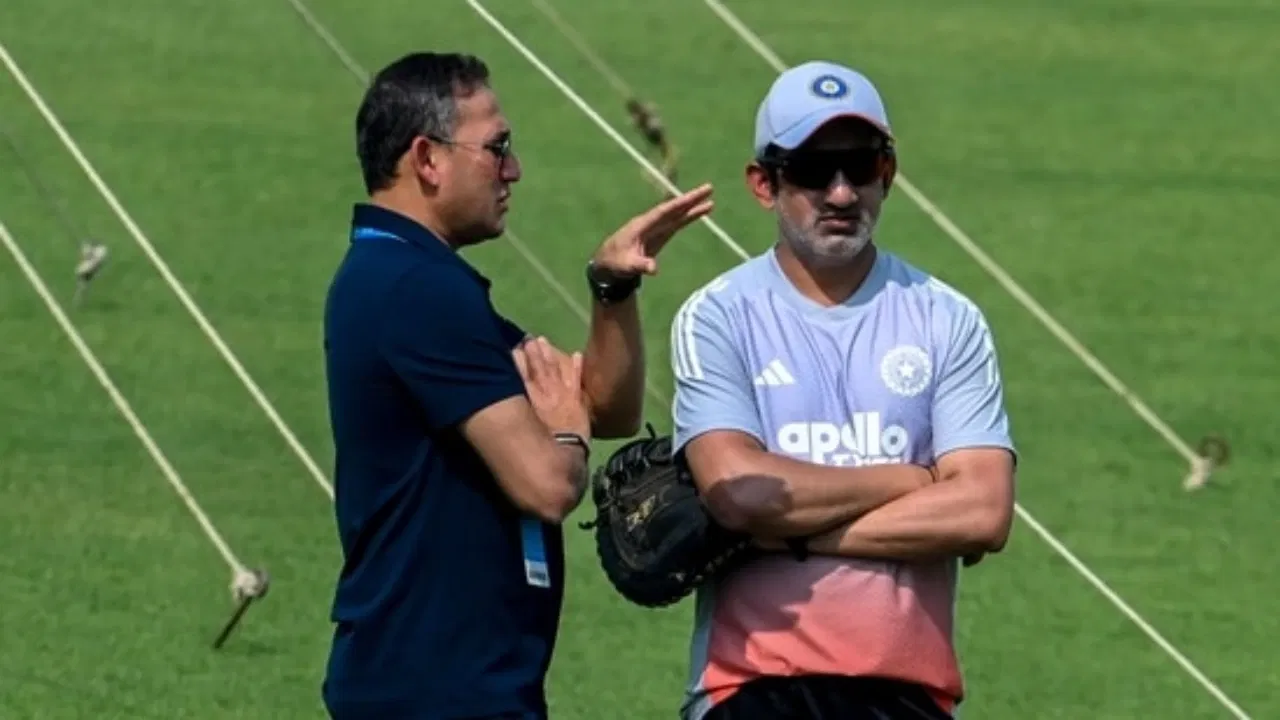
Suryakumar Yadav faces religious controversy after T20 WC win as ‘Mohammed Siraj mosque’ claim emerges
Former Cricketer Criticizes Team India’s Celebrations After T20 World Cup Victory
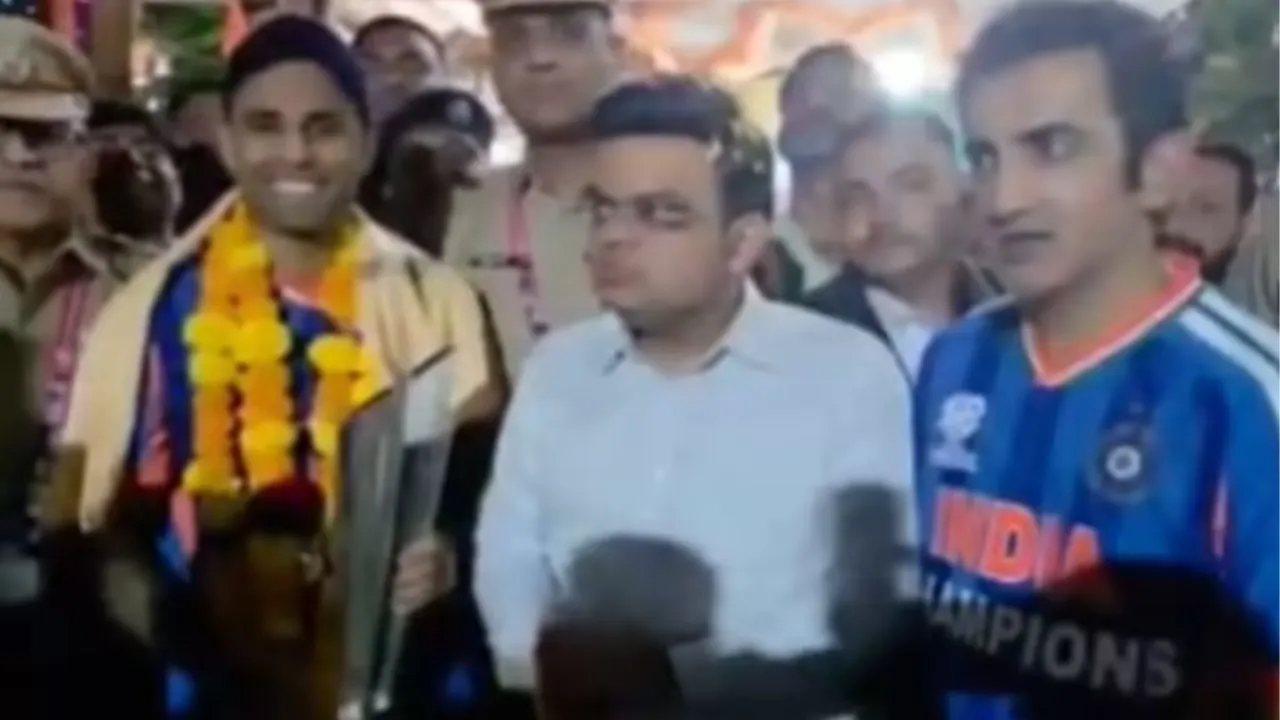
Former Indian cricketer Kirti Azad has openly criticized Team India’s recent celebrations following their historic T20 World Cup 2026 victory. Azad, who is currently a Trinamool Congress MP, slammed the team’s captain Suryakumar Yadav, head coach Gautam Gambhir, and ICC chairman Jay Shah for their visit to a Hindu temple in Ahmedabad with the trophy.
Controversial Post-Match Visit to Temple
India made history by securing a record-breaking third T20 World Cup title after defeating New Zealand by 96 runs at the Narendra Modi Stadium. After winning the final on March 8, captain Suryakumar Yadav and head coach Gautam Gambhir visited the Hanuman Tekri Temple to offer special prayers with the trophy.
Kirti Azad questioned this specific religious celebration and raised concerns about why the trophy was not taken to a mosque, church, or gurdwara to represent the diverse faiths in the nation. He emphasized that the victory belongs to all 1.4 billion Indians, regardless of their religion.
Emphasis on Unity and National Pride
Azad reminisced about the 1983 World Cup-winning squad under Kapil Dev, which included players from various religions. He highlighted how they celebrated by dedicating the trophy solely to their motherland without any religious bias. Azad expressed disappointment that the current team did not follow a similar inclusive approach.
He stressed that the Indian cricket team represents the entire nation and should not single out one religion in their celebrations. Azad’s comments sparked a debate on social media, with many echoing his sentiments about promoting unity and diversity in celebrations of national achievements.
Record-Breaking Victory and Individual Performances
Under Suryakumar Yadav’s leadership, Team India became the first-ever team to defend the T20 World Cup title and the first to win it at home. Their victory marked their third T20 World Cup title, setting a record for the most trophies in the history of the tournament.
Suryakumar Yadav’s emotional gesture on the pitch, where he smeared soil on his forehead to celebrate the triumph, resonated with fans. The team’s outstanding performance saw them post a massive total of 255 runs in the final, the highest ever in a T20 World Cup final.
Individual performances by players like Sanju Samson, who scored 89 runs off 46 balls, and bowlers Jasprit Bumrah and Axar Patel, who claimed four and three wickets respectively, were instrumental in Team India’s success.
Overall, the T20 World Cup 2026 victory was a momentous occasion for Indian cricket, although it was marred by controversies surrounding the team’s post-match celebrations. As the nation celebrates this historic win, calls for inclusivity and unity in celebrating national achievements have resonated with many fans and supporters.
Importance of Representation in Celebrations
Representation and inclusivity are crucial factors in national celebrations, especially in a diverse country like India. While religious beliefs hold immense significance for many individuals, it is equally important to ensure that celebrations of national achievements are inclusive and representative of the country’s pluralistic society. By showcasing unity and diversity in their celebrations, the Indian cricket team has the opportunity to set a positive example for fans and the younger generation.
Cultural Sensitivity and Awareness
The controversy surrounding Team India’s post-match visit to a Hindu temple underscores the importance of cultural sensitivity and awareness among public figures and role models. In a multicultural society, it is essential for individuals in the public eye to be mindful of their actions and celebrations to avoid inadvertently excluding or alienating certain groups. By acknowledging and respecting the diversity of beliefs within the nation, public figures can foster a sense of unity and inclusivity.
Impact of Social Media and Public Perception
In today’s digital age, social media plays a significant role in shaping public opinion and perception. The backlash faced by Team India following their visit to the temple highlights how actions can quickly spark debates and discussions online. Public figures need to be aware of the potential impact of their actions on social media and strive to uphold values of inclusivity and unity to resonate positively with their audience.
Celebrating Achievements Through a National Lens
When celebrating national achievements, it is important to focus on the collective success and unity of the nation rather than individual affiliations or beliefs. By emphasizing the shared pride and joy of all citizens, celebrations can become a unifying force that brings people together across different backgrounds. Team India has the opportunity to revisit their approach to celebrations and adopt a more inclusive and nationalistic stance moving forward.
Looking Towards the Future
As Team India reflects on their historic T20 World Cup victory, they have the chance to learn from the recent controversy and set new standards for celebrating national achievements. By embracing inclusivity, diversity, and unity in their post-match celebrations, the team can inspire fans and supporters while fostering a sense of belonging and pride among all Indians. Moving forward, prioritizing national unity and representation in celebrations can help strengthen the bond between the team and the diverse population they represent.
In conclusion, while celebrations are a natural part of sporting victories, it is essential to approach them with sensitivity, inclusivity, and a national perspective. By recognizing and acknowledging the diversity of beliefs and backgrounds within the nation, public figures like Team India can set a positive example for fans and inspire a sense of unity and pride that transcends religious boundaries. As the nation continues to bask in the glory of Team India’s T20 World Cup triumph, the focus on unity, inclusivity, and representation in celebrations remains paramount.
Latest News
NO Hardik Pandya or Ishan Kishan, ICC T20 World Cup 2026’s best XI has these three Indians
India cricketer, who ended Virat Kohli-Gautam Gambhir fight, accused of dowry harassment and assault
Suryakumar Yadav faces religious controversy after T20 WC win as ‘Mohammed Siraj mosque’ claim emerges
Sri Lanka appoint World Cup winning head coach as Sanath Jayasuriya’s replacement

Sanju Samson partners with Pakistan opener in ICC Men’s T20 World Cup 2026 Team of the Tournament
Abhishek Sharma termed as next ‘Virat Kohli’ after sensational innings in T20 World Cup final

He can win you the game-Gautam Gambhir makes honest admission on Sanju Samson’s T20 WC performance
NOT Sahibzada Farhan! Multan Sultans appoint Australia all-rounder as new captain for PSL 2026
Not Jasprit Bumrah or Sanju Samson! Kris Srikkanth names India’s real hero after India’s dominant win in T20 WC final
Ex-India captain highlights Sanju Samson’s similarity with MS Dhoni
‘He was not performing’: Ex-India captain questions Sanju Samson’s T20WC performances
Mohammad Amir breaks silence after Abhishek Sharma slaps him in the face with T20 WC final heroics
24-year-old Pakistan cricketer announces retirement after T20 World Cup 2026 disaster
Yuvraj Singh pressure? Gautam Gambhir reveals why Abhishek Sharma wasn’t dropped despite horrible form