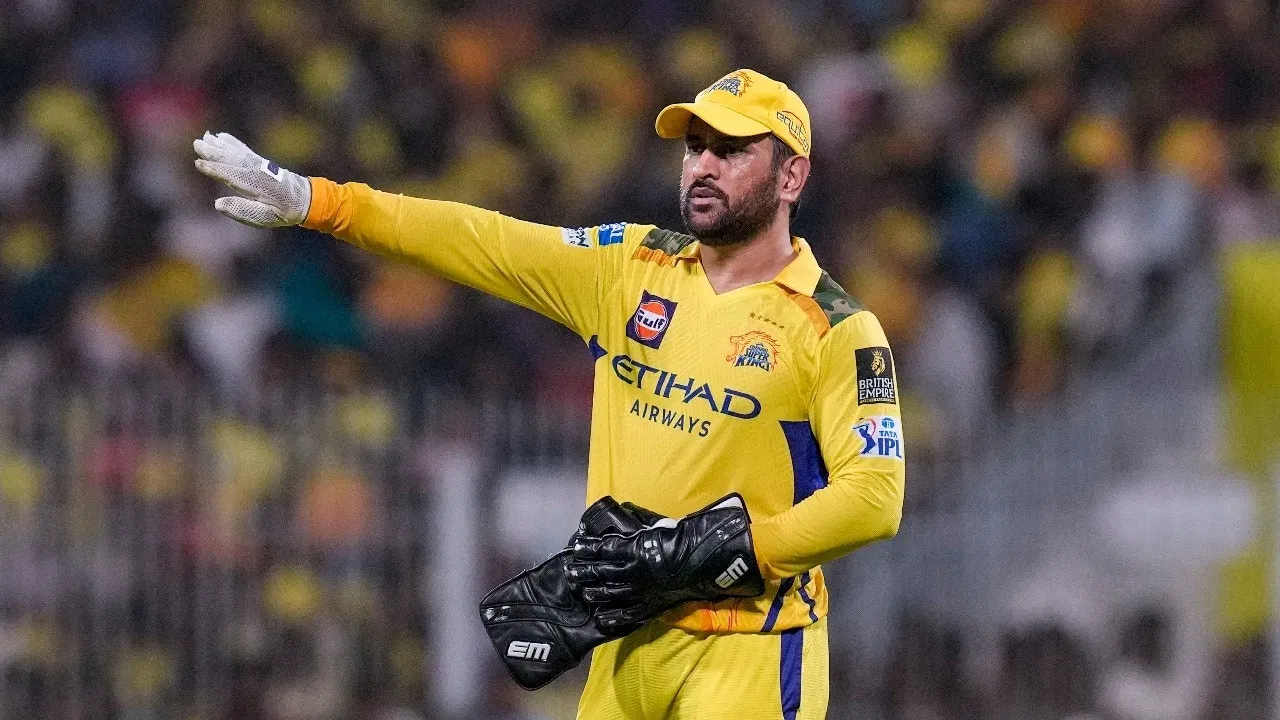
Virat Kohli dragged unnecessarily in the Shaheen Afridi-Matthew Breetzke fight in Pakistan
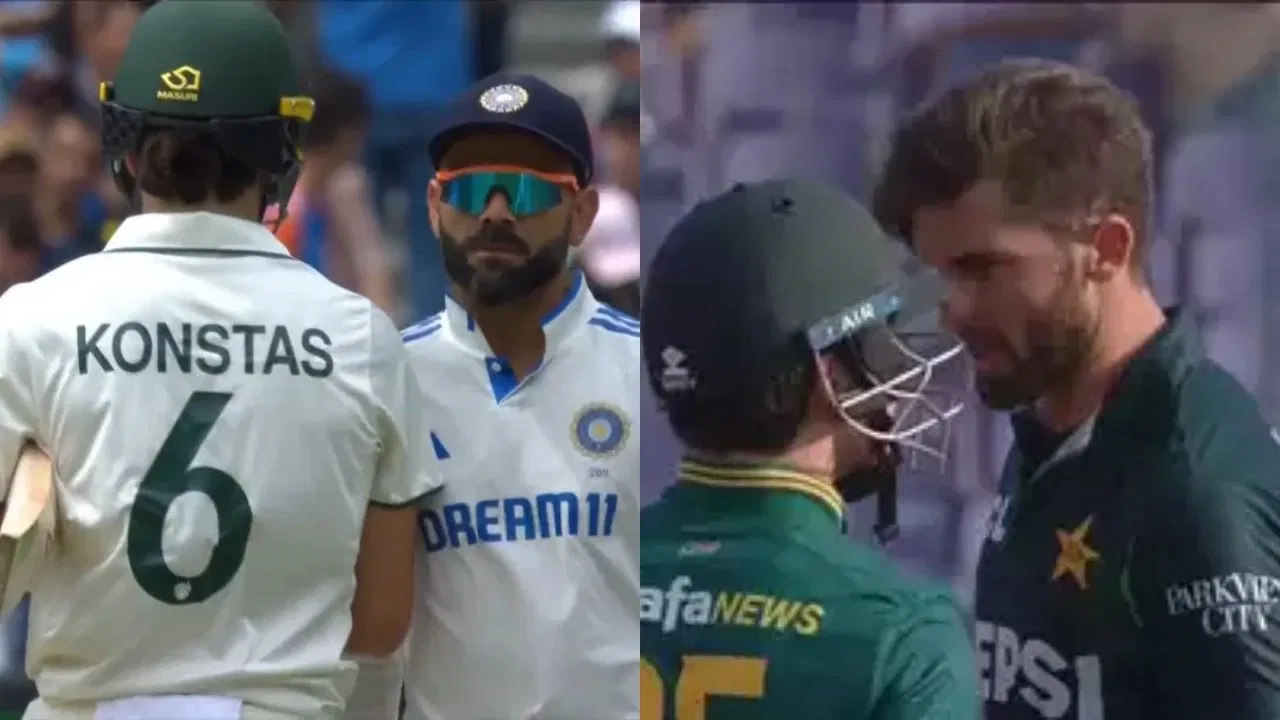
Sparks Fly Between Shaheen Afridi and Matthew Breetzke During Tri-Series Match
Former New Zealand fast bowler Danny Morrison recently witnessed a heated altercation between Shaheen Afridi and Matthew Breetzke during a tri-series game between Pakistan and South Africa, reminding him of a similar incident involving Virat Kohli and Sam Konstas during the Border-Gavaskar Trophy.
The Incident Details
The match between Pakistan and South Africa took an unexpected turn during the 28th over of South Africa’s innings when Matthew Breetzke, after a mishit, swung his bat unusually. This action didn’t sit well with bowler Shaheen Afridi, leading to a heated exchange of words between the two players. The tension escalated when Afridi deliberately stood in Breetzke’s path as he tried to take a single, resulting in a physical altercation. Both players had to be separated by the umpire and their teammates as the situation intensified.
Commenting on the incident, Danny Morrison criticized Shaheen Afridi for his actions, labeling them as unnecessary and “dumb.” He drew parallels to the incident between Kohli and Konstas during the Border-Gavaskar Trophy, emphasizing the need for sportsmanship and fair play on the field. Morrison highlighted that Breetzke attempted to avoid the confrontation, but Afridi persisted in inciting further conflict.
Recalling the Kohli-Konstas Incident
The altercation between Virat Kohli and Sam Konstas during the Border-Gavaskar Trophy occurred during the fourth Test match. Kohli and Konstas engaged in a shoulder barge and exchanged words, prompting intervention from the umpire and other players to diffuse the situation. Kohli was later fined and penalized with a demerit point for his involvement in the incident.
Controversy Continues
As tensions rise on the cricket field, it is essential for players to maintain composure and respect towards their opponents. Instances like the ones between Shaheen Afridi-Matthew Breetzke and Kohli-Konstas serve as reminders of the importance of sportsmanship in the game. The cricketing world is closely watching how such confrontations are managed and addressed to uphold the spirit of the sport.
As the tri-series progresses, fans and analysts alike are eager to see how teams navigate challenges both on and off the field. The spotlight remains on players’ behavior and the disciplinary actions taken to ensure fair play and mutual respect in cricket matches.
Stay tuned for more updates on the tri-series as the competition heats up and the players strive to showcase their skills while upholding the values of sportsmanship and integrity.
Analysis of Player Behavior in Cricket
Instances of heated altercations and conflicts between players on the cricket field are not uncommon. Emotions run high during intense matches, leading to confrontations that can sometimes escalate beyond words. While the competitive spirit is essential in sports, maintaining respect for opponents and adhering to the principles of fair play are equally crucial.
Shaheen Afridi’s confrontation with Matthew Breetzke and the comparison drawn by Danny Morrison to the incident involving Virat Kohli shed light on the importance of managing emotions on the field. Players are not only representing themselves but also their teams and countries, making it imperative to uphold the values of sportsmanship at all times.
Impact of Predictions on Player Behavior
One factor that can influence player behavior during matches is the pressure of performance expectations and predictions. When players are under scrutiny to deliver results, the stress can lead to heightened emotions and reactions in high-stakes situations. The need to meet or exceed predictions can create additional tension on the field, potentially fueling confrontations like the one between Afridi and Breetzke.
Understanding the impact of predictions on player behavior can provide insights into managing conflicts and promoting a culture of respect in cricket. Coaches, mentors, and team management play a significant role in guiding players to handle pressure effectively and maintain composure in challenging moments.
Learning from Past Incidents
Reflecting on past incidents, such as the clash between Kohli and Konstas, can serve as valuable lessons for current players and future generations. Recognizing the consequences of allowing emotions to dictate actions on the field can help players make better decisions in similar circumstances. By learning from history, players can strive to avoid unnecessary conflicts and focus on their performance and sportsmanship.
Cricket authorities and governing bodies also play a vital role in setting standards for player conduct and enforcing disciplinary measures when required. Consistent enforcement of rules and regulations helps maintain the integrity of the game and ensures that players are held accountable for their actions, regardless of their status or reputation.
Looking Ahead
As the tri-series continues and more matches unfold, the spotlight will remain on player behavior and interactions on the field. Fans, analysts, and cricket enthusiasts will be watching closely to see how players handle pressure, manage conflicts, and demonstrate sportsmanship in competitive settings.
By emphasizing the importance of respect, integrity, and fair play, players can contribute to a positive and inclusive cricketing environment that celebrates skill, teamwork, and mutual respect. As the competition progresses, the focus should not only be on the outcomes of matches but also on the conduct and character displayed by the players representing their respective teams.
Stay engaged with the ongoing tri-series to witness the evolution of player dynamics and the impact of sportsmanship on the game of cricket. As players strive to excel on the field, let us also champion the values of respect, discipline, and integrity that define the spirit of cricket.
Latest News
NZ vs SA 5th T20I Preview: Free Live Streaming, Pitch & Weather Report, Head-to-Head | South Africa tour of New Zealand 2026
NZ vs SA Match Prediction – Who Will Win 5th T20I? | South Africa tour of New Zealand 2026
New Zealand Playing XI vs South Africa Playing XI – 5th T20I | South Africa tour of New Zealand 2026
PBKS spinner calls Virat Kohli his idol, makes bold dismissal claim ahead of IPL 2026

“Not stupid”: Adam Gilchrist, Mark Waugh break silence on ECB not sacking Brendon McCullum
Revealed: Why RCB players will wear black armbands and No.11 jersey in IPL 2026?
RCB boss breaks silence on Josh Hazlewood’s IPL 2026 status, drops big remark on Venkatesh Iyer
Rajasthan Royals sold! Kal Somani’s $1.63 billion deal backed by Walmart and Ford powerhouses
‘I’m not carrying that baggage, but Virat Kohli…’: RCB boss makes huge statement ahead of IPL 2026
MS Dhoni set to return as CSK captain for his last IPL season?
‘Rohit Sharma is good enough to be part of Indian T20I team’: MS Dhoni’s ex-teammate’s big remark
3 RCB players who could struggle in IPL 2026 – ft Venkatesh Iyer
3 RCB players who could struggle in IPL 2026 – ft Venkatesh Iyer
3 MI players who could struggle in IPL 2026 – ft Rohit Sharma