“You kind of pity the person…”: Michael Atherton hails Virat Kohli but warns India about No.4 crisis
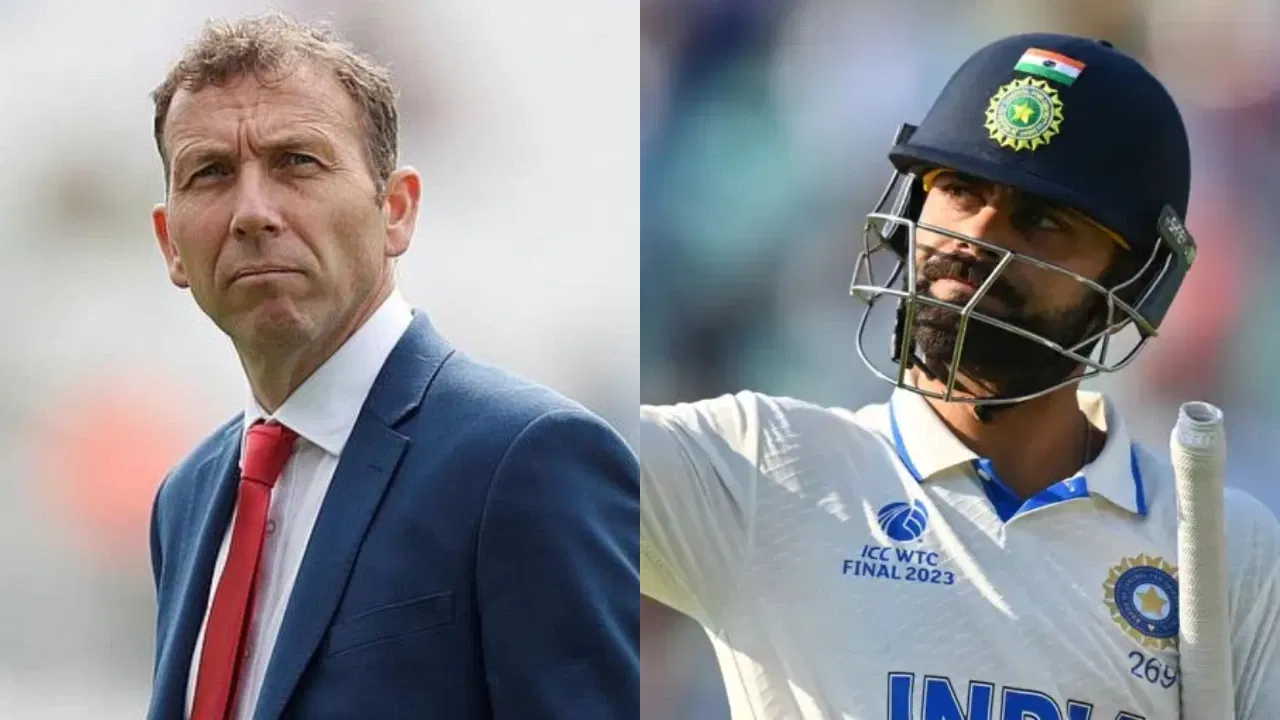
India’s Test Team Faces Major Transition as No. 4 Position Opens Up
India’s Test Team Transition
India’s Test team is currently in the midst of one of its most significant transitions in history as the long-standing No. 4 position is now wide open. For almost three decades, this crucial spot was held by two cricketing legends, Sachin Tendulkar and Virat Kohli. Together, they amassed an impressive 25,151 runs and 81 centuries while batting at No. 4 in Tests.
However, with Kohli’s recent retirement from the longest format of the game, India is left with a void that needs to be filled urgently. This unexpected move by Kohli has left the cricketing world shocked and has created an irreplaceable gap in India’s red-ball setup.
Michael Atherton’s Take
Former England captain Michael Atherton has raised questions about who will step up to carry forward the legacy of Virat Kohli and Sachin Tendulkar at the No. 4 position for India’s Test team. With the new ICC World Test Championship cycle commencing and a crucial five-match Test series in England on the horizon, finding a dependable No. 4 batter has become a pressing issue for India.
Atherton emphasized the weight of expectations that the successor to Tendulkar and Kohli will have to bear, given their dominance in that position for many years. He believes that the challenge ahead for the next player is monumental, considering the legacy left behind by these two cricketing icons.
India’s Test Future
With the retirements of Rohit Sharma and Virat Kohli from Test cricket, the focus now shifts to young talents like Shubman Gill and KL Rahul to steer India’s Test batting lineup into a new era. Both players have shown promise in their respective roles, with Gill making the No. 3 position his own and Rahul showcasing his versatility by adapting to various batting positions.
While the spotlight is currently on Gill and Rahul, selectors also have the option to include players like Shreyas Iyer, Sarfaraz Khan, and Karun Nair to shape the next generation of India’s Test batting core. The upcoming matches will be crucial in determining who will emerge as the successor to Tendulkar and Kohli at the pivotal No. 4 position.
In conclusion, India’s Test team is at a crossroads as they navigate through this period of transition. The search for a worthy successor to fill the void left by two legendary batsmen continues, with the hopes of finding a player who can carry forward the rich legacy of Sachin Tendulkar and Virat Kohli at the No. 4 position in Tests.
Challenges of Finding the Right No. 4 Batsman
As India’s Test team embarks on this period of transition, the challenge of finding a suitable replacement for the coveted No. 4 position looms large. The role of No. 4 in Test cricket is crucial, requiring a player with a solid technique, temperament, and the ability to anchor the innings while also accelerating when needed. The pressure to perform at this position is immense, as it often sets the tone for the rest of the batting lineup.
Several factors come into play when selecting the right candidate for the No. 4 spot. Apart from technical proficiency, the player’s mental strength, adaptability to different conditions, and ability to counter both pace and spin bowling effectively are essential considerations. Additionally, the player’s track record in domestic cricket and previous performances in international matches play a significant role in the selection process.
Given the legacy of Sachin Tendulkar and Virat Kohli at No. 4, the expectations from the next player to fill this position are sky-high. The individual who eventually claims this spot will not only have to match the batting prowess of his predecessors but also bring his unique style and flair to the role.
The Role of Mentorship in the Transition Period
As India navigates through this critical phase of transition, the role of mentorship becomes paramount in grooming the next generation of Test cricketers. Experienced players and coaches will play a crucial role in guiding and nurturing young talents like Shubman Gill, KL Rahul, and others vying for the No. 4 position.
Mentorship not only provides valuable insights and guidance on technical aspects of the game but also helps young players cope with the mental aspects of international cricket. The mentorship of seasoned players who have excelled in similar positions can prove invaluable in shaping the future of India’s Test team.
Evolving Strategies in Test Cricket
With the evolution of the game and changing trends in Test cricket, the role of each batting position has adapted to suit modern-day requirements. While traditional attributes like patience and resilience are still valued in Test cricket, the need for adaptability, innovation, and the ability to accelerate the scoring rate has become equally important.
Teams around the world are redefining their batting lineups to include players who can not only occupy the crease but also score briskly when needed. The role of the No. 4 batsman is no longer limited to building partnerships but also includes the responsibility of seizing momentum and capitalizing on scoring opportunities.
Conclusion
As India’s Test team faces a major transition with the opening up of the No. 4 position, the search for a worthy successor to legends like Sachin Tendulkar and Virat Kohli continues. The upcoming matches and series will provide a platform for young talents to showcase their skills and stake their claim for this pivotal role in the team.
While the challenges are significant, the opportunity for a new generation of cricketers to make their mark and carry forward the rich legacy of Indian cricket is equally promising. The evolution of Test cricket demands a blend of tradition and innovation, and India’s quest for a reliable No. 4 batsman epitomizes this balance between honoring the past and embracing the future of the sport.
Latest News
Ben Duckett opts out from IPL 2026, set to face ban
“Players will prevail”: Sourav Ganguly’s drops big verdict on ‘Impact Player’ rule ahead of IPL 2026
“Players will prevail”: Sourav Ganguly’s drops big verdict on ‘Impact Player’ rule ahead of IPL 2026
3 LSG players who could struggle in IPL 2026 – ft Rishabh Pant
Rinku Singh gets major role for KKR ahead of IPL 2026
RCB gets new buyer ahead of IPL 2026, sold to…..

KKR take massive step to honour Andre Russell forever
“Mumbai Indians are winning it” – Ex-England captain makes bold prediction for IPL 2026

Mayank Yadav reveals real story behind his recovery and Sanjiv Goenka’s support
IPL 2026 ball change rule explained
Ottis Gibson reveals plan to revive Babar Azam’s confidence ahead of PSL 2026
Liam Livingstone survives as Rob Key confirms England spot after shocking interview claims
Kevin Pietersen credits RCB and IPL for career revival

Ottneil Baartman set to join CSK in IPL 2026 as replacement of….