ICC changes WTC 2027 final venue for this reason……
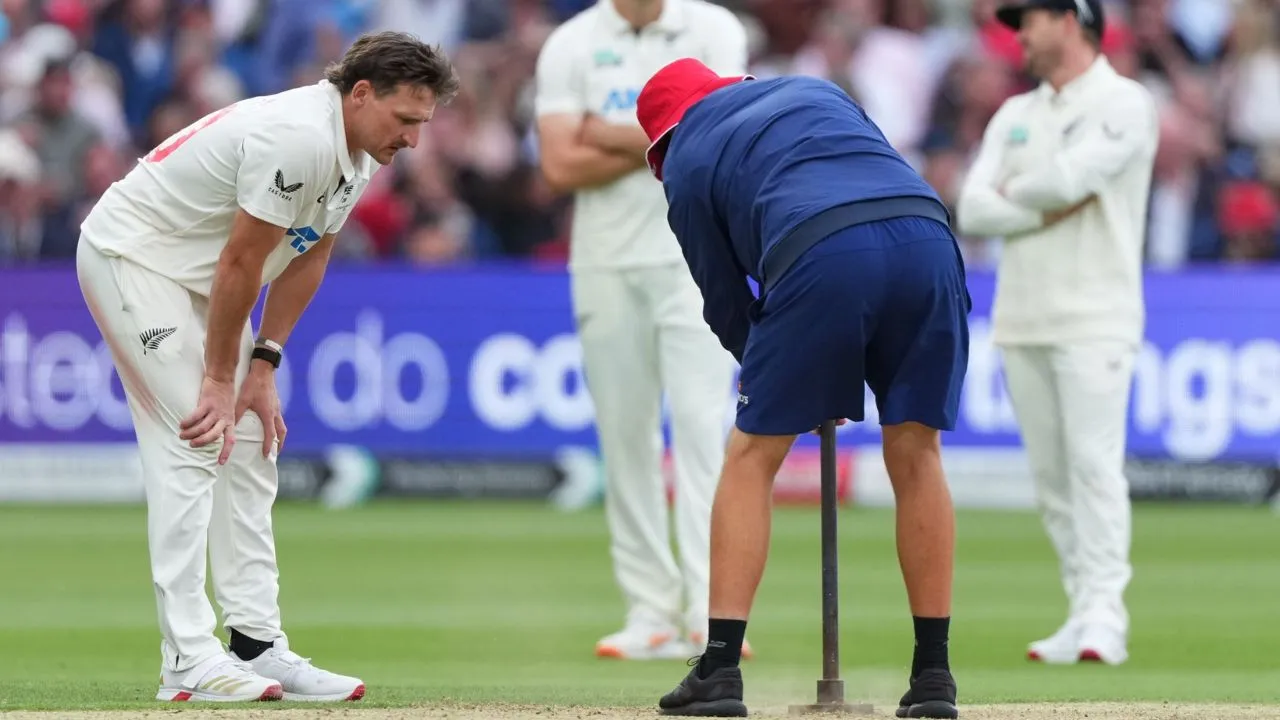
Controversy at Lord’s Cricket Ground: Poor Pitch Quality Raises Concerns
The recent England vs New Zealand 1st Test match at the historic Lord’s Cricket Ground in London has sparked controversy due to the poor pitch quality that led to a record number of wickets falling in the shortest completed Test at Lord’s in nearly 140 years. With 40 wickets falling in just 996 balls, the pitch curator from Marylebone Cricket Club (MCC) faced criticism for the challenging conditions.
Out of the 40 wickets, 24 were bowled, highlighting the difficulty batsmen faced in scoring runs. The International Cricket Council (ICC) and match referee Andy Pycroft deemed the pitch unsatisfactory as a wicket fell every 24.9 balls, making it a bowler-dominated game where only two batters managed to score half-centuries, including debutant Emilio Gay who scored 54 runs and Harry Brook in the first innings.
Shifting the World Test Championship Final
Following the backlash over the pitch quality, there are talks within the ICC about potentially shifting the World Test Championship (WTC) 2025-2027 final from Lord’s to the Kia Oval. The controversial pitch led to former cricketers and commentators criticizing the conditions after England emerged victorious by 115 runs, with no team surpassing 250 runs in four innings.
England, set to host the final for the fourth time, previously held the WTC final in the 2023-2025 cycle at Lord’s, where South Africa clinched their maiden title by defeating Australia. However, concerns over the pitch quality at Lord’s have raised doubts about the venue’s suitability for the upcoming final.
Concerns and Decisions
Recent reports suggest that the final may be relocated from London to the Oval due to the issues with the Lord’s pitch. Final decisions are expected to be made within the next month, with the official program for next summer’s cricket events to be released shortly.
The England and Wales Cricket Board (ECB) holds the rights to host the WTC final until 2031, with the ICC expressing their desire for the final to remain in London. With Lord’s hosting three Tests this year, along with the first women’s Test at the venue and Women’s World Cup events, the pressure on groundsman Karl McDermott and his team to prepare quality pitches is mounting.
Future of Lord’s as a Cricket Venue
While discussions continue about the potential shift of the WTC final, an MCC spokesman mentioned collaboration with the ECB but emphasized that no decision on next year’s fixture list has been finalized. Despite the challenges, last year’s WTC final at Lord’s received positive feedback, including a ‘very good’ rating for the pitch.
As the cricketing world awaits the final decisions regarding the venue for the prestigious WTC final, the spotlight remains on the quality of pitches at Lord’s Cricket Ground and the ongoing efforts to ensure a fair playing field for all teams.
Addressing Pitch Quality Concerns
Following the controversial pitch conditions at Lord’s Cricket Ground during the England vs New Zealand Test match, discussions are underway to address the concerns surrounding pitch quality in international cricket. The Marylebone Cricket Club (MCC) has acknowledged the need for improvements to ensure a fair balance between bat and ball in future matches.
One proposed solution is the implementation of stricter guidelines and regulations for pitch preparation, with a focus on creating surfaces that provide an even contest between batsmen and bowlers. The International Cricket Council (ICC) is considering conducting regular assessments of pitches at various venues to maintain standards and prevent occurrences of excessively bowler-friendly or batsman-friendly conditions.
Impact on Player Performance and Strategy
The poor pitch quality at Lord’s Cricket Ground not only affected the outcome of the recent Test match but also had a significant impact on player performance and strategic decisions. Batsmen struggled to adapt to the challenging conditions, leading to a higher number of dismissals and low-scoring innings.
Bowlers, on the other hand, capitalized on the pitch’s behavior, using its unpredictability to their advantage. The match highlighted the importance of adaptability and skill in challenging circumstances, with bowlers requiring precision and consistency to exploit the pitch’s weaknesses.
Building Resilience and Adaptability
As teams prepare for future matches at venues like Lord’s Cricket Ground, a key focus will be on building resilience and adaptability among players. Coaches and support staff will emphasize the importance of mental fortitude, technical proficiency, and tactical flexibility to succeed in varying pitch conditions.
Training sessions may incorporate simulations of challenging pitch scenarios to help players develop strategies for different surfaces. Batsmen will work on their shot selection and footwork, while bowlers will refine their line and length to exploit any weaknesses in the pitch.
Enhancing the Spectator Experience
While pitch quality remains a crucial aspect of the game, efforts are also being made to enhance the overall spectator experience at cricket matches. Venues like Lord’s Cricket Ground are exploring innovative ways to engage fans and create a vibrant atmosphere during matches.
Initiatives such as interactive fan zones, virtual reality experiences, and enhanced hospitality options are being considered to attract a diverse audience and cater to different preferences. The goal is to make cricket matches more than just a sporting event but a complete entertainment package for fans of all ages.
Looking Ahead to a Brighter Future
Despite the recent controversies surrounding pitch quality at Lord’s Cricket Ground, the cricketing community remains optimistic about the future of the sport. With ongoing discussions to address concerns and improve standards, the focus is on creating a level playing field for all teams and ensuring that matches are decided based on skill and performance.
As the cricket calendar progresses and new competitions are introduced, the lessons learned from past experiences will guide the evolution of the game. By prioritizing fairness, competitiveness, and spectator engagement, cricket will continue to thrive as a beloved sport cherished by millions around the world.
Latest News

Top 10 highest run-chases in T20 cricket history, ft. West Indies’ Ranchi win vs India

Aaryavir Sehwag and Anvay Dravid set to make headlines at U19 Asia Cup 2026

Longest ducks in Test cricket history ft. Nic Maddinson, Shoaib Akhtar

ECB to offer 39 central contracts to England players after Ben Stokes, Mark Wood’s retirement

Steve Smith surpasses Steve Waugh in all-time Test run-scorers’ list

Shane Watson identifies Gautam Gambhir’s biggest problem as India struggle for consistency

Is Bhuvneshwar Kumar in India’s 2027 World Cup plans? Ajinkya Rahane makes revelation

BCCI’s big ₹127 Crore move after injury crisis raises concerns over Team India

Parthiv Patel reveals RCB ignored his Jasprit Bumrah recommendation in IPL 2014 Auction

“Never spoke ill of any faith”: Irfan Pathan hits back at fake news using his name

Nic Maddinson bags 33-ball duck on Test comeback, disappoints George Bailey

Imran Tahir predicts 2027 ICC ODI World Cup Semi-Finalists, snubs India for title

Australia create unwanted history with first all-30-plus Test XI

Ravindra Jadeja returns to Ranji Trophy as Saurashtra announce squad