Auqib Nabi breaks silence on slow bowling speeds, admits ODI selection shock
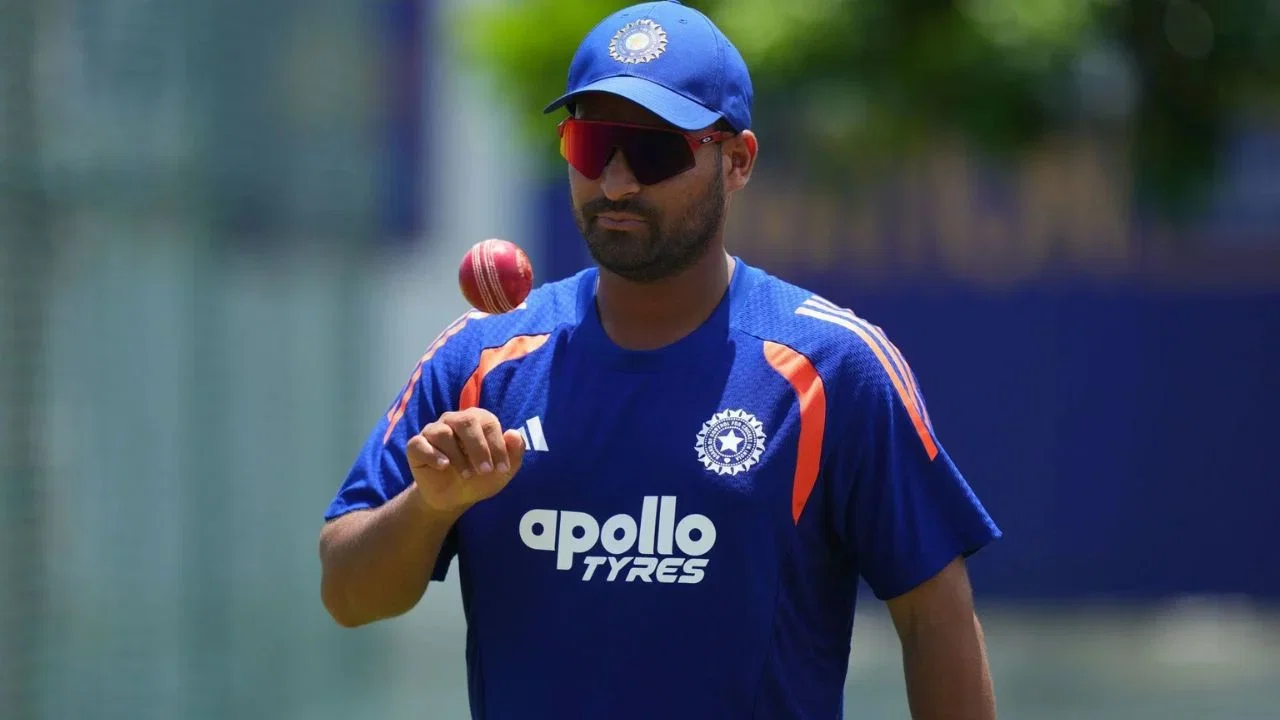
Auqib Nabi backs his bowling skills as pace debate follows India ODI debut
Auqib Nabi is determined to make his mark in India’s ODI side by relying on the qualities that earned him an international call-up. The Jammu and Kashmir fast bowler accepts that pace can be a valuable weapon, but says speed alone does not define an effective bowler. As he adjusts to international cricket, Nabi plans to trust his skills, maintain discipline and continue using the methods that brought him success in domestic competition.
His comments come as attention turns to his bowling speed and his early results in India colours. Nabi’s international start has been demanding: a difficult first ODI against the West Indies was followed by his first wickets against New Zealand. The early figures have prompted questions, but the 30-year-old remains focused on learning from each appearance rather than changing his game in response to outside criticism.
A challenging start to international cricket
Nabi earned his maiden ODI call-up in September 2026 after establishing himself as a leading fast bowler for Jammu and Kashmir. His domestic performances, particularly in the Ranji Trophy, helped put him on the national selectors’ radar. He made his India debut against the West Indies in Guwahati on September 30.
The debut proved a difficult introduction to the international stage. Nabi conceded 84 runs in 8.5 overs without taking a wicket, registering the most expensive bowling figures by an Indian on ODI debut. Such a performance can be a tough measure of a new international player, especially in a format where batters can attack from the outset and a bowler may have little time to settle.
India retained Nabi for the final two ODIs against New Zealand, and he was later included in the squad for the full series after Prasidh Krishna was injured. Nabi has since claimed two wickets in his first three ODIs against New Zealand, with best figures of 2/31. Those wickets offered an early sign of what he can contribute, even as he continues to build consistency at the highest level.
For a bowler making the transition from domestic cricket, the challenge is not simply to reproduce past performances. International batters often identify patterns quickly, while conditions, field settings and match situations can change from one spell to the next. Nabi’s first outings are therefore part of a longer adjustment process, rather than a complete verdict on his potential.
“Having pace is good, but I back my skills”
Speaking ahead of the fourth ODI against New Zealand, Nabi addressed the discussion around his speed. He acknowledged that pace can help a fast bowler unsettle batters, but stressed that he would not abandon the approach that earned him a place in the Indian team.
“Having pace is good but I back my skills. I will do what I have been doing and what has brought me here. I will just do what I did in domestic cricket, and that will help me here too,” Nabi said, as quoted by The Times of India.
His response reflects a practical view of fast bowling: raw speed is only one part of the job. Control, seam position, length, variation and the ability to execute a plan under pressure can be just as important. A bowler who consistently hits the right areas may create chances even without operating at extreme pace, while a quicker delivery can lose its threat if it is too easy to anticipate.
That balance may be particularly important as Nabi looks to secure a regular place in India’s ODI attack. He is competing in a demanding environment where bowlers are expected to adapt to different surfaces and match conditions. His immediate aim is to turn promising moments into dependable spells and show that he can contribute across a full innings.
Adapting to New Zealand’s conditions
The New Zealand tour has also given Nabi a first opportunity to experience conditions in the country. He said that seam movement and the use of a scrambled seam could be useful tools, while noting that bowlers cannot rely on swing alone.
“It is my first time in New Zealand. You need to rely more on seam here. Use scrambled seam because swing can be dealt with,” he explained.
His assessment points to the tactical detail involved in adapting to unfamiliar conditions. When the ball moves in the air, batters can sometimes counter it by adjusting their stance or playing later. Seam movement off the pitch can offer another route to trouble them, particularly when a bowler maintains a consistent line and length. A scrambled seam, which makes the ball’s movement less predictable after pitching, can help create uncertainty.
Nabi also emphasised that good bowling remains essential regardless of whether a pitch favours the attack. On a surface that offers little assistance, discipline becomes especially important because loose deliveries can quickly turn into boundaries. “When wickets are good, you need to bowl with discipline because you can go for runs,” he said.
He added that India’s quicks have been discussing plans for the drop-in pitches, including with fellow fast bowlers Arshdeep Singh and Anshul Kamboj. Such conversations can help a new squad member understand how teammates approach different conditions and how bowling plans may need to shift during a match.
From domestic red-ball cricket to India’s white-ball setup
Nabi’s rise has taken a different route from the one he expected. Having built much of his reputation through red-ball cricket, he thought a call-up in the longer format might come before an opportunity in ODI cricket. Instead, his first international chance arrived in the 50-over game.
“I was expecting a red-ball call-up before white-ball cricket, but this experience will also be very helpful. And then also staying with the Test team,” he said.
The experience could prove valuable beyond the immediate ODI series. White-ball cricket demands quick decision-making, precise execution and the ability to respond to aggressive batting. Those skills can complement the patience and control required in red-ball cricket. Time around the national setup may also help Nabi learn from senior players and coaches, strengthening his preparation for future opportunities in any format.
For Nabi, representing India remains the central achievement. He described playing for the country as a major moment and offered a message to aspiring cricketers who may be concerned about access to facilities: focus on doing the best possible work, he said, and opportunities can follow.
What Nabi needs to show next
India’s interest in Nabi appears to extend beyond his role as a specialist quick. He is also viewed as a potential lower-order batting option, with the ability to add depth around No. 8. If he can provide useful runs alongside disciplined bowling, he could offer the team greater flexibility when selecting its combination.
The next stage of his development will be about consistency: building pressure through accurate spells, using seam and pace variations intelligently, and recovering quickly when batters attack. His early ODI record includes a tough debut as well as a first return of wickets, giving him both challenges and encouraging signs to build on.
There is no single formula for succeeding as an international fast bowler. Nabi’s prediction for his own progress is grounded in staying true to his strengths while continuing to adapt. If he can combine the skills that made him stand out in domestic cricket with sharper execution against international opposition, the debate over his speed may become less important than the impact he makes with the ball.
Latest News
Axar Patel leaves Delhi Capitals captaincy, franchise faces leadership call
Auqib Nabi breaks silence on slow bowling speeds, admits ODI selection shock

Watch: Pat Cummins gets into heated fight with wife before addressing Usman Khawaja’s Sandpapergate claims

11:11 special! Kavya Maran marries Anirudh as Arshdeep Singh proposes to girlfriend Samreen Kaur

“It was a blunder”: Mohammad Kaif calls out Hardik Pandya over GT exit
Rishabh Pant declared fit, set to join India squad for New Zealand Tests
Mitchell Marsh confirms Mahli Beardman’s dream ODI debut in Perth vs England
Bangladesh eye Ireland Test ahead of 2027 Lord’s clash against England

Punjab Kings co-owner breaks silence on Hardik Pandya deal, reveals rival franchises were interested
BCCI breaks silence on IPL 2028 expansion, clears air on Rs 150 Crore team purse

How T20 Cricket Is Changing the Way Fans Enjoy Online Entertainment
Stuart MacGill breaks silence on Australia’s ball-tampering culture

Joe Root fires back at reporters over Australia’s Sandpapergate scandal ahead of ODI series

Mitchell Starc set to play for DC in IPL 2027, but with one condition