“Can challenge even a 25-year-old cricketer”: Kapil Dev questions Virat Kohli’s early Test retirement
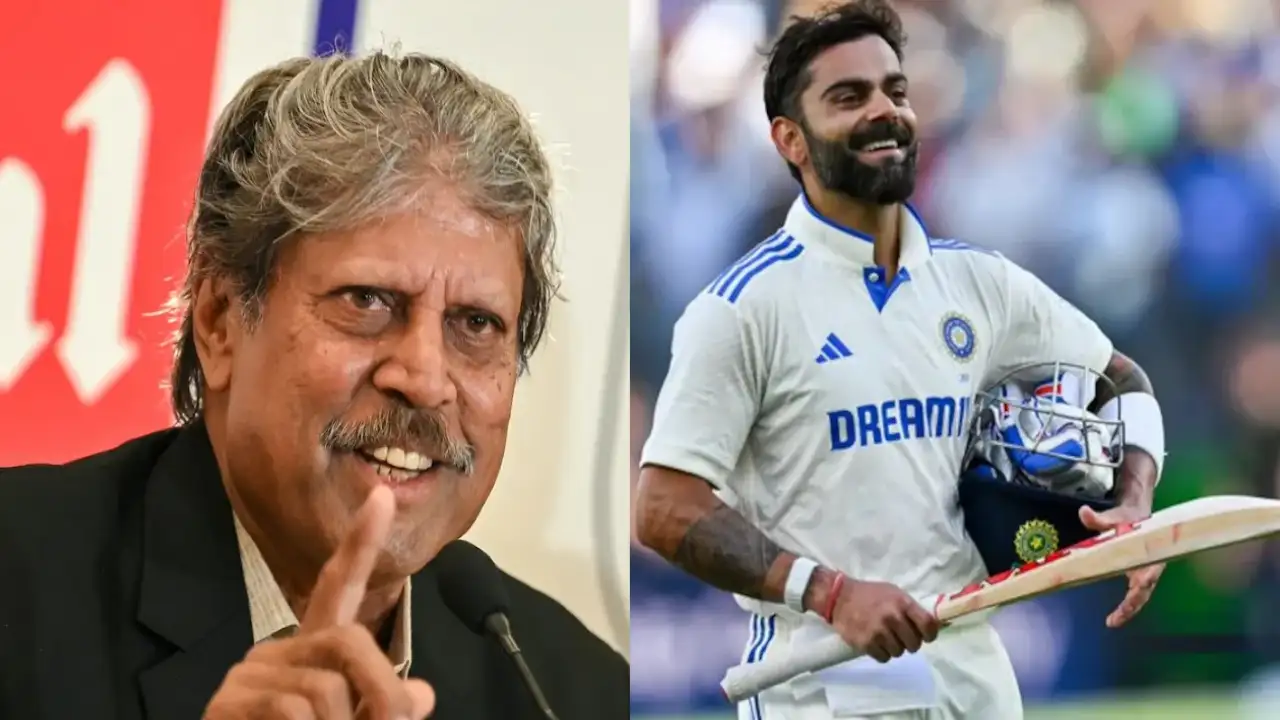
Kapil Dev Says Virat Kohli May Regret Test Retirement, Calls It a Major Career Mistake
Former India captain Kapil Dev believes Virat Kohli had more to contribute to Test cricket and may one day regret leaving the format. In a recent interview with Mid-Day, the 1983 World Cup-winning captain described Kohli’s retirement as a significant mistake, arguing that the batter’s fitness and experience could have allowed him to continue playing at the highest level.
Kohli announced his retirement from Test cricket on May 12, 2025, ahead of India’s tour of England for the Anderson-Tendulkar Trophy. His final Test appearance came earlier that year, in Sydney in January. The announcement ended a distinguished career in the longest format and prompted debate among supporters about whether the former India captain had walked away too soon.
Kapil Dev’s prediction: Kohli could regret his decision
Kapil has previously questioned the timing of Kohli’s departure. In his latest comments, he said the decision could look different to the batter with the passage of time. Kapil’s prediction is that Kohli may reflect on the choice a decade from now, particularly because he still had the physical conditioning needed to compete with younger players.
“I think Virat Kohli made the biggest mistake. He retired from Test cricket. He will regret his decision after 10 years,” Kapil said. He added that Kohli’s fitness stood out, suggesting the batter could match the physical demands placed on a 25-year-old cricketer.
Kapil also cautioned against making a major career decision in a moment of frustration. Rather than viewing retirement as the only response to difficult circumstances, he said players can sometimes take a break, work on their game and attempt a comeback.
Mohinder Amarnath offered as an example
To illustrate his point, Kapil referred to former India batter Mohinder Amarnath, who was dropped from the national side on several occasions but returned to the team and re-established himself. Kapil’s comparison was not that every player should follow the same path, but that setbacks do not always have to mark the end of an international career.
“They should be like Mohinder Amarnath. He was dropped so many times, but he came back and proved others wrong,” Kapil said.
The remarks underline a broader question in modern cricket: how should players balance personal choice, physical readiness and the demands of a packed international schedule? Retirement decisions are ultimately individual, but Kohli’s exit has continued to invite discussion because he left while still a major figure in Indian cricket.
Virat Kohli’s Test record and legacy
Kohli finished his Test career with 9,230 runs from 123 matches at an average of 46.85, including 30 centuries. He ranked among India’s most prolific Test batters, behind Sachin Tendulkar, Rahul Dravid and Sunil Gavaskar in the country’s all-time run-scoring list.
His contribution extended beyond runs. As captain, Kohli led India in 68 Tests and recorded 40 victories, the most Test wins by an Indian captain. Under his leadership, India reached the top of the international Test rankings and strengthened its reputation as a competitive side at home and overseas.
Kohli ended his career 770 runs short of the 10,000-run milestone. That figure has become part of the conversation surrounding his retirement, though it does not diminish the scale of his achievements. His record reflects a long period in which he was central to India’s batting plans and helped shape the team’s approach to Test cricket.
For many fans, the timing of his departure is as striking as the numbers. Kohli’s final Test came in Sydney in January 2025, while his retirement announcement followed in May, before the England series. The relatively brief gap and the absence of a lengthy public farewell contributed to the sense that his exit from the format came suddenly.
Kapil Dev leaves Rohit Sharma’s future to selectors
Kapil was also asked about Rohit Sharma and his future in international cricket. Rather than offering a definitive prediction, he said the decision should rest with the selectors, who must consider what is best for the team and the game.
Kapil acknowledged Rohit’s service to India while noting that no player can remain in the team indefinitely. He pointed to the careers of Sunil Gavaskar, Sachin Tendulkar, Anil Kumble, Ravichandran Ashwin and MS Dhoni as reminders that even celebrated players eventually step away from the international stage.
“If he can play, fine. I would leave it to the selectors,” Kapil said, adding that Rohit has served the country admirably. He stressed that selection decisions should be made collectively, with the team’s needs in mind.
A debate about timing, choice and the next chapter
Kapil’s comments are likely to resonate with fans who believe Kohli could have added to his Test record, particularly given his fitness and standing in the game. Others may see retirement as a personal decision shaped by factors outsiders cannot fully assess, including workload, priorities and a player’s own sense of when to stop.
What is clear is that Kohli’s Test career leaves a substantial legacy: thousands of runs, 30 centuries, a record-setting captaincy and a lasting influence on India’s approach to the format. Whether he ever regrets retiring, as Kapil predicts, remains a question only time can answer. For now, the discussion reflects the high expectations attached to one of India’s most accomplished cricketers—and the enduring importance of Test cricket to his supporters.
Latest News
“Mismanagement and mishandling”: Aakash Chopra raises concerns over Kuldeep Yadav’s treatment
IPL 2027: CSK part ways with two Indian pacers ahead of mini-auction
David Fulton returns to Kent as director of cricket after club secures promotion to Division One
IPL 2027: Rajasthan Royals retain Brijesh Sharma and Yudhvir Singh
IPL 2027: CSK retain Noor Ahmad and Dewald Brevis, release INR 14.20 crore star
Ravi Shastri agrees with Gautam Gambhir, warns India about batting struggles ahead of World Cup
“Cocky little bloody…”: Dale Steyn recalls his first impression of Virat Kohli
“He wants to lead”: Irfan Pathan drops big hint on Yashasvi Jaiswal’s potential move to KKR
Kevin Pietersen leaves England camp ahead of Australia series decider, here’s why or reason revealed
PAK vs SL Playing 11 Today, Live Streaming, Pitch & Weather: Sri Lanka tour of Pakistan 2026, 2nd Test
“Can challenge even a 25-year-old cricketer”: Kapil Dev questions Virat Kohli’s early Test retirement
Rajat Patidar creates history, becomes first Madhya Pradesh batter to score SMAT century
Cameron Bancroft set to break silence on Sandpapergate after Usman Khawaja’s claims
Dodda Ganesh picks India playing XI for 1st Test vs New Zealand, Mohammed Siraj IN