

Aakash Chopra backs Shubman Gill to continue as India Test captain despite WTC setback
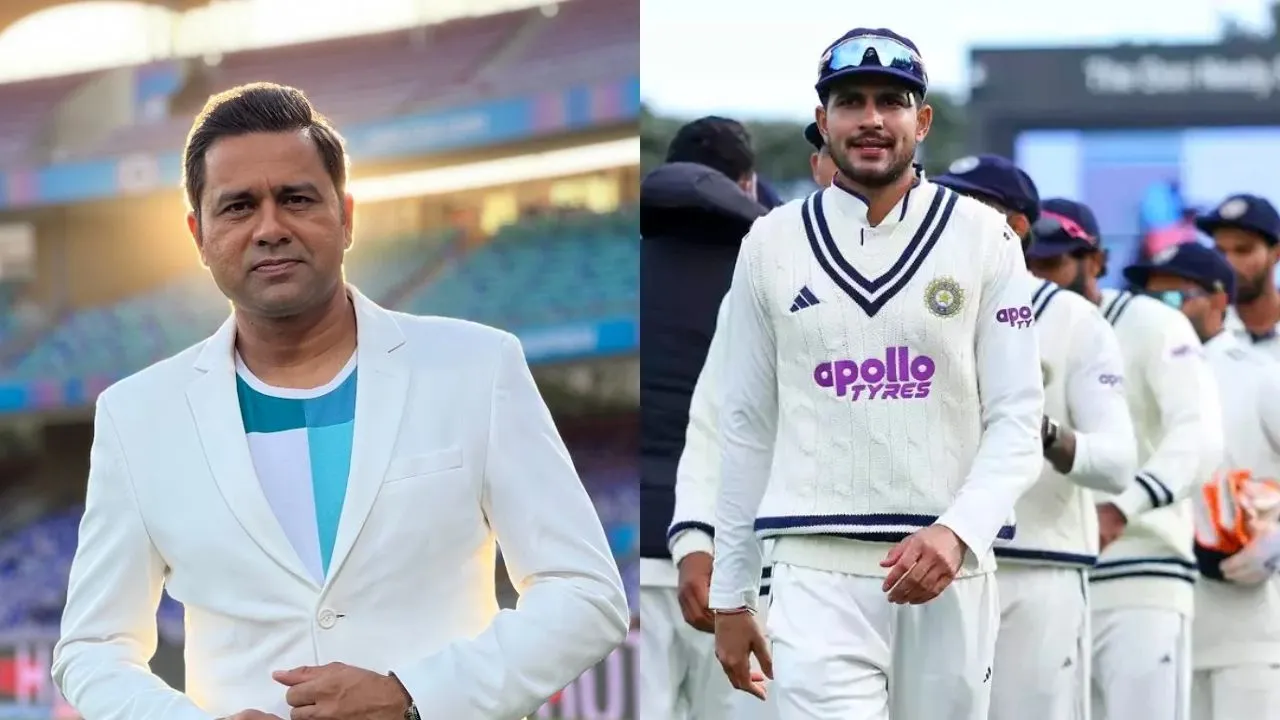
Aakash Chopra Backs Shubman Gill Despite India’s WTC Qualification Challenge
India’s first Test against New Zealand at Wellington’s Basin Reserve ended in a draw, leaving the home side frustrated after periods of strong play failed to produce a decisive result. With the teams preparing for the next match, former India batter and commentator Aakash Chopra has questioned some of the team’s tactical decisions—but says a disappointing World Test Championship (WTC) campaign alone should not be enough to remove Shubman Gill as captain.
The result has also made India’s route to the 2025–27 WTC final more demanding. With six Tests remaining in the current stretch—one against New Zealand and five against Australia—India may need a perfect run to put itself in a strong position. That leaves little room for mistakes and puts added attention on team selection, match management and Gill’s development as a leader.
Chopra says one WTC cycle is not enough to judge Gill
Speaking on his YouTube channel, Chopra argued that Gill should be given time to grow into the captaincy. Gill took charge at the beginning of the current WTC cycle, and Chopra said it would be premature to make a major leadership change before the cycle has run its course.
“The WTC cycle is two years. He was handed the captaincy at the start of this cycle. After that, if you are unable to reach the final, is that a good enough reason to review and move in a different direction? I would say no,” Chopra said, cautioning against reacting too quickly to setbacks.
Chopra acknowledged that Gill’s appointment was made with some uncertainty. Before taking on the role, the young batter had not yet established an extensive record of success in overseas conditions. That made the decision a bet on his potential as much as a reward for his performances. Chopra said the early results have not been flawless, but suggested that learning through difficult moments is part of building a captain’s experience.
His comments come as India face scrutiny following a series of disappointing outcomes and tactical debates. Yet Chopra’s central point is that leadership decisions should be based on a broader assessment than one tournament qualification target. A captain’s ability to improve, earn the dressing room’s trust and make better decisions over time also matters.
Questions over India’s tactics and team selection
Chopra also discussed the decisions that have contributed to doubts around India’s Test approach. He pointed to the team’s 0–2 home series loss to South Africa, noting that the conditions in those matches drew criticism. Consecutive home defeats are particularly significant for India, whose record on home pitches has traditionally been a major source of strength.
He also revisited India’s drawn match in Sri Lanka, arguing that a declaration made earlier might have created a better opportunity to force a result. In Test cricket, the timing of a declaration is a delicate calculation: a captain must give bowlers enough time to take 20 wickets while leaving the opposition a target it cannot comfortably defend. Chopra’s comments underline how small decisions can shape the outcome of a match—and, over time, influence a team’s WTC points total.
Team selection in the opening Test against New Zealand was another subject of discussion. Selection debates often become sharper when a match ends without a win, but Chopra questioned whether one disputed lineup decision should be treated as grounds for a change in captaincy. For him, the more important issue is whether India can identify a consistent strategy and apply it effectively across different conditions.
India’s WTC final prediction depends on a perfect finish
The qualification picture is increasingly challenging. Chopra estimated that winning all six remaining Tests would take India to around 66 percentage points. That figure could be enough to reach the final, as teams have qualified in previous WTC cycles with lower percentages, but the outcome will also depend on results elsewhere.
India’s immediate priority is to turn the remaining matches into wins rather than relying on calculations. A draw may preserve some points, but it can significantly reduce the margin for error in a competition where every match affects a team’s percentage. The upcoming Tests against New Zealand and Australia will therefore test not only India’s batting and bowling depth, but also its ability to adapt quickly to different opponents and match situations.
Any prediction about India’s final qualification remains uncertain. A clean sweep would provide a clear path, but winning six consecutive Tests is an exceptionally difficult task, especially against strong opposition. India will need its senior players to deliver consistently, its younger cricketers to handle pressure and the leadership group to make decisive calls when conditions shift.
Gill’s batting form offers encouragement
Despite the questions around his captaincy, Gill’s batting has been a significant positive. Since taking over as Test captain, he has produced strong performances, particularly on overseas tours. During India’s series in England, he scored 754 runs in 10 innings at an average of 75.40, including four centuries, and finished as the leading run-scorer.
That record matters because a captain’s own form can influence the balance of a team. Gill’s runs have helped India compete in demanding conditions and show that the responsibility of leadership has not prevented him from producing at the crease. He had also scored 98 runs in an innings during the New Zealand series at the time of Chopra’s assessment.
Gill is still developing as a Test captain, and the current WTC cycle will provide a demanding measure of his progress. The challenge is to translate individual batting success into stronger collective results—through clearer selection, sharper declarations and more effective management of the bowling attack.
A longer view of India’s leadership question
Chopra’s position is not that India’s recent concerns should be ignored. Rather, he has argued that they should be examined without rushing into a leadership change. Replacing a captain may offer a short-term response to poor results, but it can also disrupt continuity if the underlying problems involve broader tactical or selection issues.
For India, the next six Tests will shape the WTC standings and provide a clearer picture of Gill’s growth in the role. A strong finish could strengthen confidence in the captain and his methods. A poor run would inevitably intensify debate, though Chopra believes the decision should still account for the full context of the cycle—not simply whether India reaches the final.
For now, the focus is on converting promising passages of play into victories. India’s WTC prediction remains difficult to make with confidence, but the team’s route is straightforward: win as many of the remaining Tests as possible, make better use of key moments and give its young captain the opportunity to learn while competing under pressure.
Latest News
“Don’t understand why”: Madan Lal questions Rishabh Pant’s absence in ODIs and T20Is
Aakash Chopra points out why Ravindra Jadeja is a better bowler than Washington Sundar
PSL 2027: Peshawar gets historic first match as PCB confirms six host cities
“Keep fighting”: Daryl Mitchell highlights New Zealand’s team spirit ahead of 2nd Test
Kamindu Mendis to skip IPL 2027, remains open to franchise cricket
Aakash Chopra backs Shubman Gill to continue as India Test captain despite WTC setback
India’s nemesis chooses PSL over IPL, joins Islamabad United for PKR 7.07 crore
ICC unwilling to reconsider saliva ban despite India’s concerns after Wellington Test

SA vs BAN Playing 11 Today, Live Streaming, Pitch & Weather: South Africa tour of Bangladesh 2026, 2nd Test

AUS vs ENG Playing 11 Today, Live Streaming, Pitch & Weather: England tour of Australia 2026, 2nd T20I

Blair Tickner ruled out of 2nd Test vs India, replacement named

Tim Paine and Justin Langer face fresh questions over Australia’s ball-tampering scandal

India tour of Bangladesh gets fresh hope as BCB confirms talks with BCCI

Tom Latham opens up on soft ball problem and saliva ban after draw against India


