

ICC unwilling to reconsider saliva ban despite India’s concerns after Wellington Test
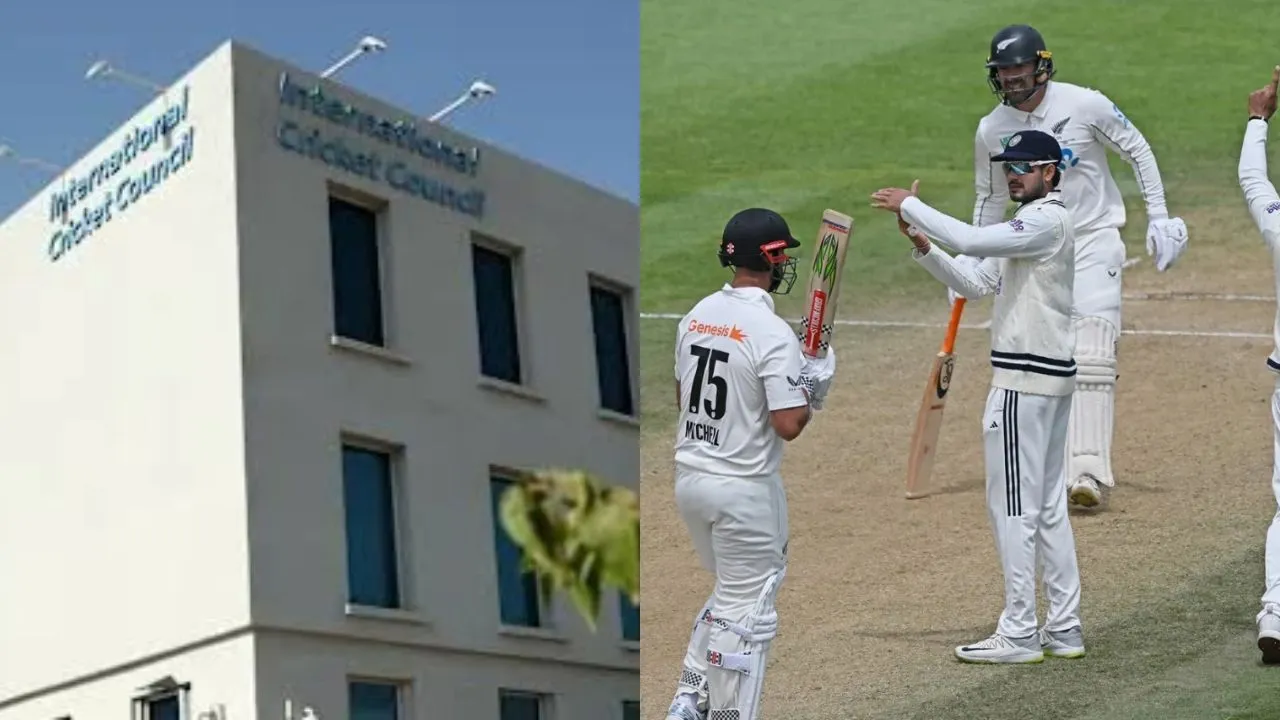
ICC Saliva Ban Set to Continue as Shubman Gill Questions Its Impact on Test Cricket
The International Cricket Council (ICC) is not currently planning to reverse its ban on applying saliva to a cricket ball, despite renewed questions about the regulation following India’s drawn Test against New Zealand in Wellington. The issue has returned to the spotlight ahead of the teams’ second Test, with India captain Shubman Gill arguing that the restriction can make it harder for bowlers to keep the ball in effective condition.
The rule was introduced during the COVID-19 pandemic as a health precaution. Although cricket has moved beyond the emergency restrictions of that period, the ICC has retained the ban. Its decision reflects continuing concerns around player health, alongside the broader challenge of deciding how the regulation affects the balance between bat and ball.
Why Shubman Gill Wants the Saliva Rule Reconsidered
Speaking after the first Test, Gill said he did not understand why players were still prohibited from using saliva to shine the ball. He suggested that allowing the traditional practice could help maintain the ball’s condition and give bowlers a better chance of creating movement, particularly in longer formats such as Test cricket.
“I don’t understand why we haven’t been allowed to shine the ball yet. We are way past COVID times,” Gill said, adding that the quality and condition of the ball had influenced the contest. His comments have renewed debate among players, supporters and analysts over whether a pandemic-era measure remains appropriate for today’s international cricket.
Before the ban, bowlers commonly used saliva on one side of the ball while polishing the other side with a cloth. The difference between the two surfaces could help generate swing through the air. With saliva prohibited, players have relied on sweat and other permitted methods to maintain the ball. How much that changes a bowler’s prospects can depend on the weather, the pitch, the ball’s age and the type of bowling being used.
How the Wellington Test Reached a Draw
India entered the final day of the Wellington Test needing eight wickets to secure victory and take a 1–0 lead in the two-match series. The visitors had made early progress, reducing New Zealand to five wickets before the hosts reached 200. However, Daryl Mitchell and Glenn Phillips built a determined partnership that blunted India’s attack and kept the home side in the match.
As the final day unfolded, the conditions became increasingly difficult for the bowlers. Gill said the ball had softened and the pitch offered little assistance, allowing the batters to settle. New Zealand’s resistance meant India could not complete the chase for the remaining wickets, and the captains eventually agreed to a draw rather than continue a contest with diminishing prospects of a result.
The decision prompted criticism from some fans and former players, who questioned whether the match should have continued for longer. Others pointed to the conditions and the strength of the Mitchell–Phillips stand, arguing that the probability of India taking eight wickets had fallen sharply. The debate illustrates how Test captains must weigh ambition against time, player workload and the realistic chances of forcing a result.
Pitch Conditions and the Ball: A Difficult Combination
Gill’s comments focused not only on saliva but also on the way the ball and surface behaved on the final day. A pitch can appear to offer pace or seam movement early in a match, yet become more predictable as it wears. Grass on the surface may help fast bowlers under suitable conditions, but its presence alone does not guarantee movement—especially when the ball is soft and the weather is not helping it swing.
Former India batter Sanjay Manjrekar also highlighted the nature of the wicket in his social media comments. He noted that the surface had a covering of grass, but that the conditions were not favourable enough for the fast bowlers to make the most of it. His assessment reinforced a point often overlooked in post-match analysis: pitch appearance is only one part of the equation. The ball’s condition, moisture, temperature and the batters’ ability to build partnerships all matter.
That context is important when assessing Gill’s prediction that restoring the use of saliva could improve the quality of the ball and make Test cricket more competitive. A better-maintained ball might help bowlers in some situations, but it would not automatically solve every problem on a flat or unresponsive surface. Any change would need to be judged across different conditions and formats, rather than on the basis of one final day.
Why the ICC Has Not Changed the Regulation
The ICC’s current position is that there are no plans to lift the saliva restriction. The original measure was designed to reduce potential health risks during the pandemic, and the governing body has continued to consider player safety in its approach. Any revision would require the ICC to assess not only the medical concerns but also the practical impact of changing a rule used across international cricket.
There is also a sporting question: would allowing saliva restore a fairer contest, or would it create new concerns about consistent enforcement? Cricket already permits players to polish the ball within established limits, and officials must monitor how it is handled. Changing the rules could require updated guidance for players and umpires, as well as agreement across the game’s governing structures.
For now, bowlers must work within the existing regulations, using permitted methods to care for the ball. The discussion is likely to continue, especially when a Test match reaches a stage where the surface offers little assistance and the batting side can defend comfortably.
What the Debate Means for the Next Test
As India and New Zealand prepare for the second Test, attention will turn to whether the conditions offer a more balanced contest. India will be looking for ways to convert pressure into wickets, while New Zealand will aim to build on the resilience shown in Wellington. The result could depend on early movement, the effectiveness of the seam attack and how quickly either side adapts to the pitch.
Gill’s remarks have placed the saliva ban back in the conversation, but the ICC has given no indication that a change is imminent. The broader prediction is that the debate will persist as long as bowlers and captains believe ball maintenance affects the balance of Test cricket. Whether the rule is eventually reviewed will depend on the governing body’s assessment of health, safety and the quality of competition—not simply the outcome of one match.
Latest News
PSL 2027: Peshawar gets historic first match as PCB confirms six host cities

“Keep fighting”: Daryl Mitchell highlights New Zealand’s team spirit ahead of 2nd Test

Kamindu Mendis to skip IPL 2027, remains open to franchise cricket
Aakash Chopra backs Shubman Gill to continue as India Test captain despite WTC setback
India’s nemesis chooses PSL over IPL, joins Islamabad United for PKR 7.07 crore
ICC unwilling to reconsider saliva ban despite India’s concerns after Wellington Test

SA vs BAN Playing 11 Today, Live Streaming, Pitch & Weather: South Africa tour of Bangladesh 2026, 2nd Test

AUS vs ENG Playing 11 Today, Live Streaming, Pitch & Weather: England tour of Australia 2026, 2nd T20I

Blair Tickner ruled out of 2nd Test vs India, replacement named

Tim Paine and Justin Langer face fresh questions over Australia’s ball-tampering scandal

India tour of Bangladesh gets fresh hope as BCB confirms talks with BCCI

Tom Latham opens up on soft ball problem and saliva ban after draw against India

Ajinkya Rahane slams Tilak Varma for publicly criticising Shahbaz Ahmed after India A’s defeat

ICC to introduce IPL-style bat checks in international cricket


