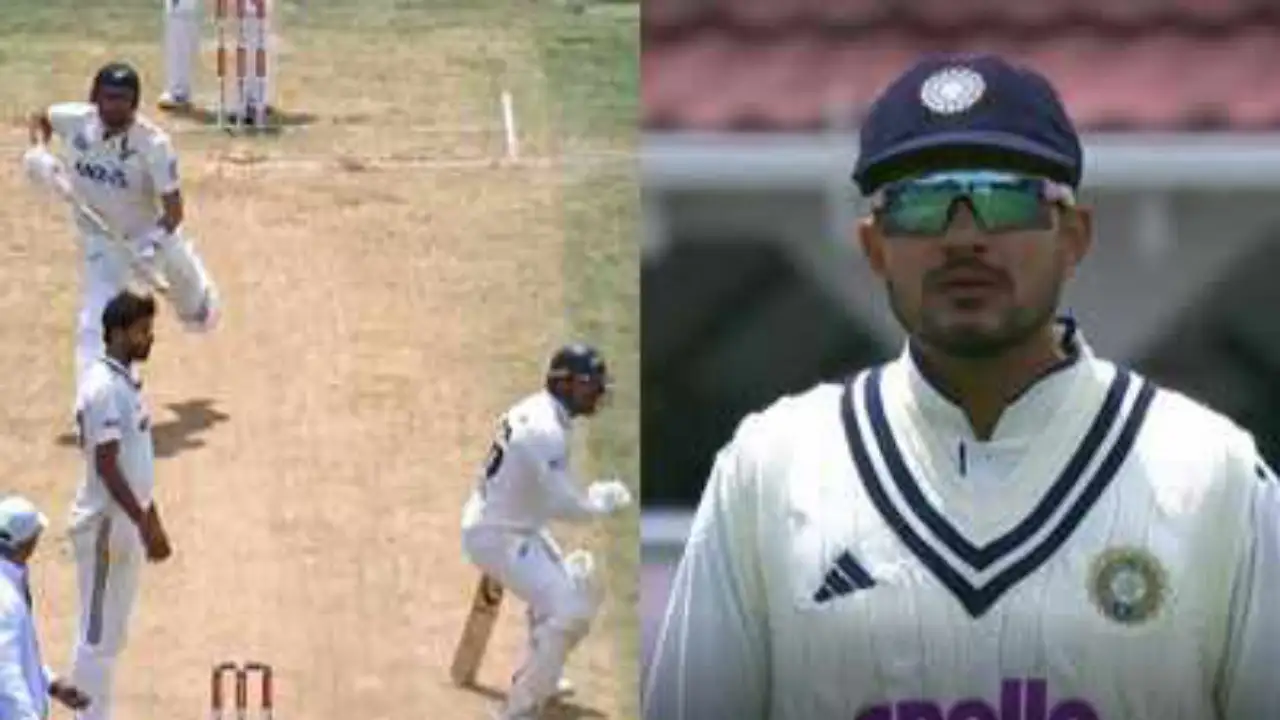
Ajinkya Rahane slams Tilak Varma for publicly criticising Shahbaz Ahmed after India A’s defeat

Ajinkya Rahane Criticises Tilak Varma’s Public Comments After India A’s Loss to Pakistan Shaheens
India A’s defeat to Pakistan Shaheens in the ACC Men’s Asia Cup Rising Stars 2026 has sparked debate over more than the result. After India fell 48 runs short of a challenging target in Doha, captain Tilak Varma questioned all-rounder Shahbaz Ahmed’s dismissal during the post-match presentation. Former India batter Ajinkya Rahane later criticised the decision to air that frustration publicly, saying such conversations are better handled inside the dressing room.
The match at West End Park International Cricket Stadium ended with Pakistan Shaheens securing a place in the semi-finals. India A, meanwhile, must beat the United Arab Emirates in their next fixture to keep their own qualification hopes alive. The result also offered a reminder that, in high-pressure cricket, communication and team management can become as much a talking point as batting and bowling.
Rahane Says Player Feedback Should Stay in the Dressing Room
Rahane responded to Varma’s comments by emphasising the importance of protecting a player’s confidence in public. He said that if a captain has concerns about a teammate’s decision-making, those concerns should be discussed privately rather than in front of a broadcast audience.
“Nobody wants you to talk about your player in front of the world. If you want to say something, go say it in the dressing room—it builds their confidence,” Rahane said.
His remarks were not simply a defence of Shahbaz. They reflected a broader view of captaincy: leaders need to address mistakes honestly, but the setting and tone matter. A private conversation can allow a player to understand what went wrong without turning a difficult moment into a public dispute. It can also help a team move forward together after a loss.
Rahane Believes Varma Will Learn From the Experience
Rahane also urged people to consider the pressure captains face immediately after a match. A leader may be dealing with disappointment, tactical questions and the need to explain a result, all while speaking live to the media. In those circumstances, comments may not come out exactly as intended.
“This happens in cricket. You put in the effort, results go your way or they don’t. Sometimes, as captain, so many things are running through your mind. You come to the presentation, and maybe what you want to say doesn’t come out; something else comes out,” Rahane explained.
He added that the episode could become a useful lesson for the young captain. Rahane’s prediction was that Varma would gain experience from the incident and develop a better sense of how to handle sensitive team matters in the future. His comments framed the controversy as part of a learning process rather than a lasting judgment on Varma’s leadership.
Why Shahbaz Ahmed’s Dismissal Became a Turning Point
India A’s chase of 314 began under pressure after the early loss of Vaibhav Sooryavanshi. Abhishek Sharma helped revive the innings with an aggressive 70, while Varma produced a century that kept India in contention. The pair of Varma and Shahbaz then added 112 runs for the seventh wicket, bringing the target within reach and briefly shifting momentum towards India.
Varma later suggested that Shahbaz could have stayed at the crease for another couple of overs, arguing that the partnership might have given India a stronger chance of completing the chase. But Shahbaz’s dismissal triggered a rapid collapse. India lost three wickets for just three runs, leaving Varma with little support and a steep task at the other end.
The sequence illustrates how quickly a large chase can change. A substantial partnership had put India in a promising position, but the loss of wickets in quick succession disrupted the innings’ rhythm. With the lower order exposed, Varma had to balance the need to score quickly against the risk of losing the final wickets. India were eventually bowled out for 265, 48 runs short of the target.
Pakistan Shaheens Post 313 After Strong Contributions
After winning the toss, Pakistan Shaheens chose to bat first and made the most of a productive start. Although India took wickets through the middle overs, Hasan Nawaz held the innings together with a composed 79. Contributions from the middle and lower order then helped Pakistan build a total of 313, giving their bowlers a substantial score to defend.
The total proved demanding, particularly after India’s early setback. Pakistan’s ability to keep adding runs after losing wickets was a key difference between the sides. While India had a strong partnership of their own, the late collapse prevented Varma’s century and the earlier work from Sharma and Shahbaz from translating into victory.
India A’s Qualification Hopes Remain Alive
Pakistan’s win confirmed their semi-final qualification, while India A now face a must-win situation against the UAE. The upcoming match will require India to respond quickly, both with the bat and in the field, if they are to remain in the tournament. Their performance against Pakistan showed that the side can recover from early trouble, but it also highlighted the importance of maintaining partnerships through the closing stages of a chase.
For Varma, the match carried mixed lessons. His century demonstrated his ability to anchor an innings under pressure, yet the final result and the post-match exchange will invite reflection on how a captain communicates after a painful defeat. Rahane’s intervention has shifted attention towards leadership and team culture, adding another layer to an already intense rivalry match.
As India prepare for their next fixture, the focus will return to qualification. But the prediction surrounding Varma’s development is also likely to remain part of the conversation: young captains inevitably face difficult moments, and how they respond can shape their growth as leaders as much as their performances do.
Latest News

India tour of Bangladesh gets fresh hope as BCB confirms talks with BCCI

Tom Latham opens up on soft ball problem and saliva ban after draw against India
Ajinkya Rahane slams Tilak Varma for publicly criticising Shahbaz Ahmed after India A’s defeat

ICC to introduce IPL-style bat checks in international cricket

“Smiling Laughing doesn’t happen”: R Ashwin’s dig at India’s approach after draw vs New Zealand

“Not good enough for Test cricket”: Scott Styris, Sunil Gavaskar slam Wellington pitch

Dodda Ganesh declares India ‘out of WTC final race’ after Wellington Test draw

Ajinkya Rahane criticises Shubman Gill for abusing Akash Deep in 1st Test vs New Zealand

‘Why so many boundary riders?’ Dinesh Karthik questions Shubman Gill’s captaincy after Wellington Test

“I just want to enjoy my life”: Yash Dayal reflects on his return to cricket

“Conversation was about…”: Glenn Phillips reveals New Zealand’s Day 5 plan that helped secure draw vs India
Saba Karim takes aim at Washington Sundar’s selection after India’s Wellington Test draw
“Please focus on the sport”: Navjot Singh Sidhu urges India and Pakistan to resume bilateral cricket ties
Prithvi Shaw threatens legal action against Yograj Singh over personal remarks