Babar Azam addresses Mohammad Abbas’ surprise omission from 2nd Test vs West Indies
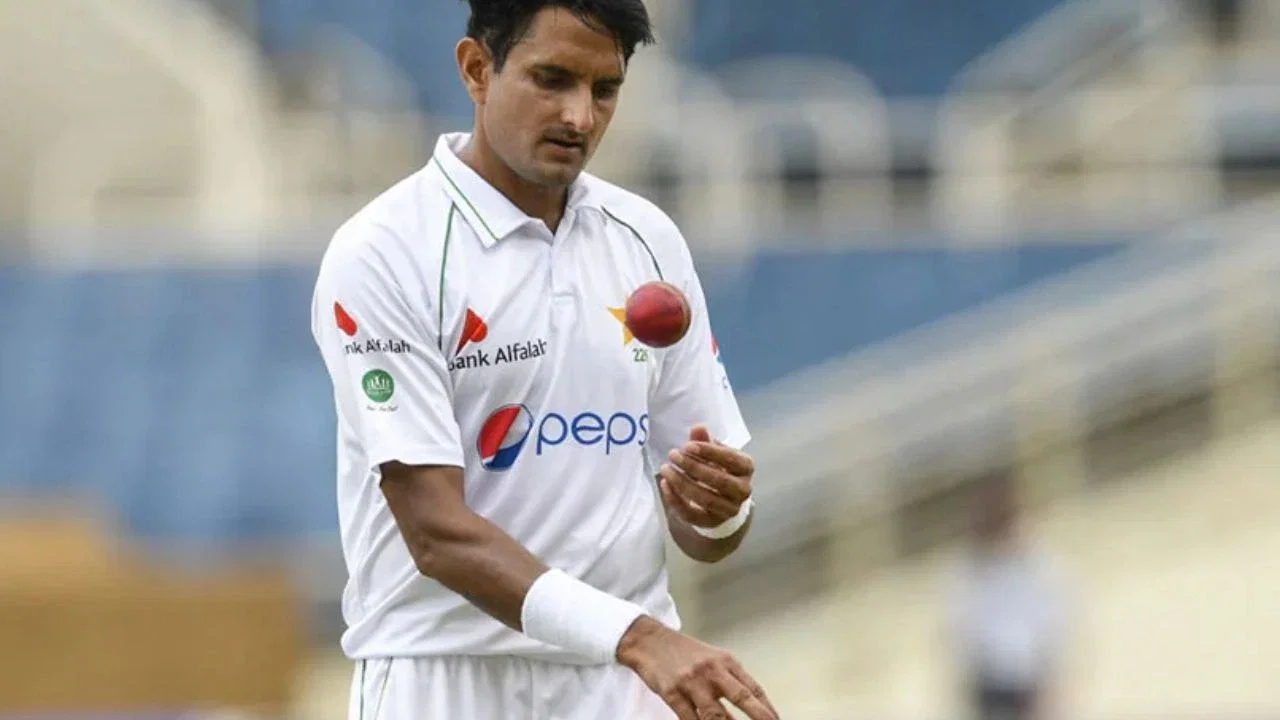
Pakistan Makes Surprising Decision to Drop Mohammad Abbas for Second Test Against West Indies
Pakistan raised eyebrows by omitting experienced fast bowler Mohammad Abbas from the playing XI for the second Test against West Indies, despite his exceptional performance in the series opener. Abbas had claimed eight wickets in the first Test, creating a buzz around his exclusion before the match at Queen’s Park Oval.
Babar Azam Explains Decision
Captain Babar Azam clarified that Abbas was left out due to the specific conditions at Queen’s Park Oval and not because of an injury. Babar mentioned during the toss that Pakistan opted for an extra spinner to adapt to the pitch conditions for the series decider.
“No, no. I told you that because of the conditions. The condition demand is different, so the condition is like different, so I put one spinner on,” Babar stated.
The decision to drop Abbas surprised many, considering his stellar performance in recent series, including being the leading wicket-taker in the Bangladesh series.
Pakistan Introduces New Faces in the Team
In Abbas’ absence, 20-year-old fast bowler Ubaid Shah made his Test debut, joining Mohammad Ali in the pace attack. Shah managed to claim a wicket on the opening day, showing promise at the international level.
Batter Awais Zafar also received his maiden Test cap as Pakistan made several changes to the playing XI for the crucial Test match against West Indies.
West Indies Bounce Back with Greaves and Chase Partnership
West Indies captain Roston Chase’s decision to bat first paid off as the team recovered from a shaky start to reach 239/5 at stumps on a rain-interrupted opening day. Justin Greaves and Roston Chase batted sensibly to guide the hosts to a respectable total.
Greaves, in particular, continued his good form with an unbeaten half-century, while Chase provided stability in the middle order. Their partnership of 66 runs shifted the momentum towards West Indies, putting them in a strong position heading into day two of the second Test.
Overall, Pakistan’s surprising decision to drop Abbas and include new faces in the team raised questions and added an element of unpredictability to the series decider against West Indies. With the match finely poised, all eyes will be on how the teams perform in the upcoming days.
The Impact of Mohammad Abbas’ Exclusion
While Pakistan’s decision to drop Mohammad Abbas may have seemed surprising, it reflects a strategic shift based on the playing conditions. The team management’s choice to include an extra spinner indicates a proactive approach to adapting to the pitch, showcasing their flexibility and willingness to make bold decisions for the team’s benefit.
Abbas’ absence also opens up opportunities for emerging talents like Ubaid Shah to showcase their skills on the international stage. Shah’s debut and successful performance in the second Test highlight Pakistan’s depth in fast bowling talent and their ability to nurture young players for the future.
Strategic Team Composition
By introducing new faces like Awais Zafar and emphasizing a varied bowling attack, Pakistan’s team composition for the second Test reflects a forward-thinking strategy. The inclusion of different players allows for experimentation and provides opportunities for individuals to prove their capabilities in challenging situations.
The decision to prioritize flexibility and adaptability in team selection demonstrates Pakistan’s commitment to strategic planning and tactical awareness in the ever-evolving landscape of Test cricket.
West Indies’ Resilience and Momentum
West Indies’ strong performance in the second Test, led by the partnership between Justin Greaves and Roston Chase, showcases the team’s resilience and ability to bounce back from difficult situations. The duo’s partnership not only steadied the innings but also shifted the momentum in favor of the hosts, setting the stage for an intriguing battle in the remainder of the match.
With their solid performance on the first day, West Indies have demonstrated their determination to compete against a talented Pakistani side, setting the stage for an exciting conclusion to the series decider.
The Unpredictable Nature of Test Cricket
Test cricket’s beauty lies in its unpredictability and the ability of teams to adapt and evolve throughout a match. Pakistan’s surprising decision to drop a key player like Mohammad Abbas and introduce new faces adds an element of unpredictability to the game, keeping fans and experts on the edge of their seats.
As the match progresses, the outcome remains uncertain, highlighting the essence of Test cricket as a test of skill, patience, and strategy. The twists and turns of the game serve as a reminder of the intrigue and excitement that come with the longest format of the sport.
Conclusion
In conclusion, Pakistan’s decision to drop Mohammad Abbas, introduce new players, and West Indies’ resilient performance in the second Test against Pakistan have set the stage for a thrilling contest between two competitive sides. As the match unfolds, the strategic decisions made by both teams, the emergence of young talent, and the shifting momentum emphasize the dynamic nature of Test cricket and the captivating narratives that unfold on the field.
With each ball bowled and each run scored, the second Test between Pakistan and West Indies promises to deliver an enthralling display of skill, determination, and sportsmanship, keeping fans and enthusiasts engaged until the final delivery is bowled.
Latest News

Top 10 highest run-chases in T20 cricket history, ft. West Indies’ Ranchi win vs India

Aaryavir Sehwag and Anvay Dravid set to make headlines at U19 Asia Cup 2026

Longest ducks in Test cricket history ft. Nic Maddinson, Shoaib Akhtar

ECB to offer 39 central contracts to England players after Ben Stokes, Mark Wood’s retirement

Steve Smith surpasses Steve Waugh in all-time Test run-scorers’ list

Shane Watson identifies Gautam Gambhir’s biggest problem as India struggle for consistency

Is Bhuvneshwar Kumar in India’s 2027 World Cup plans? Ajinkya Rahane makes revelation

BCCI’s big ₹127 Crore move after injury crisis raises concerns over Team India

Parthiv Patel reveals RCB ignored his Jasprit Bumrah recommendation in IPL 2014 Auction

“Never spoke ill of any faith”: Irfan Pathan hits back at fake news using his name

Nic Maddinson bags 33-ball duck on Test comeback, disappoints George Bailey

Imran Tahir predicts 2027 ICC ODI World Cup Semi-Finalists, snubs India for title

Australia create unwanted history with first all-30-plus Test XI

Ravindra Jadeja returns to Ranji Trophy as Saurashtra announce squad