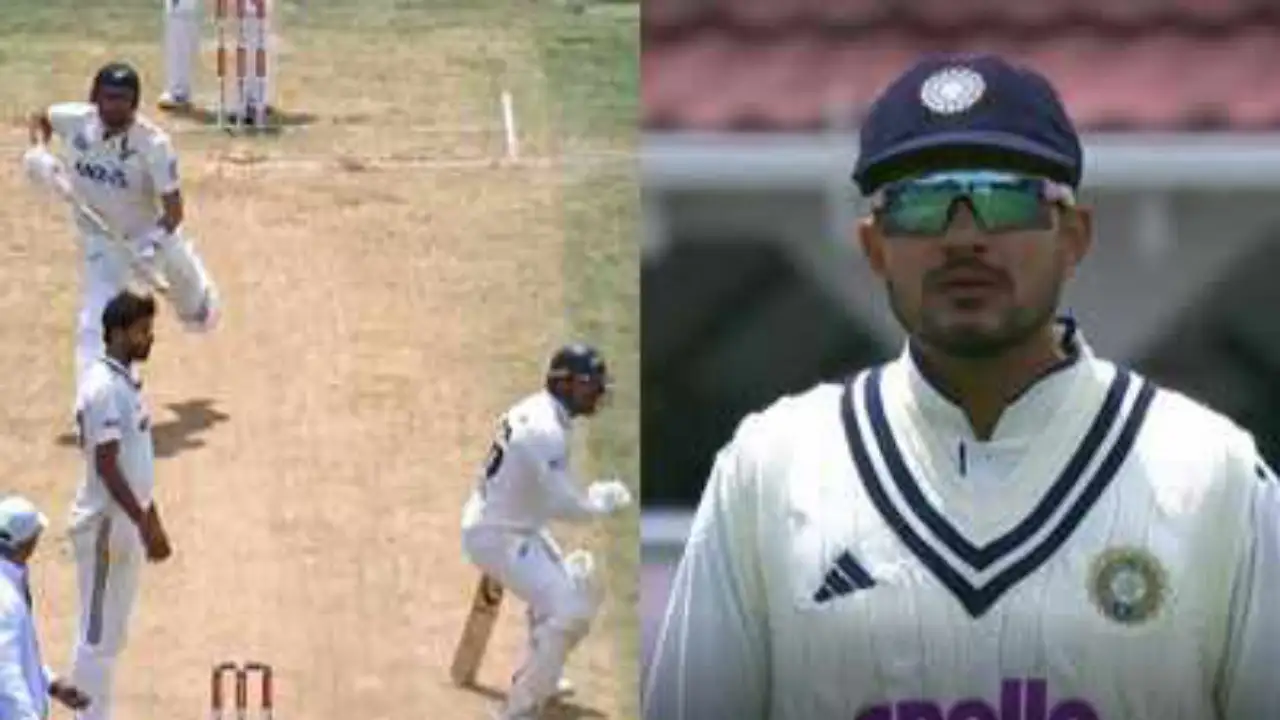
“Smiling Laughing doesn’t happen”: R Ashwin’s dig at India’s approach after draw vs New Zealand

R Ashwin Criticises India’s Final-Day Approach After Wellington Test Draw
Former India spinner R Ashwin has questioned the urgency and intent shown by Shubman Gill’s side after the first Test against New Zealand ended in a draw at the Basin Reserve in Wellington. India had put the hosts under considerable pressure, but could not take the final five wickets before the teams shook hands with roughly 15 overs remaining on the last day.
Ashwin’s comments have renewed discussion about India’s match management, attacking mindset and ability to close out Test matches. In his view, a draw was always possible, but India could have made a stronger attempt to force a result rather than allow New Zealand’s batters to settle into a comfortable rhythm.
Ashwin Sees a Contrast With India Under Virat Kohli
Speaking on his podcast Ash Ki Baat, Ashwin said India could take a lesson from the urgency associated with Virat Kohli’s captaincy. He was careful not to claim that a different approach would certainly have produced a win, but argued that sustained pressure matters when a team is chasing a result.
“A draw was also possible; you can never say another bowler or another captain would have won the match—but I’ll only say this: urgency helps,” Ashwin said.
His point was less about comparing individual captains and more about the atmosphere a team creates in a decisive phase. When a batting side is trying to survive, close fielders, sharp communication and consistent bowling can make every delivery feel consequential. If the pressure eases, batters may find it easier to reset, rotate the strike and see out the remaining overs.
Daryl Mitchell’s Relaxed Manner Draws Ashwin’s Attention
Ashwin also referred to New Zealand batter Daryl Mitchell, who appeared relaxed during the closing stages. He noted that Mitchell moved around, spoke with the Indian players and captain, and was seen smiling while at the crease.
For Ashwin, those moments suggested that New Zealand had begun to feel increasingly secure. He said that when India are pushing for a win, the team should remain focused and determined rather than allow the opposition to slip into a comfort zone.
“When we’re on top, it happens, but when we’re chasing a result, we’re ready to fight, because otherwise the batsmen go into a comfort zone,” Ashwin said, describing the intensity he believes is needed in that situation.
His observation highlights a subtle part of Test cricket: pressure is not created by the ball alone. Body language, field placement, the pace between overs and the energy of the fielding side can all influence how secure a batter feels. Ashwin’s criticism was that India did not maintain that sense of urgency for long enough on the final day.
Why India’s Decision to End the Match Was Questioned
The decision to shake hands with around 15 overs still available became another focus of Ashwin’s assessment. He believed India could have continued bowling and given themselves more time to pursue the five remaining wickets.
Even if the fast bowlers needed a break, Ashwin suggested that India had other options. The spinners could have been brought into the attack, supported by close catchers and an attacking field, in an effort to create pressure or provoke a mistake. Such a strategy would not guarantee a breakthrough, particularly on a tiring final-day pitch, but it would preserve the possibility of a late result.
That distinction matters in Test cricket. A team may dominate long periods of a match without converting that control into a victory. The final session can require a different calculation: how much risk to take, how to manage bowler fatigue, and whether there is enough time to keep attacking. Ashwin’s argument was that India should have stayed in the contest for longer before accepting the draw.
WTC Prediction and the Value of Turning Control Into Wins
Ashwin connected the Wellington result to the broader race for the ICC World Test Championship (WTC). In the championship, teams earn points through results—not for controlling sessions or playing attractive cricket without winning. That makes every opportunity to finish a match especially important, particularly against a rival near the top of the standings.
India had put New Zealand under pressure during the Test, but failed to claim all 20 wickets. Ashwin said that dominance alone would not improve India’s position in the WTC table. His comments also underline why a reliable match-winning prediction is difficult in Test cricket: conditions can change, the ball can lose its effectiveness, and a determined batting side can survive even when the balance of the game appears to be against it.
Still, Ashwin felt India should have shown greater determination after doing much of the hard work. He compared the team’s finish to a runner who completes most of a marathon but fails to push through the final stretch. The analogy captures his central concern: India had created a promising position, yet did not sustain its effort until the last possible moment.
What the Wellington Draw Could Mean for India
Ashwin’s criticism is ultimately a challenge to India’s decision-making rather than a dismissal of the team’s overall performance. The side had controlled important phases, but the inability to take the final wickets left the match unfinished from a competitive standpoint. For India, the next step is to assess how attacking fields, bowling changes and communication can be adjusted when a Test reaches its final hours.
“We dominated this Test match, but you’ve not nailed them, right? Nobody will give us points for dominating the Test match. Points come for winning,” Ashwin said. He added that India should have been frustrated at letting New Zealand recover after placing them in difficulty.
The draw in Wellington therefore offers more than a single result to reflect on. It raises a familiar question for ambitious Test teams: when victory remains possible but far from certain, should they protect the draw or keep pushing for the win? Ashwin’s answer is clear. India may not have been guaranteed a breakthrough, but he believes they should have made New Zealand fight for every remaining over.
Latest News

India tour of Bangladesh gets fresh hope as BCB confirms talks with BCCI

Tom Latham opens up on soft ball problem and saliva ban after draw against India

Ajinkya Rahane slams Tilak Varma for publicly criticising Shahbaz Ahmed after India A’s defeat

ICC to introduce IPL-style bat checks in international cricket
“Smiling Laughing doesn’t happen”: R Ashwin’s dig at India’s approach after draw vs New Zealand

“Not good enough for Test cricket”: Scott Styris, Sunil Gavaskar slam Wellington pitch

Dodda Ganesh declares India ‘out of WTC final race’ after Wellington Test draw

Ajinkya Rahane criticises Shubman Gill for abusing Akash Deep in 1st Test vs New Zealand

‘Why so many boundary riders?’ Dinesh Karthik questions Shubman Gill’s captaincy after Wellington Test

“I just want to enjoy my life”: Yash Dayal reflects on his return to cricket

“Conversation was about…”: Glenn Phillips reveals New Zealand’s Day 5 plan that helped secure draw vs India
Saba Karim takes aim at Washington Sundar’s selection after India’s Wellington Test draw
“Please focus on the sport”: Navjot Singh Sidhu urges India and Pakistan to resume bilateral cricket ties
Prithvi Shaw threatens legal action against Yograj Singh over personal remarks