Babar Azam humiliated by teammate over strike rate ahead of Asia Cup 2025
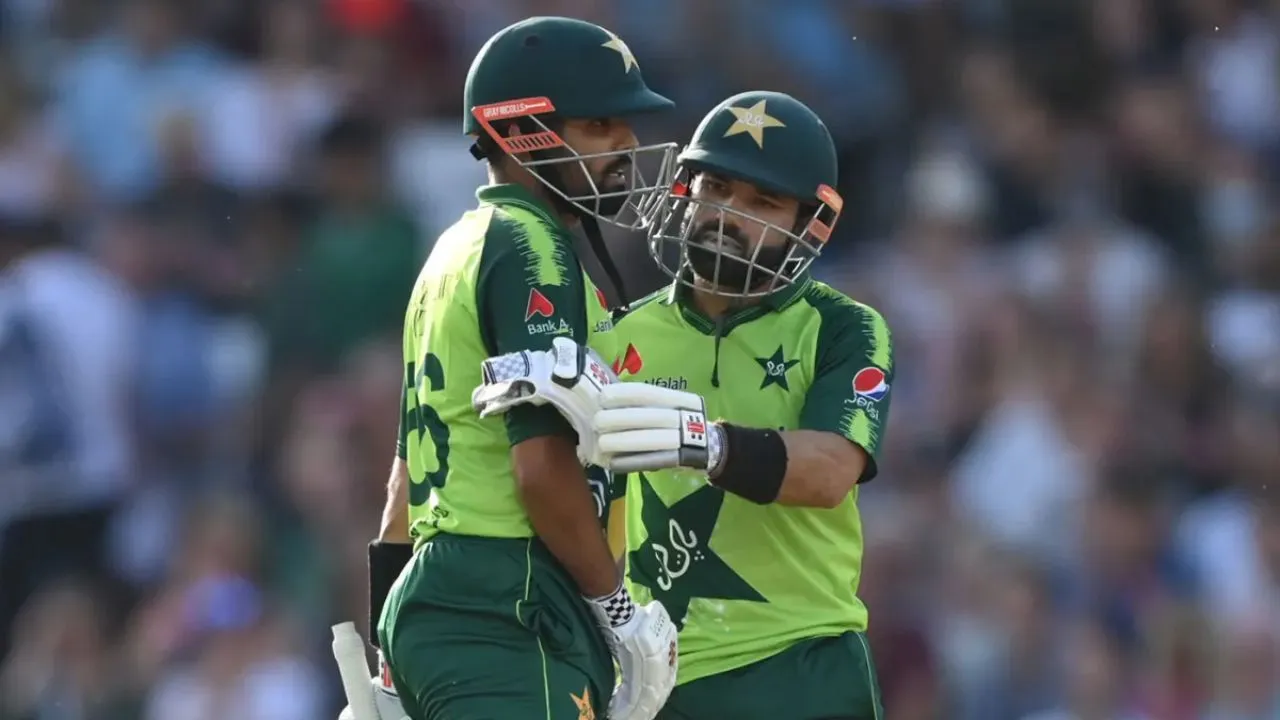
Pakistan’s Mohammad Haris Calls for Babar Azam to Play Faster in T20s
Pakistan’s wicketkeeper-batsman Mohammad Haris has sparked conversation by making a bold prediction about star batter Babar Azam ahead of the upcoming tri-nation series and the Asia Cup 2025. Notably, Babar was left out of the upcoming series squad, with selectors opting for players like Saim Ayub, Sahibzada Farhan, and Fakhar Zaman instead. This decision comes despite Babar Azam and Mohammad Rizwan being the country’s top batsmen.
Babar Azam’s T20I Record and Recent Struggles
Babar Azam boasts an impressive track record in T20 Internationals, having scored 4,223 runs in 128 matches at an average of nearly 40, with three centuries and 36 half-centuries to his name. Despite these achievements, criticism has been directed towards his strike rate of 129. Babar’s exclusion from the T20 squad follows his underwhelming performances in the 2024 T20 World Cup and bilateral series against Australia and South Africa.
In the 2025 Pakistan Super League (PSL), Babar showed signs of form with notable scores for Peshawar Zalmi. However, his last appearance for Pakistan was in a three-match ODI series against the West Indies, where he struggled with scores of 47, 0, and 9. While being the second-highest run-scorer in T20Is behind Rohit Sharma, Babar’s strike rate raises concerns about his future in the shortest format.
Mohammad Haris Advocates for a Faster Approach
Mohammad Haris believes that Babar Azam needs to adopt a more aggressive batting approach in T20 cricket to improve his strike rate. Haris, known for his aggressive play, recently scored an unbeaten 107 off 46 balls against Bangladesh at a striking rate of 232.60, becoming Pakistan’s second-fastest T20I centurion. However, he has struggled in his last six T20I matches, scoring only 21 runs.
2025 Asia Cup Schedule and Pakistan’s Campaign
The 2025 Asia Cup is scheduled to take place from September 9 to 28, marking the return of the event to the T20I format for the first time since 2022. The tournament will feature eight teams divided into two groups. Pakistan finds themselves in Group A alongside India, Oman, and the UAE. Their opening match will be against Oman on September 12, followed by clashes against India and the UAE.
Prior to the Asia Cup, Pakistan will participate in a tri-series against Afghanistan and the UAE from August 29 to September 7, led by Salman Ali Agha. The squad includes established players like Shaheen Afridi, Haris Rauf, and Hasan Ali, as well as promising talents like Hasan Nawaz and Mohammad Haris.
Haris’s call for Babar Azam to accelerate his game in T20s adds an intriguing dynamic to Pakistan’s cricketing landscape as they gear up for the upcoming tournaments. Fans will be watching closely to see if Babar heeds Haris’s advice and makes adjustments to his gameplay.
Challenges Faced by Babar Azam
Despite being a consistent performer in T20 cricket, Babar Azam has faced criticism for his inability to accelerate his scoring rate in the shortest format of the game. While he has shown an exceptional ability to build an innings and anchor the batting lineup, there have been instances where his lack of aggression has cost the team in crucial moments. The pressure to score quickly in T20s, especially with the rise of power-hitting batsmen around the world, has put Babar under scrutiny.
One of the challenges Babar faces is finding the right balance between his natural game of playing authentic cricketing shots and adapting to the demands of modern T20 cricket, which often require batsmen to take more risks and play unconventional strokes. This dilemma has led to discussions about whether Babar should focus on maintaining his consistency or evolve his game to add more firepower to the team’s batting lineup.
Impact of Mohammad Haris’s Statement
Mohammad Haris’s statement urging Babar Azam to play faster in T20s has stirred a debate among cricketing circles and fans alike. While some believe that Babar’s approach as a batsman has been effective and that he should stick to his strengths, others argue that adapting to the changing dynamics of T20 cricket is essential for his continued success. The pressure on Babar to perform at a higher strike rate while maintaining his average puts him in a challenging position.
Haris, who himself has shown the ability to score quickly and change the course of a game with his aggressive style, brings a fresh perspective to the conversation. His recent exploits with the bat have highlighted the impact a more assertive approach can have on a team’s fortunes in T20 matches. As a rising star in Pakistan cricket, Haris’s words carry weight and could potentially influence Babar’s approach to the game.
The Evolution of T20 Cricket
Over the years, T20 cricket has evolved significantly, with teams and players adapting to the changing trends in the game. The rise of franchise leagues like the Indian Premier League (IPL), Big Bash League (BBL), and Caribbean Premier League (CPL) has led to the emergence of power hitters and aggressive batsmen who have redefined the way T20 cricket is played. In this high-octane environment, the ability to score quickly and dominate bowlers has become a prized asset for any team.
As teams prepare for major tournaments like the Asia Cup, the focus on finding the right balance between traditional stroke play and innovative shot-making becomes crucial. The inclusion of players who can accelerate the run rate and take on the bowlers from the outset has become a common strategy for successful T20 teams. Babar Azam’s challenge lies in adapting his game to meet these evolving demands while maintaining his status as one of the premier batsmen in world cricket.
Conclusion
As Pakistan gears up for the tri-nation series and the Asia Cup, the spotlight will be on Babar Azam and his approach to T20 cricket. The debates surrounding his strike rate, consistency, and adaptability will only intensify as he looks to prove his critics wrong and make a significant impact in the upcoming tournaments. Whether Babar chooses to heed Mohammad Haris’s advice and play faster or continues with his established style remains to be seen, but one thing is certain – his performances will be closely monitored by fans, experts, and opponents alike.
As the cricketing world eagerly awaits the action-packed contests in the tri-nation series and the Asia Cup, the narrative surrounding Babar Azam’s evolution as a T20 batsman adds an intriguing layer to the unfolding drama. With expectations high and challenges aplenty, Babar’s response to the growing demands of modern T20 cricket will shape not only his own legacy but also Pakistan’s fortunes on the international stage.
Latest News

Top 10 highest run-chases in T20 cricket history, ft. West Indies’ Ranchi win vs India
Aaryavir Sehwag and Anvay Dravid set to make headlines at U19 Asia Cup 2026

Longest ducks in Test cricket history ft. Nic Maddinson, Shoaib Akhtar

ECB to offer 39 central contracts to England players after Ben Stokes, Mark Wood’s retirement

Steve Smith surpasses Steve Waugh in all-time Test run-scorers’ list

Shane Watson identifies Gautam Gambhir’s biggest problem as India struggle for consistency

Is Bhuvneshwar Kumar in India’s 2027 World Cup plans? Ajinkya Rahane makes revelation

BCCI’s big ₹127 Crore move after injury crisis raises concerns over Team India

Parthiv Patel reveals RCB ignored his Jasprit Bumrah recommendation in IPL 2014 Auction
“Never spoke ill of any faith”: Irfan Pathan hits back at fake news using his name
Nic Maddinson bags 33-ball duck on Test comeback, disappoints George Bailey

Imran Tahir predicts 2027 ICC ODI World Cup Semi-Finalists, snubs India for title

Australia create unwanted history with first all-30-plus Test XI
Ravindra Jadeja returns to Ranji Trophy as Saurashtra announce squad