

ICC rejects England’s request to change WTC slow over-rate penalties
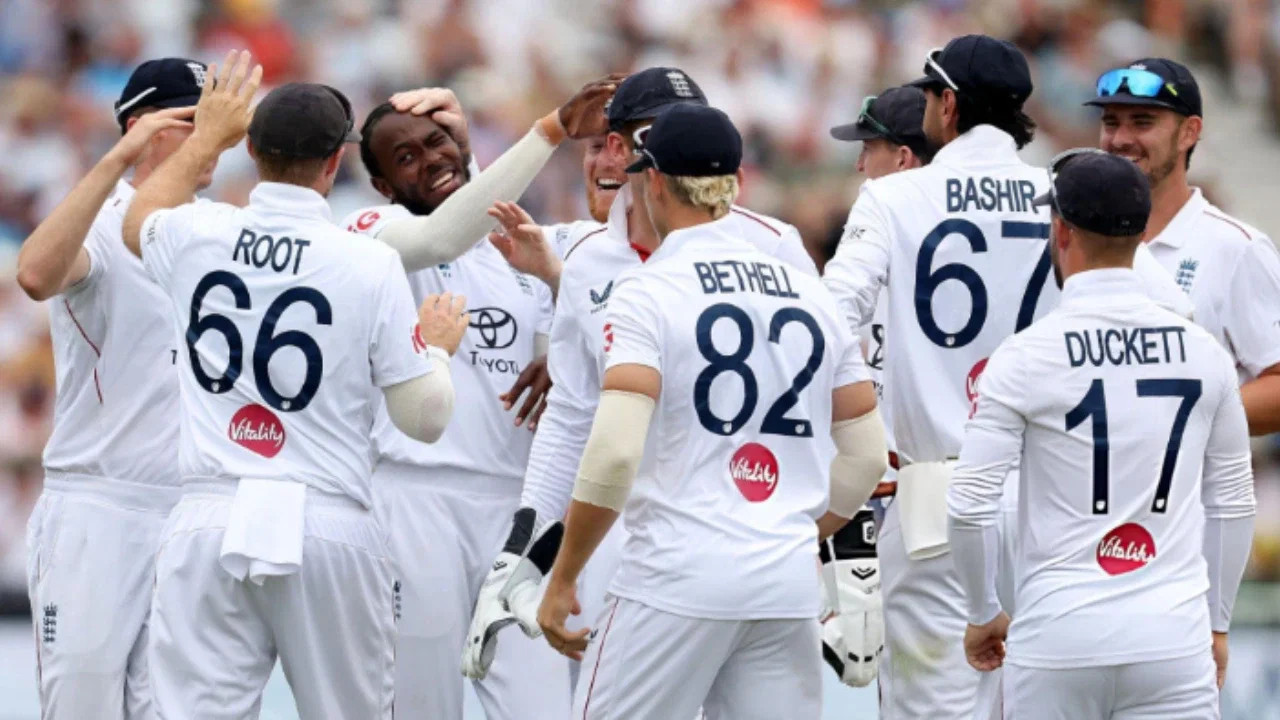
ICC Rejects England’s Bid to Change WTC Slow Over-Rate Penalties
England’s attempt to soften the World Test Championship’s slow over-rate rules has been turned down by the International Cricket Council. The ICC Cricket Committee, chaired by former India captain Sourav Ganguly, did not support the proposal during meetings in Bali, meaning teams will continue to lose one WTC point for every over they fall behind the required rate.
The decision leaves England facing the same penalties that have already damaged its campaign. The team has lost 14 points for slow over rates and sits sixth in the standings, making qualification for next summer’s WTC Final at The Oval increasingly unlikely. The ruling also renews a wider debate about how cricket can balance the pace of a five-day match with the tactical demands of Test cricket.
Why England Asked for a Change
Ben Stokes, who has previously captained England, argued that the current system does not adequately account for differences in playing conditions and bowling styles. In his view, teams that use spinners more often—particularly in subcontinental conditions—may find it easier to complete their overs on time than sides that rely heavily on fast bowlers.
Fast-bowling spells can involve longer run-ups, more time between deliveries and greater physical demands on players. England’s approach in seam-friendly conditions, Stokes suggested, can therefore make it harder to maintain the prescribed rate. He also questioned whether a uniform penalty fairly reflects the different circumstances teams encounter across the WTC schedule.
However, the committee reportedly considered the argument insufficient to justify changing the rules. Pace-oriented teams such as Australia and New Zealand have also managed to meet the required rates in home Tests, suggesting that bowling style alone does not determine whether a side falls behind.
“The Promised Volume of Cricket”
A key concern for the ICC committee was the amount of cricket spectators are entitled to see each day. Slow over rates can reduce the number of overs bowled before the scheduled close of play, limiting the action available to fans in the stadium and watching around the world.
From the governing body’s perspective, the one-point deduction is intended to make teams accountable for keeping matches moving. Without a meaningful consequence, officials may have fewer effective ways to encourage sides to meet their daily obligations. The committee’s position indicates that protecting the “promised volume of cricket” remains more important than introducing exceptions based on bowling type or match tactics.
The ruling does not mean every delay is necessarily avoidable. Injuries, reviews, changes in conditions and other interruptions can affect a match’s rhythm. But the ICC’s decision reinforces the principle that teams are responsible for managing the time available and completing their overs at the required pace.
Stokes Says Test Match Tactics Need Consideration
Stokes’ criticism also focused on the nature of captaincy. Test cricket allows teams to adjust their plans from ball to ball, and captains may need to speak with bowlers, move fielders or respond to a batter’s changing approach. Those decisions can take time, especially during tense passages of play.
“There’s so many tactical decisions that you need to make, whether that be chatting with the bowler or field changes,” Stokes said. He added that a field could look completely different by the end of an over, arguing that these responsibilities are not reflected in the current calculation. His broader point was that simply telling players to “hurry up” may not address the reasons a side falls behind.
The ICC’s response suggests it expects teams to find ways to preserve tactical flexibility while still meeting the over-rate target. That could require quicker communication, more efficient field changes and better coordination between captains, bowlers and support staff. Teams may also need to plan ahead for likely bowling changes rather than making every adjustment only after an over has ended.
WTC Standings Complicate England’s Argument
The current standings provide a mixed picture of how slow over-rate penalties affect different teams. Pakistan and Sri Lanka have been among the hardest hit, losing more points through deductions than they have earned from match results. Pakistan have been docked 24 points while collecting 16, while Sri Lanka have lost 15 points against 13 earned.
Recent sanctions have added to the pressure. Sri Lanka received a 15-point deduction, while Pakistan lost five points after falling five overs short in their Rawalpindi Test. Those figures underline that slow over-rate penalties are not confined to England or to teams that depend on fast bowling.
At the other end of the table, South Africa, Australia and New Zealand have not lost points for slow over rates during the current WTC cycle. India have also avoided deductions. These records do not prove that conditions are identical for every team, but they do show that maintaining the required rate is possible across different squads and styles of play.
What the Decision Means for England
With the penalty system unchanged, England’s immediate challenge is practical: avoid further deductions while continuing to compete in a demanding Test schedule. The team’s existing 14-point loss has left little room for error in the race to reach the final. Any additional sanctions could make its qualification prospects even harder to recover.
England’s coaching staff will likely need to treat over-rate management as part of match strategy, not merely an administrative concern. That may involve monitoring the rate more closely during play, streamlining communication and identifying moments when field changes or bowling discussions can be handled more quickly.
Stephen Fleming’s arrival as head coach is also expected to bring renewed attention to England’s WTC campaign. The team will need to adapt without sacrificing the aggressive, tactically flexible style that has shaped its Test approach. The challenge is to maintain that identity while ensuring the match does not lose overs—and valuable championship points—through avoidable delays.
Prediction: Pressure on Teams to Adapt
The ICC’s decision makes a change to the WTC slow over-rate rules unlikely in the near term. Instead, teams can expect continued enforcement, with points deductions remaining a significant factor in the standings. England may continue to argue that the system should account for the realities of Test cricket, but the committee’s emphasis on delivering a full day’s play suggests that the existing policy will remain in place.
For England, the most realistic route forward is to improve its match-day processes rather than rely on a rule change. For the wider WTC competition, the debate is likely to persist: how can cricket protect spectators’ time without discouraging the tactical conversations and careful decision-making that make Test matches distinctive? For now, the ICC has made its priority clear—teams must find a way to play their cricket and complete their overs on schedule.
Latest News

Michael Vaughan questions Shubman Gill’s decision to settle for draw against New Zealand

Priyansh Arya smashes world record, surpasses KL Rahul’s highest T20 score by an Indian
ICC rejects England’s request to change WTC slow over-rate penalties

IPL 2027: LSG, PBKS set to battle for England pacer Sonny Baker in mini-auction

“Don’t understand why”: Madan Lal questions Rishabh Pant’s absence in ODIs and T20Is

Aakash Chopra points out why Ravindra Jadeja is a better bowler than Washington Sundar

PSL 2027: Peshawar gets historic first match as PCB confirms six host cities

“Keep fighting”: Daryl Mitchell highlights New Zealand’s team spirit ahead of 2nd Test

Kamindu Mendis to skip IPL 2027, remains open to franchise cricket

Aakash Chopra backs Shubman Gill to continue as India Test captain despite WTC setback

India’s nemesis chooses PSL over IPL, joins Islamabad United for PKR 7.07 crore

ICC unwilling to reconsider saliva ban despite India’s concerns after Wellington Test

SA vs BAN Playing 11 Today, Live Streaming, Pitch & Weather: South Africa tour of Bangladesh 2026, 2nd Test

AUS vs ENG Playing 11 Today, Live Streaming, Pitch & Weather: England tour of Australia 2026, 2nd T20I


