David Warner backs Chris Broad’s dig at Darren Lehmann over 2018 ball-tampering scandal
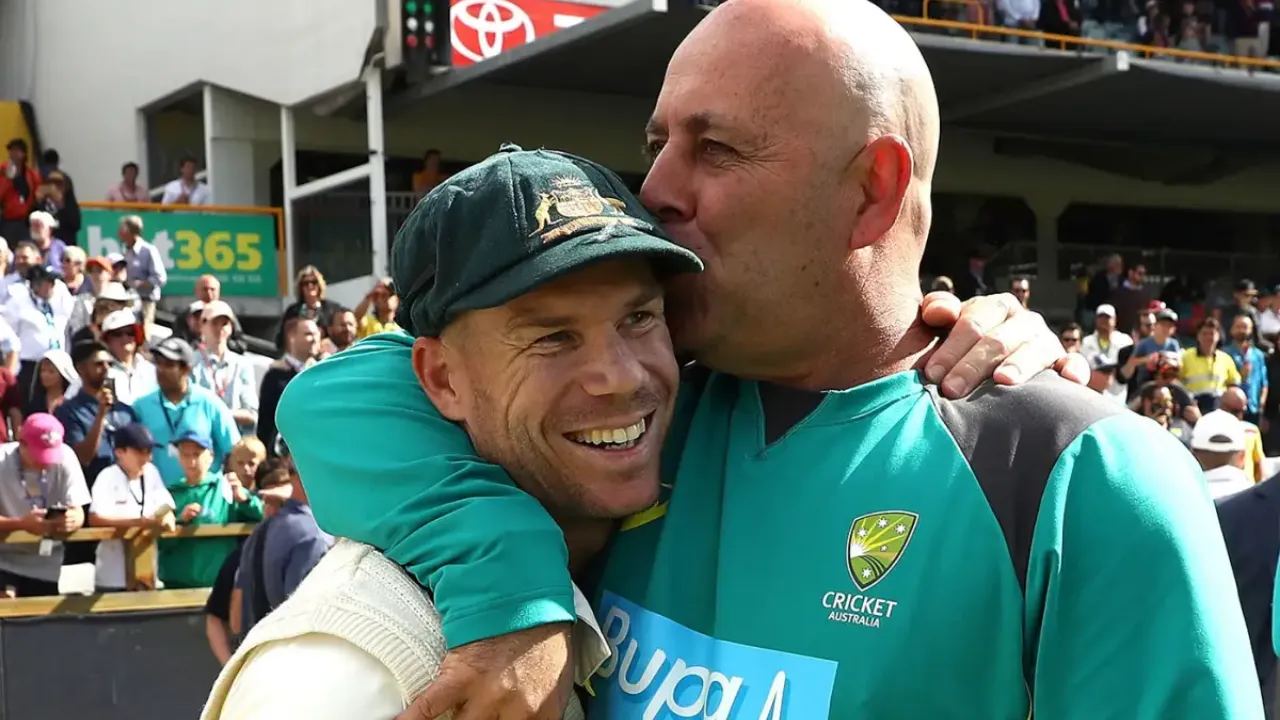
David Warner Backs Chris Broad’s Criticism of Darren Lehmann Over Ball-Tampering Scandal
Former Australia batter David Warner has publicly supported ICC match referee Chris Broad’s criticism of ex-Australia coach Darren Lehmann, reigniting debate about accountability for the 2018 ball-tampering scandal. Warner agreed with Broad’s view that Lehmann’s position as head coach warranted greater scrutiny after the Cape Town incident, even though Lehmann maintained that he had no prior knowledge of the plan.
The controversy has returned to the spotlight following the release of Usman Khawaja’s autobiography, Sabr. In the book, the Australia opener describes a method the team used to encourage reverse swing during the 2017–18 Ashes series—months before Cameron Bancroft was caught using sandpaper in South Africa. Khawaja’s account has prompted fresh discussion about where teams draw the line between exploiting a ball’s natural wear and deliberately altering its condition.
Warner Agrees With Broad’s Assessment of Lehmann
Speaking on Track Radio, Broad said he was “very angry” with Lehmann’s response to the Cape Town scandal. Broad questioned how the former coach could have been unaware of the plan and argued that, if he genuinely did not know what was happening, that raised questions about his oversight of the team.
“Darren Lehmann surely knew all about it,” Broad said. “And if he didn’t, he shouldn’t have been the coach at the time.” He also argued that Lehmann had escaped formal sanctions, despite leaving his coaching role a few months after the scandal.
Warner, who was one of the players sanctioned for his involvement in the Cape Town affair, backed Broad in a post on X. “I couldn’t agree more and that’s hard for me to say!” he wrote, sharing his response to the former England batter’s comments.
Warner’s agreement is notable given his own role in the episode. Cricket Australia suspended him for 12 months after the investigation into the 2018 Test, while captain Steve Smith also received a 12-month ban and Bancroft was suspended for nine months. The penalties made the scandal one of the most consequential disciplinary episodes in modern Australian cricket.
Why Broad Says the 2013 Ashes Matters
Broad’s frustration is also rooted in an earlier Ashes dispute involving his son, former England fast bowler Stuart Broad. During the 2013 Test at Trent Bridge, Stuart remained at the crease after edging a delivery to first slip. The umpire did not give him out, and the England batter chose not to walk.
Lehmann, then an Australia coach, publicly described Stuart as a “blatant cheat” and encouraged Australian supporters to target him during the return series. Broad believes those remarks make Lehmann’s later position on the 2018 scandal difficult to accept.
“There he was in 2013, taking the moral high ground against my son,” Broad said, recalling the criticism. He contrasted Lehmann’s condemnation of Stuart’s decision with the Cape Town incident, in which members of the Australian team were found to have deliberately interfered with the ball.
The two episodes were different in nature: Stuart Broad’s decision was a matter of sportsmanship within the laws and conventions of the game, while the Cape Town case involved a planned attempt to change the ball’s condition. But Broad’s point is about consistency—whether the same standards of honesty and responsibility were applied when the scrutiny turned to Australia’s own conduct.
Khawaja’s Account of Reverse Swing in the 2017–18 Ashes
In Sabr, Khawaja describes Australia’s efforts to generate reverse swing during the Ashes series against England. He says the team found that lifting the flaps along the ball’s quarter-seam could affect its movement through the air, likening the raised seam to a rudder.
“We were reverse swinging it late on day five,” Khawaja wrote, adding that Australia had also managed to make the pink ball move during the previous match. He stressed that he used “we” because the players were part of a team, regardless of who personally carried out the action.
Khawaja’s description does not, by itself, establish that the method was equivalent to the sandpaper incident. Reverse swing is a legitimate feature of cricket when produced through the ball’s natural wear and lawful maintenance. Deliberately damaging or altering the ball, however, breaches the Laws of Cricket. The distinction between legal ball management and prohibited tampering is therefore central to the renewed debate.
Australia’s third Test victory in Perth, which helped the team regain the Ashes, came late on the fifth day. Khawaja’s account has brought new attention to the techniques used to make the ball reverse swing during that series, although the book’s claims should be understood separately from the findings of the later Cape Town investigation.
Fresh Scrutiny, but No New Finding on the Cape Town Case
The timing of the Ashes revelations has encouraged comparisons with the 2018 scandal, but the events should not be treated as interchangeable. The Cape Town investigation established that Bancroft used sandpaper to alter the ball, with Smith and Warner receiving sanctions for their roles in the plan. Lehmann was not given a playing or coaching ban and left his position after the incident.
That difference helps explain why Broad’s comments have resonated again. His criticism is directed not only at what happened on the field, but also at the question of leadership: what a coach knew, what a coach should have known, and whether responsibility ends with the individuals caught carrying out an act.
Khawaja’s book has added another layer to that discussion by offering a player’s recollection of Australia’s approach to reverse swing before the Cape Town Test. It has not changed the official sanctions from 2018, but it has renewed interest in how cricket teams manage the ball and how clearly they communicate the rules to players.
What the Debate Means for Cricket’s Integrity
Ball condition has long been part of cricket strategy, particularly in matches where reverse swing can influence the outcome. That makes transparent rules and consistent enforcement essential. Players, coaches and officials must understand the difference between maintaining one side of the ball and intentionally changing its surface or seam.
Broad’s criticism, Warner’s endorsement and Khawaja’s account have combined to bring the issue back into public conversation. Any prediction about further consequences would be premature: the new discussion does not automatically mean fresh disciplinary action. For now, the focus is on how cricket remembers the scandal, how responsibility is assigned within a team, and whether the sport’s standards are applied consistently to players and coaches alike.
As the debate continues, the broader lesson is clear: trust in cricket depends not only on the rules themselves, but on the willingness of everyone involved to uphold them. The renewed attention to the 2017–18 Ashes and the Cape Town Test shows that questions about leadership, accountability and ball tampering remain highly relevant to the game.
Latest News
Suryakumar Yadav breaks silence on difficult period following T20 World Cup victory
Usman Khawaja’s book tour faces changes after fiery ABC interview
Sanju Samson returns as captain as Kerala announce squad for Syed Mushtaq Ali Trophy 2026-27
PCB announces venue change for 2nd Pakistan-Sri Lanka Test, dates remain unchanged
Lance Morris suffers freak injury at engagement party, faces month-long absence
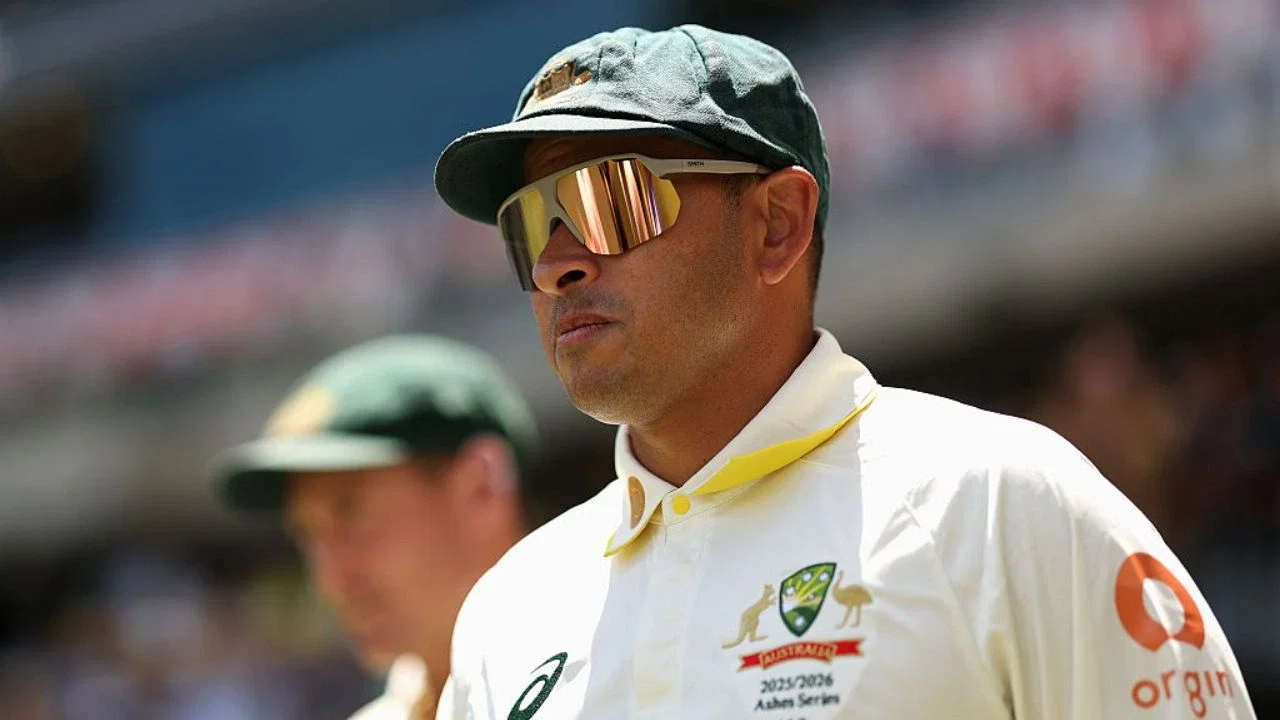
Usman Khawaja breaks silence on Lord’s incident, makes racial abuse allegations against MCC members
“There was a moment where we…”: Kane Williamson opens up on Fab Four comparison

Harshal Patel to Gujarat Titans? Sunrisers Hyderabad considering cash deal or Tom Banton swap
Surrey’s Lee Fortis saga ends in exit after ECB row and Gautam Gambhir controversy
KS Bharat to play international cricket for another country after leaving Indian cricket
Rajasthan Royals asked LSG for Mohammed Shami, Mohsin Khan in Yashasvi Jaiswal trade talks

Hardik Pandya-Arshdeep Singh trade officially announced as MI-PBKS pull off historic move
New Zealand Test squad for India series: Jacob Duffy IN, Devon Conway & Rachin Ravindra picked
David Warner backs Chris Broad’s dig at Darren Lehmann over 2018 ball-tampering scandal