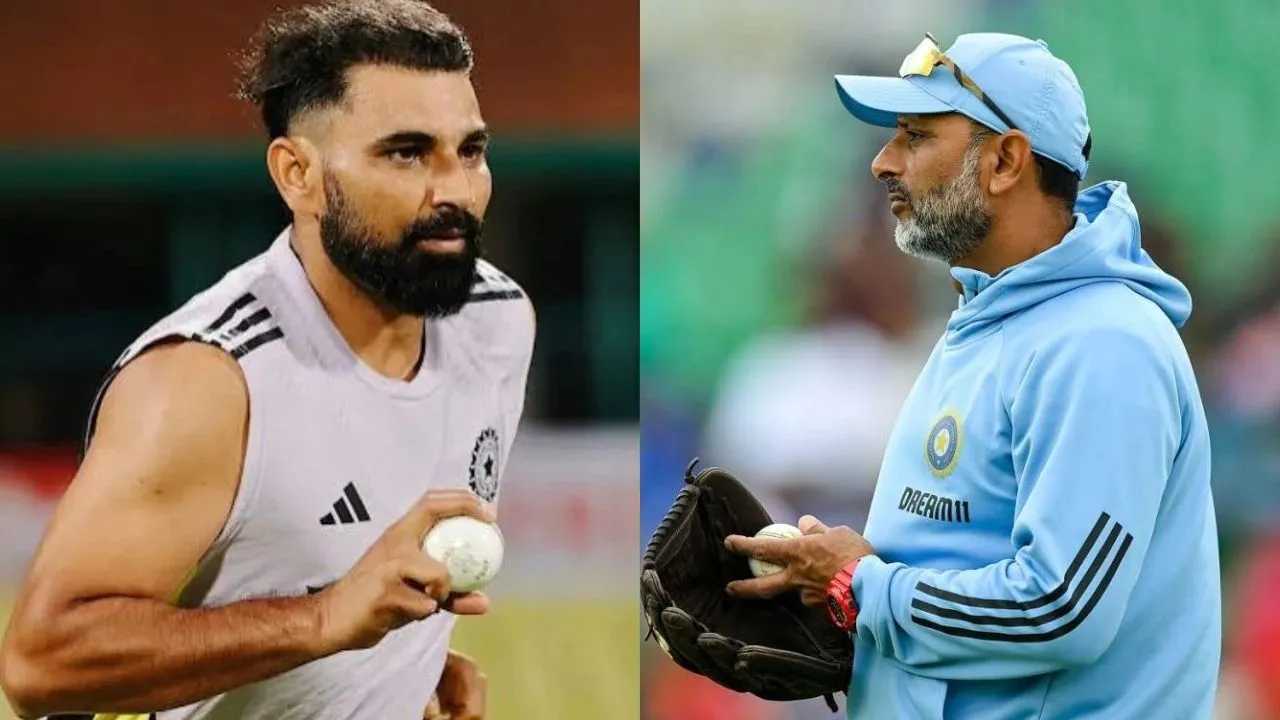
Gautam Gambhir’s former teammate backs split coaching model for Team India
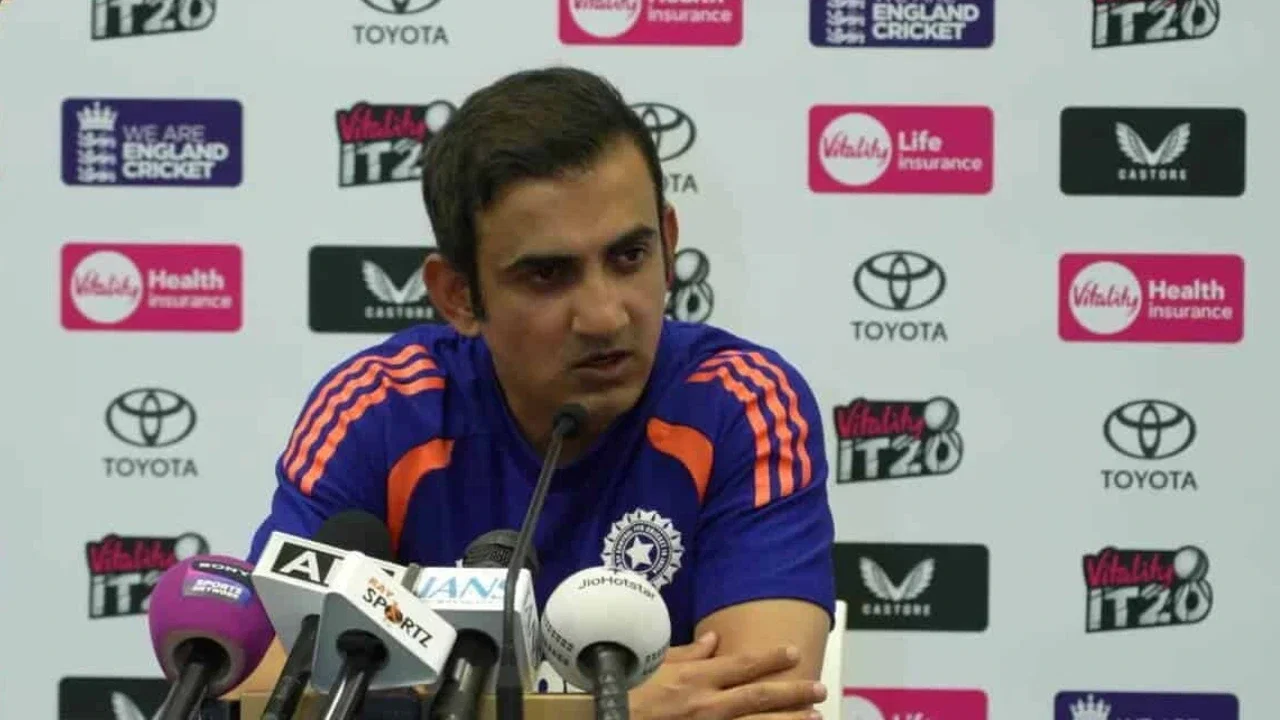
**Former India Opener Wasim Jaffer Suggests Split Coaching for Indian Cricket Team**
Former India opener and teammate of Gautam Gambhir, Wasim Jaffer, has recently proposed the idea of split coaching for the Board of Control for Cricket in India (BCCI) to consider. Jaffer believes that with the increasing number of international fixtures involving the India National Cricket Team, it may be beneficial to divide the coaching responsibilities.
**Challenges Faced by Gautam Gambhir**
As the head coach serving the Indian cricket team in all three formats, Gautam Gambhir has been shouldering a significant workload. With back-to-back tours, ICC and other series, and constant traveling due to matches, the demands on Gambhir have become overwhelming. While his success rate in the white-ball formats has been commendable, his performance as the coach in Test matches has not been as impressive.
Under Gambhir’s coaching, the Indian team has achieved victories in the 2025 Champions Trophy in the ODI format and the 2026 T20 World Cup. However, in Test matches, the team has only managed to win six out of 18 games, with 10 losses and two draws.
**Split Coaching Theory**
Speaking on his official YouTube channel, Wasim Jaffer highlighted the challenges faced by modern cricket coaches due to the fast-evolving nature of the game and the emergence of new talents. He expressed his belief in the split coaching theory, suggesting that handling responsibilities across all formats has become increasingly challenging for head coaches.
Jaffer mentioned, “A lot of players come and go, the formats change frequently, and there’s very little time to settle in. So, in my opinion, it makes sense. Whether it actually happens or not remains to be seen.”
**Upcoming Test Series as Acid Tests**
Jaffer emphasized the importance of India’s upcoming Test series against Sri Lanka, New Zealand, and Australia in shaping the team’s future in the format. Currently ranked fifth in the World Test Championship points table, India needs to win a significant number of matches to qualify for the championship final.
He stated, “The upcoming series against Sri Lanka, New Zealand, and Australia is huge. I think this will be a real testing period because, as far as I know, we need to win almost 90% of our remaining matches to qualify for the World Test Championship final.”
Jaffer also noted that while Sri Lanka may not pose a significant challenge for India, the series against New Zealand and Australia will be crucial tests for the team.
In conclusion, the suggestion of split coaching by Wasim Jaffer has sparked conversations about the evolving demands on cricket coaches and the need for strategic changes to optimize the team’s performance in different formats. As India prepares for challenging Test series ahead, the coaching staff and players will face significant pressure to deliver consistent results on the international stage.
**The Evolution of Coaching in Cricket**
The role of a cricket coach has evolved significantly over the years, especially with the advent of T20 cricket and the fast-paced nature of the game. Coaches are now required to have a deep understanding of each format, specialized skills, and the ability to adapt quickly to changing circumstances. With players transitioning between formats regularly, the demands on coaches have increased, leading to the need for innovative solutions like split coaching.
In the past, a single head coach handled all formats of the game. However, with the complexities and demands of modern cricket, dividing coaching responsibilities between different individuals specializing in specific formats could potentially optimize performance and strategy. This approach could ensure that each coach is well-versed in the nuances of their designated format, leading to more focused and effective coaching.
**Benefits of Split Coaching**
Split coaching could offer several benefits to the Indian cricket team. By having separate coaches for Test matches, ODIs, and T20s, the players could receive more specialized attention, tailored strategies, and focused development. Each coach could work closely with the players to enhance their skills in the specific format, leading to improved performance and results on the field.
Moreover, split coaching could alleviate the workload on individual coaches, allowing them to focus more on their designated format and excel in their coaching responsibilities. It could also provide opportunities for younger coaches to gain valuable experience and contribute to the team’s success. By implementing split coaching, the Indian cricket team could potentially achieve a better balance between the formats and enhance their overall performance across all formats.
**Future of Coaching in Indian Cricket**
As the cricketing landscape continues to evolve, the role of coaching in Indian cricket will also undergo significant changes. With a talented pool of players and a competitive international schedule, the need for strategic coaching approaches has never been greater. Split coaching, as suggested by Wasim Jaffer, could be a step towards modernizing the coaching structure and enhancing the team’s competitiveness in different formats.
The upcoming Test series against Sri Lanka, New Zealand, and Australia will serve as critical tests for both the players and the coaching staff. The results of these series could potentially shape the future of coaching in Indian cricket and pave the way for innovative coaching strategies to optimize the team’s performance across all formats.
In conclusion, the proposal for split coaching by Wasim Jaffer brings to light the evolving nature of coaching in cricket and the need for strategic changes to adapt to the demands of the game. As Indian cricket looks towards a challenging Test series ahead, the implementation of split coaching could be a game-changer in maximizing the team’s potential and achieving success on the international stage.
Latest News
Top 10 highest run-chases in T20 cricket history, ft. West Indies’ Ranchi win vs India
Aaryavir Sehwag and Anvay Dravid set to make headlines at U19 Asia Cup 2026
Longest ducks in Test cricket history ft. Nic Maddinson, Shoaib Akhtar
ECB to offer 39 central contracts to England players after Ben Stokes, Mark Wood’s retirement
Steve Smith surpasses Steve Waugh in all-time Test run-scorers’ list
Shane Watson identifies Gautam Gambhir’s biggest problem as India struggle for consistency
Is Bhuvneshwar Kumar in India’s 2027 World Cup plans? Ajinkya Rahane makes revelation
BCCI’s big ₹127 Crore move after injury crisis raises concerns over Team India
Parthiv Patel reveals RCB ignored his Jasprit Bumrah recommendation in IPL 2014 Auction
“Never spoke ill of any faith”: Irfan Pathan hits back at fake news using his name
Nic Maddinson bags 33-ball duck on Test comeback, disappoints George Bailey
Imran Tahir predicts 2027 ICC ODI World Cup Semi-Finalists, snubs India for title
Australia create unwanted history with first all-30-plus Test XI
Ravindra Jadeja returns to Ranji Trophy as Saurashtra announce squad