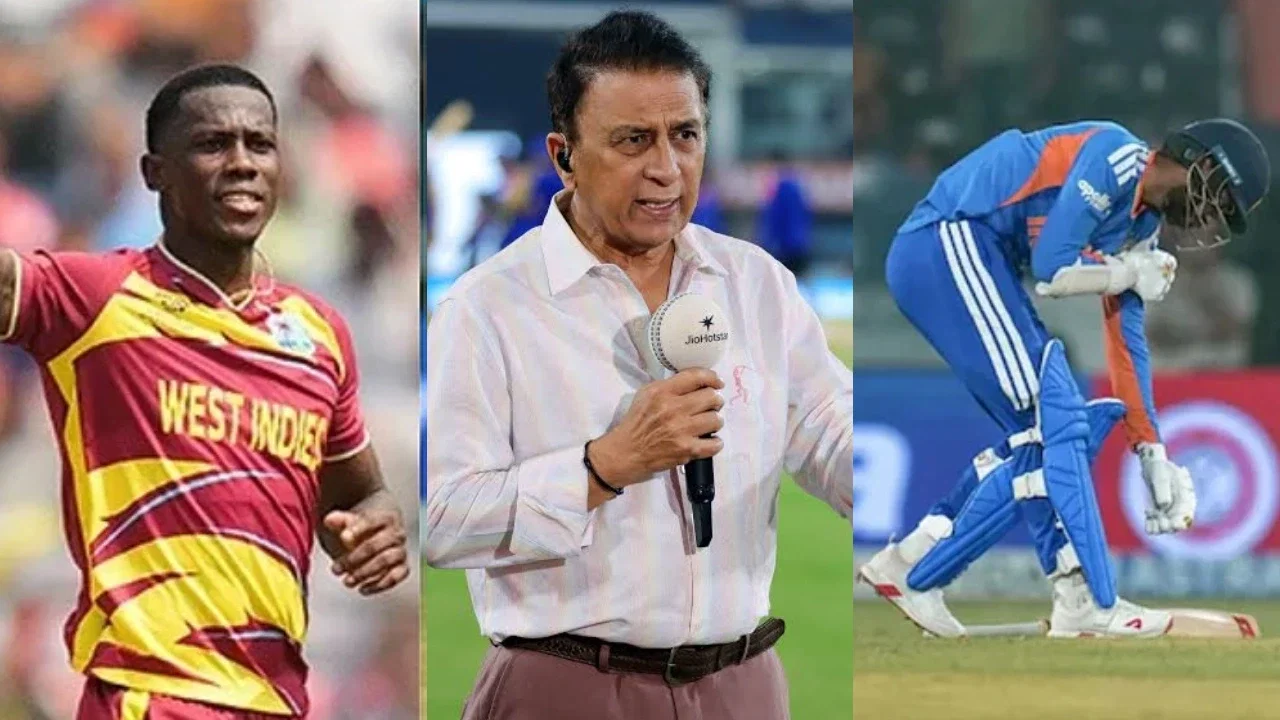
‘India earn millions, West Indies get nothing’: CWI CEO questions cricket’s financial model
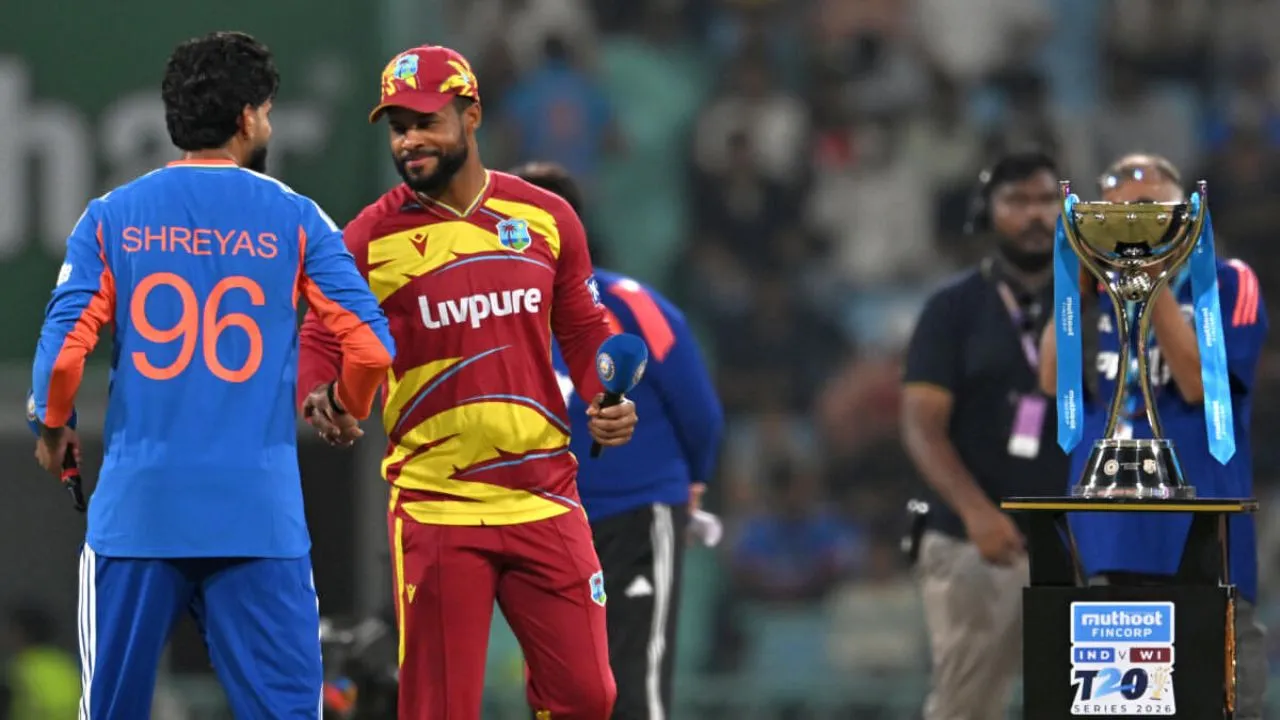
West Indies Cricket Revenue Debate: Chris Dehring Questions ICC’s Financial Model
Cricket West Indies CEO Chris Dehring has renewed debate over how international cricket’s broadcasting income is distributed, arguing that the current system leaves smaller boards with little financial reward when they tour major cricket markets. His comments come during India’s five-match T20I series against the West Indies, where the contrast between the commercial value of the matches and the visitors’ earnings has drawn attention.
According to Dehring, a bilateral series staged in India could generate an estimated $20 million to $30 million through broadcasting and related commercial rights. Yet Cricket West Indies (CWI) receives no share of that broadcast revenue under the existing arrangement, because India is hosting the series and controls the rights associated with it.
The issue highlights a wider challenge in international cricket: audiences, sponsorship and broadcasting demand are concentrated in a handful of large markets, while boards representing smaller populations have fewer opportunities to generate comparable income. For West Indies cricket, the question is not simply who earns money from one tour, but whether the sport’s financial structure can support competitive teams across the international game.
India-West Indies series brings financial debate into focus
The five-match T20I contest has also offered plenty of action on the field. With the series level at 2-2 after Shai Hope’s century in Hyderabad, the final match is set to determine the winner. But beyond the result, Dehring’s remarks have shifted attention to the economics behind bilateral cricket.
In comments reported by The Scoop by Wisden Cricket, Dehring said West Indies cricket would receive no broadcasting income from the series despite the substantial value it may generate in India. His point is that the host board benefits from the commercial rights attached to matches played in its territory, while the touring side’s compensation does not necessarily rise in line with the series’ overall earnings.
That arrangement can produce sharply different outcomes depending on where a series is played. A tour in India can attract enormous audiences and command high-value media deals. A comparable series hosted in the Caribbean operates in a much smaller broadcast market, even when the cricket itself is equally competitive. The result is a financial imbalance that can be difficult for smaller boards to overcome.
Dehring recalls a different touring model
Dehring traced the current system back to a major change in international cricket’s financial arrangements in 1997. Before that shift, host nations generally paid touring teams a guaranteed fee. For West Indies, those payments could be more valuable than the income the board might earn by hosting a series at home.
He recalled that the West Indies team was once a highly sought-after touring opponent, and that guaranteed fees provided an important source of revenue. The subsequent move toward a model in which the host nation retained income from its own broadcasting rights changed the balance of power between cricket boards.
Dehring said nine of the 10 ICC member countries supported the change, leaving West Indies isolated in opposition. He has described the decision as deeply unfair and warned at the time that removing a dependable source of income could have serious consequences for Caribbean cricket.
The change reflected the growing commercial importance of television rights and the increasing ability of host boards to sell cricket to domestic audiences. However, it also meant that revenue became more closely tied to the size and purchasing power of each market. Boards with large populations and strong media demand gained a substantial advantage, while smaller nations had fewer ways to make up the difference.
Why market size matters in cricket finance
Dehring’s comparison between India and the Caribbean illustrates the scale of the challenge. India has a population of around 1.5 billion and a vast domestic audience for cricket. By contrast, individual Caribbean territories have much smaller populations: Antigua has roughly 100,000 residents, while St Kitts has around 30,000.
Population is not the only factor affecting revenue, but it helps explain why broadcasting rights can command very different prices. A large audience can attract more advertisers, sponsors and subscription customers. Smaller markets may produce passionate support and a strong cricket culture, yet still be unable to generate the same commercial returns.
This difference can influence a board’s ability to fund development programmes, maintain facilities, support domestic competitions and retain players. It also raises questions about the long-term competitiveness of international cricket if financial resources become increasingly concentrated among a small group of wealthy boards.
What the debate means for the future of international cricket
Dehring’s criticism adds to ongoing discussions about whether the ICC’s financial framework should do more to support boards with limited commercial markets. Any reform would need to balance the rights of host nations with the wider interests of the international game. Options could include stronger revenue-sharing arrangements, more predictable touring payments or targeted support for development and infrastructure.
There are practical complications. Broadcasting contracts are negotiated in different markets, and host boards invest in staging matches and building local audiences. At the same time, touring teams contribute to the value of a series: a bilateral contest depends on both participants, and the visitors’ role is central to the product being sold.
For CWI, the challenge is especially significant because the West Indies represent a collection of Caribbean nations rather than one large domestic market. The team’s history and global following remain valuable, but those strengths do not automatically translate into the kind of broadcast income available in cricket’s biggest economies.
The financial debate is unlikely to be settled by one series. Still, Dehring’s comments have made the disparity difficult to ignore. As the India-West Indies T20I series reaches its conclusion, the match prediction may focus on which side can claim victory on the field. The larger question for cricket administrators is whether the sport can create a financial model that rewards the host while also helping touring teams and smaller boards remain sustainable.
Ultimately, the future of international cricket depends on more than high-profile fixtures and large television deals. It also depends on maintaining a broad, competitive global game. If smaller boards struggle to fund their teams and pathways, the sport risks weakening the very international contests that make its biggest markets valuable.
Latest News
![Mohammed Shami IN: India ODI squads for New Zealand tour 2026 [Predicted]](https://111.90.158.165/wp-content/uploads/2026/10/Untitled-design-9-1--1.webp)
Mohammed Shami IN: India ODI squads for New Zealand tour 2026 [Predicted]
Yuzvendra Chahal breaks silence on divorce, reveals anxiety attacks and 26 days in rehab
India vs Zimbabwe women’s T20I tickets: Free entry for women in Raipur
Watch: Vaibhav Sooryavanshi warns paparazzi with “thuk jaoge” remark
Bharat Arun, R Sridhar give Nitish Kumar Reddy reality check on becoming next Hardik Pandya
Australia captain Sophie Molineux fit for T20I opener vs NZ, Phoebe Litchfield remains doubtful
Yuzvendra Chahal reveals drunk Australian player nearly killed him
‘Get hit for 6 sixes’: Yuzvendra Chahal recalls Virat Kohli’s unusual advice
Yuzvendra Chahal reveals why Rohit Sharma left him out of India’s 2023 World Cup squad
‘India earn millions, West Indies get nothing’: CWI CEO questions cricket’s financial model
South Africa vs Australia: Scott Boland pushes for recall, Kagiso Rabada awaits fitness clearance
Mitchell Starc may skip IPL 2027 to prioritise Australia’s Test commitments
Yuvraj Singh reveals how Sourav Ganguly offered him Delhi Capitals coaching job
Pathum Nissanka ruled out of Pakistan ODI tri-series, Lahiru Udara named replacement