Yuzvendra Chahal reveals why Rohit Sharma left him out of India’s 2023 World Cup squad
Yuzvendra Chahal Explains His 2023 ODI World Cup Exclusion and Rohit Sharma’s Role
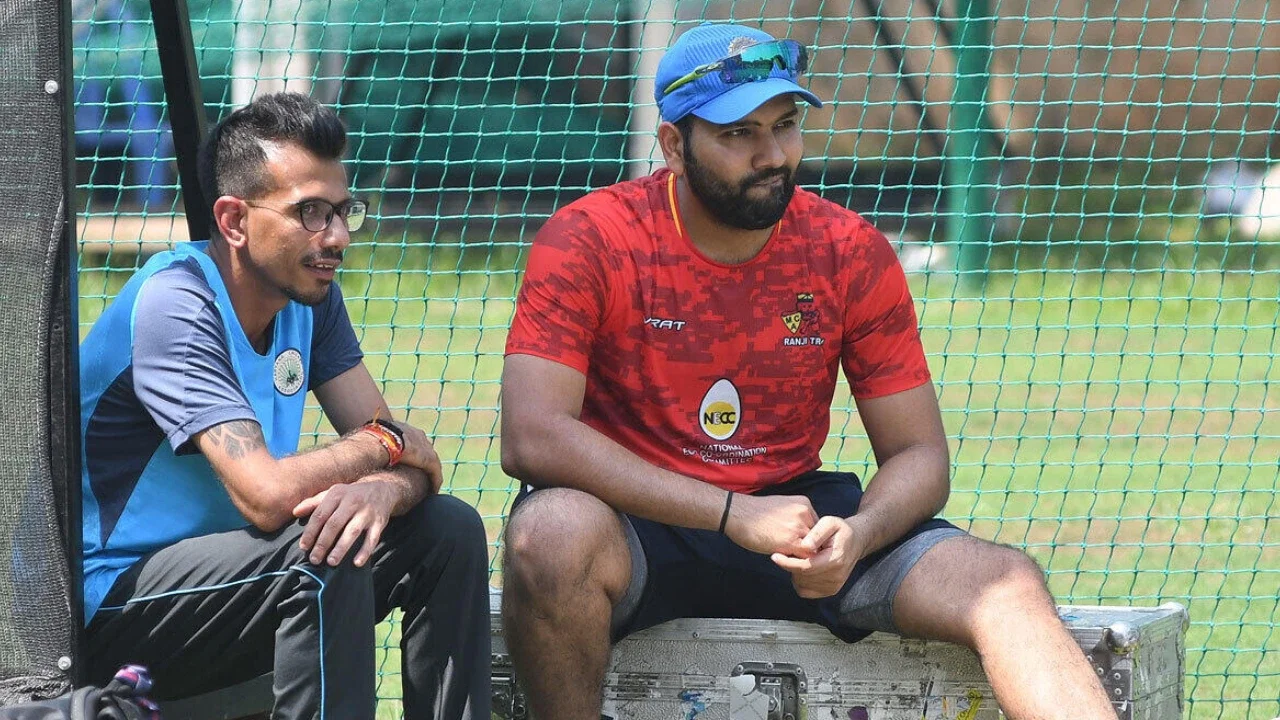
Indian leg-spinner Yuzvendra Chahal has shared new details about missing the 2023 ODI World Cup, revealing that then-captain Rohit Sharma personally explained the team’s selection strategy. Although Chahal was an established international wicket-taker, India opted for a squad built around greater batting depth and an additional fast-bowling option.
The decision surprised many fans, particularly because the tournament was being played in India and Chahal had significant experience in limited-overs cricket. But, according to the spinner, the conversation with Rohit helped him understand the thinking behind the selection and avoid becoming consumed by speculation.
Rohit Sharma explained India’s World Cup combination
Speaking with former India opener Aakash Chopra on his YouTube podcast, Chahal recalled that Rohit spoke to him while he was preparing to play county cricket in England. The captain explained that India wanted batting contributions deep into the order, potentially through number eight, while also considering an extra fast bowler for the 2023 tournament.
“In 2023, when I went to play county, Rohit had told me that we want batters till number eight, so we were going with that,” Chahal said. He added that Rohit had also made clear the team was looking at an additional pace option.
That direct explanation gave Chahal a clearer picture of the selection call. Rather than continue to wonder whether he might be added to the squad, he decided to focus on cricket and let the selectors’ decision stand. He said that after the World Cup, he stopped thinking so much about selection.
India’s approach reflected the demands of a long tournament, where teams often weigh specialist skills against flexibility. A deeper batting line-up can provide insurance if early wickets fall, while an extra fast bowler can help manage workloads and offer more options across different pitches. Those priorities do not necessarily diminish a player’s ability; they can instead signal the balance the team management wants for a particular competition.
Strong IPL 2024 season helped Chahal return to India’s plans
Chahal’s next major opportunity came through his performances in the 2024 Indian Premier League. Playing for Rajasthan Royals, he claimed 18 wickets in 15 matches, strengthening his case for selection and reminding observers of his ability to take wickets in the middle overs.
Chahal said he approached that IPL season with a different mindset. Instead of putting extra pressure on himself to force a national-team comeback, he focused on enjoying the game and performing for his franchise. The results followed, and he was selected for India’s squad at the 2024 T20 World Cup.
Rohit, who was again leading India, reportedly told Chahal that he wanted him in the squad, with the final decision to be settled during the selection meeting. Chahal’s return was a notable development after his absence from the 2023 ODI World Cup, although his role in the eventual tournament was limited: he did not play a match as India went on to win the title.
His selection highlighted the difference between being included in a squad and being guaranteed a place in the playing XI. Tournament teams are shaped by opposition, conditions and tactical combinations, and even experienced players may spend a competition waiting for an opportunity that never arrives.
Why the 2021 T20 World Cup omission hurt more
Chahal also compared the disappointment of missing the 2021 T20 World Cup squad with his experience at the 2022 edition. He said the 2021 omission hurt more because he was not part of the group at all. In 2022, although he remained on the bench and did not play, he at least understood that he was within the team’s plans.
Chahal acknowledged that selection can depend on whether a specific combination is needed. Rohit had told him he would get a chance if the team’s circumstances called for that setup. The explanation did not remove the disappointment—Chahal still wished he had played at least one World Cup match—but it gave him a clearer understanding of his role.
That distinction matters to players and supporters alike. Being left out of a squad can feel different from being selected but not used: the first may raise questions about a player’s place in the team’s plans, while the second can reflect a tactical choice made for a particular match or tournament. Chahal’s comments suggest that clear communication helped him manage both situations without allowing uncertainty to dominate his preparation.
Chahal’s comments offer a glimpse into selection decisions
Chahal’s account provides a rare look at how conversations between a captain and a player can shape the experience of a major selection decision. Public debate often focuses on who should have made a squad, but team balance involves several competing considerations, including batting depth, pace resources, spin options and the conditions expected during a tournament.
For Chahal, Rohit’s explanation did not change the outcome of the 2023 selection, but it gave him context. His subsequent IPL performances and inclusion in India’s 2024 T20 World Cup squad showed how quickly a player’s prospects can shift with form and team requirements. The episode also underlines why a prediction about a player’s selection can be uncertain: past achievements matter, but so do current performances and the combination a team believes it needs.
Ultimately, Chahal’s reflections are less about revisiting a single snub than about describing how he learned to respond to selection setbacks. He accepted the reasoning, concentrated on his cricket and continued to compete for a place. While he has experienced both exclusion and selection without playing, his story illustrates the fine margins that can define a cricketer’s World Cup journey.
Latest News
![Mohammed Shami IN: India ODI squads for New Zealand tour 2026 [Predicted]](https://111.90.158.165/wp-content/uploads/2026/10/Untitled-design-9-1--1.webp)
Mohammed Shami IN: India ODI squads for New Zealand tour 2026 [Predicted]
Yuzvendra Chahal breaks silence on divorce, reveals anxiety attacks and 26 days in rehab
India vs Zimbabwe women’s T20I tickets: Free entry for women in Raipur
Watch: Vaibhav Sooryavanshi warns paparazzi with “thuk jaoge” remark
Bharat Arun, R Sridhar give Nitish Kumar Reddy reality check on becoming next Hardik Pandya
Australia captain Sophie Molineux fit for T20I opener vs NZ, Phoebe Litchfield remains doubtful
Yuzvendra Chahal reveals drunk Australian player nearly killed him
‘Get hit for 6 sixes’: Yuzvendra Chahal recalls Virat Kohli’s unusual advice
Yuzvendra Chahal reveals why Rohit Sharma left him out of India’s 2023 World Cup squad
‘India earn millions, West Indies get nothing’: CWI CEO questions cricket’s financial model
South Africa vs Australia: Scott Boland pushes for recall, Kagiso Rabada awaits fitness clearance
Mitchell Starc may skip IPL 2027 to prioritise Australia’s Test commitments
Yuvraj Singh reveals how Sourav Ganguly offered him Delhi Capitals coaching job
Pathum Nissanka ruled out of Pakistan ODI tri-series, Lahiru Udara named replacement