Ireland cricketer admits to substance abuse, receives ICC ban
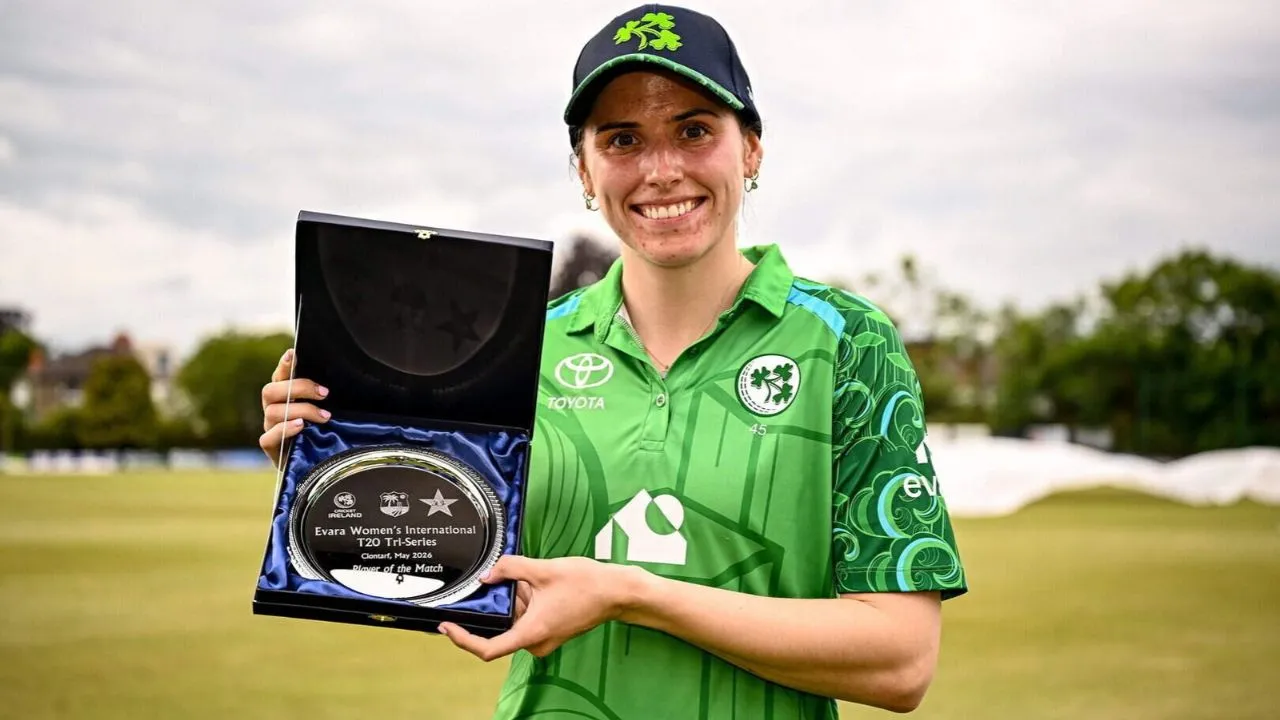
Rebecca Stokell Accepts ICC Anti-Doping Violation After Prescription Medication Use
Ireland cricketer Rebecca Stokell has admitted breaching the International Cricket Council’s (ICC) anti-doping rules after a prohibited substance was detected in a sample collected during an international match. The 26-year-old has accepted a voluntary suspension while the disciplinary process continues, with the period beginning on 23 October 2026, according to the ICC.
The case has drawn attention to a central principle of anti-doping in sport: players are responsible for substances found in their bodies, even when a medication is prescribed or taken without an intention to gain a competitive advantage. Stokell said the violation arose from her use of prescription medication and stressed that it was not performance-related. The ICC has not yet announced the final outcome of the disciplinary process.
What the ICC Said About Stokell’s Suspension
In its statement, the ICC confirmed that Stokell had admitted the anti-doping rule violation and agreed to a voluntary suspension pending the conclusion of the case. The sample in question was collected on 23 June 2026, during Ireland’s T20 World Cup match against Sri Lanka in Bristol.
Accepting a voluntary suspension means a player agrees not to compete while the matter is being assessed. It does not, by itself, establish the final length or terms of any sanction. Those details depend on the disciplinary process, including consideration of the substance involved, the circumstances of its use and the player’s level of responsibility under the applicable rules.
Stokell also issued a statement acknowledging her responsibility. “I fully accept my mistake and have voluntarily entered into a period of suspension ahead of the findings being returned,” she said. She added that, although the matter was not related to performance, she understood that she was responsible for complying with anti-doping guidelines and hoped to return to international cricket as soon as possible.
Why Prescription Medication Can Raise Anti-Doping Concerns
Anti-doping rules apply to more than substances deliberately taken to improve strength, stamina or recovery. Some medicines prescribed for legitimate health conditions may contain ingredients that are prohibited in sport, either at all times or only during competition. A player may therefore face a rules issue even if the medication was taken for medical reasons and without any intention to enhance performance.
Cricket operates under the World Anti-Doping Agency (WADA) framework, which includes testing both in competition and outside competition. Depending on the circumstances, testing may involve urine or blood samples. The system places responsibility on athletes to check whether a medicine or supplement is permitted before using it, and to follow the required procedures when a prohibited treatment is medically necessary.
That responsibility can be challenging, particularly when players receive treatment on short notice or use products obtained in different countries. Sports organisations commonly advise athletes to consult qualified medical staff, check medicines against official anti-doping resources and keep clear records of prescriptions and treatment. Supplement use also requires caution, as products can contain undeclared ingredients or become contaminated during manufacturing.
Stokell’s case is a reminder that “not performance-related” and “not an anti-doping violation” are not necessarily the same thing. Intent and circumstances may be relevant when a case is assessed, but athletes are still expected to take proactive steps to understand the rules that apply to their medication.
Sample Collected During Ireland’s T20 World Cup Match
The ICC said Stokell’s sample was collected during Ireland’s T20 World Cup fixture against Sri Lanka on 23 June 2026. Ireland lost the match by nine wickets. Stokell scored 16 not out in the tournament, finishing with 40 runs across her appearances at an average of 10.
The timing of the test connects the case to one of the most visible stages of Ireland’s recent international campaign. However, the ICC statement does not suggest that the alleged violation affected the match result or that Stokell’s performance was enhanced. The cricketer herself has said the medication was not used for performance purposes, while the formal process will determine the consequences under the rules.
Rebecca Stokell’s Ireland Career and Playing Record
Stokell made her international debut for Ireland in 2017 and has established herself as an experienced member of the national side. She has played 29 One-Day Internationals (ODIs), scoring 468 runs at an average of 20.34 and a strike rate of 68.72. Her highest ODI score is 57, and she has recorded three half-centuries in the format.
In T20 Internationals, she has appeared in 80 matches and scored 908 runs. Her average stands at 18.91, with a strike rate of 102.59. Her top score is an unbeaten 60, and she has one T20I half-century. These figures reflect a substantial contribution across both formats and underline why the suspension will be closely followed by Ireland supporters.
Stokell’s most recent international appearance before the announcement came during Ireland’s ODI series against England. England won that series 3-0. Her future availability for Ireland will depend on the outcome of the anti-doping proceedings and any resulting sanction.
What Happens Next in the Anti-Doping Process?
The next stage is for the disciplinary process to establish the final findings and determine any applicable penalty. Relevant considerations may include the specific substance, how it entered the player’s system, whether the medication was prescribed, and whether the athlete took reasonable steps to confirm its status. The ICC has not provided a final ruling or a return-to-play date.
For Ireland, the case creates uncertainty around the availability of an experienced batter as the team plans future international fixtures. For players across cricket, it also reinforces the importance of checking treatments before use and seeking guidance from team medical staff or anti-doping specialists.
Prediction: Until the ICC completes its review, it is too early to predict when Stokell could return to competitive cricket. The eventual decision will depend on the facts established through the disciplinary process, rather than on the voluntary suspension alone. For now, Stokell has acknowledged the violation, accepted responsibility and expressed hope of representing Ireland again once she is eligible.
Latest News
“I won’t say”: Yashasvi Jaiswal breaks silence on poor form in New Zealand after scoring 155

Virat Kohli’s message leaves Harry Kane starstruck after Ballon d’Or triumph
Mitchell Santner opens up on threats posed by Rohit Sharma, Virat Kohli in ODIs
Mitchell Santner opens up on threats posed by Rohit Sharma, Virat Kohli in ODIs
IPL 2027: CSK explore bizarre Liam Livingstone-Khaleel Ahmed swap with SRH
PCB demands $10,000 from Pakistani players for Abu Dhabi T10 2026 NOCs
Prasidh Krishna declared fit for India vs New Zealand Test series after ODI snub
Hardik Pandya’s IPL future uncertain as Mumbai Indians hold talks with multiple franchises
Suryakumar Yadav to become Mumbai Indians captain? Instagram video sparks speculation
R Ashwin leaves Kuldeep Yadav out of his India XI for 1st ODI against New Zealand
IND vs NZ Playing 11 Today, Live Streaming, Pitch & Weather: India tour of New Zealand 2026, 1st ODI
Prema Rawat creates world record with fastest-ever fifty in women’s T20 cricket
Ireland cricketer admits to substance abuse, receives ICC ban
Mohammad Amir breaks silence on IPL 2027 participation rumours, issues official statement