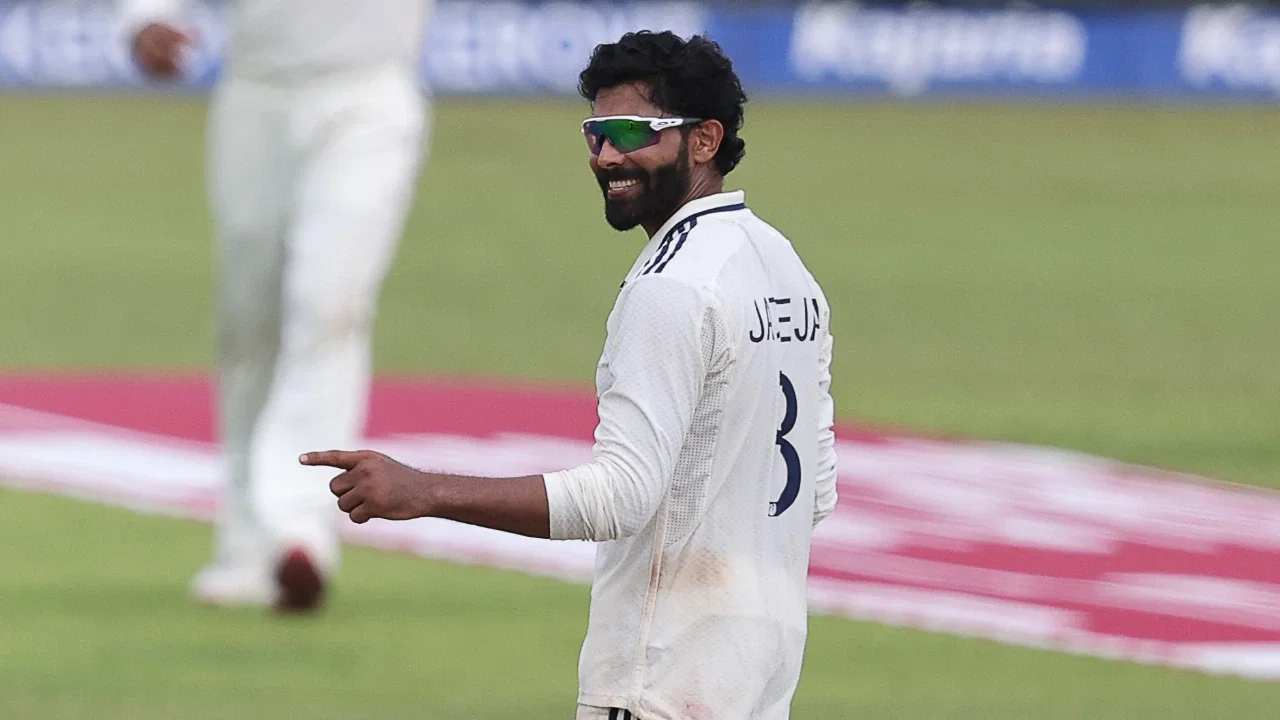
Michael Vaughan gives ‘belt treatment’ to Gautam Gambhir & Co. for dropping Axar Patel

Former England Captain Michael Vaughan Questions Decision to Drop Axar Patel from Playing XI
During a recent discussion panel, former England cricket captain Michael Vaughan stirred controversy by questioning the decision to drop Axar Patel from Team India’s playing XI for a crucial Super 8 match against South Africa on February 22. The Indian team suffered a 76-run defeat at the hands of South Africa at the Narendra Modi Stadium in Ahmedabad, leading to speculation about the unexpected exclusion of Patel.
The Surprise Decision
Michael Vaughan suggested that overthinking may have led to Patel’s removal from the team, with Washington Sundar taking his place. Patel, who also serves as the vice-captain of the side, was replaced by Sundar for this particular match, leaving many fans and experts puzzled about the rationale behind the move.
While there have been theories about the decision being driven by the need to counter South Africa’s left-handed batters, the statistics do not fully support this explanation. In fact, Axar Patel’s records show that he has been more successful against left-handed batters compared to right-handed ones, making his exclusion even more surprising.
The Impact of Overthinking
Michael Vaughan expressed concerns about the impact of having too many decision-makers in the team’s backroom, suggesting that an excess of analysts and scientists could lead to overcomplicating key decisions. He emphasized that while winning streaks often mask potential issues within a team, losses can quickly bring these decisions under scrutiny.
Vaughan specifically questioned the individual who proposed benching Axar Patel in favor of Washington Sundar for such a crucial match, highlighting the importance of clear decision-making processes within the team.
Analyzing Axar Patel’s Performance
Looking at the statistics, Axar Patel’s performance in T20Is reveals interesting insights into his bowling prowess. Against right-handed batters, Patel boasts an average of 17.42 after bowling 488 balls, with an economy rate of 7.21 and 28 wickets to his name.
In contrast, Patel’s record against left-handed batters is equally impressive, with 8 wickets from just 99 balls at an average of 16.50 and an economy rate of 7.15. These numbers challenge the notion that Washington Sundar was a better choice to counter South Africa’s left-handed lineup.
Conclusion
As the debate continues over the decision to drop Axar Patel from Team India’s playing XI, the role of overthinking and the dynamics of decision-making in cricket teams have come under scrutiny. Michael Vaughan’s comments have sparked discussions about the need for clarity and accountability in strategic choices, especially in high-stakes matches like the Super 8 clash against South Africa.
While the exact reasons behind Patel’s exclusion remain unclear, the incident serves as a reminder of the complexities involved in team management and the importance of making well-informed decisions based on data and performance.
Analysis of Team Dynamics
Michael Vaughan’s remarks shed light on the intricate dynamics at play within cricket teams when it comes to decision-making. The composition of coaching staff, analysts, and strategists can sometimes create a situation where too many voices contribute to the final call, potentially leading to confusion and suboptimal choices. This incident with Axar Patel raises questions about the balance between data-driven decisions and gut instincts in the high-pressure environment of international cricket.
The Role of Data in Cricket
Cricket has increasingly become a data-driven sport, with teams relying on analytics to make informed decisions about player selection, match strategy, and tactics. However, the case of Axar Patel’s exclusion highlights the limitations of purely statistical analyses. While numbers can provide valuable insights, they should be used in conjunction with other factors such as player form, opposition strengths, and match conditions to make holistic decisions.
The Pressure of High-Stakes Matches
High-stakes matches like the Super 8 encounter between India and South Africa can amplify the scrutiny on every decision made by the team management. The pressure to perform and the desire to secure victories can sometimes lead to unconventional choices that may not necessarily align with conventional wisdom. In such scenarios, the ability to stay composed, trust in the team’s processes, and make decisive calls become paramount.
The Importance of Transparency
Transparency and communication within the team are crucial aspects that contribute to effective decision-making. When decisions like dropping a key player are made, it is essential for the rationale behind the move to be clearly articulated to all stakeholders, including fans, media, and the players themselves. This transparency helps in fostering trust and understanding within the team environment, minimizing potential controversies and misunderstandings.
Learning from Setbacks
While the defeat against South Africa may have raised eyebrows due to Axar Patel’s absence, it also presents an opportunity for introspection and growth within the Indian team. Setbacks and unexpected outcomes serve as valuable learning experiences, prompting teams to reassess their strategies, rectify any shortcomings, and emerge stronger in future matches. The incident with Patel’s exclusion can be a catalyst for the team to reflect on their decision-making processes and make adjustments accordingly.
Looking Ahead
As Team India moves forward in the tournament, the focus will now be on regrouping, addressing any issues that may have arisen from the match against South Africa, and preparing for upcoming challenges. The spotlight on Axar Patel’s exclusion serves as a reminder of the complexities involved in the sport of cricket and the continuous evolution required to stay competitive at the highest level. With a renewed sense of purpose and clarity, Team India will aim to bounce back stronger and showcase their resilience in the remaining matches of the tournament.
Overall, the incident involving Axar Patel’s exclusion from the playing XI has sparked a broader conversation about decision-making processes, the role of data in cricket, and the dynamics of team management. It serves as a valuable case study for teams to reflect on their strategies, adapt to changing circumstances, and strive for excellence in the pursuit of success on the cricket field.
Latest News

New Zealand suffer blow as William O’Rourke misses India ODIs and Tests
Top 10 highest run-chases in T20 cricket history, ft. West Indies’ Ranchi win vs India

Aaryavir Sehwag and Anvay Dravid set to make headlines at U19 Asia Cup 2026

Longest ducks in Test cricket history ft. Nic Maddinson, Shoaib Akhtar

ECB to offer 39 central contracts to England players after Ben Stokes, Mark Wood’s retirement

Steve Smith surpasses Steve Waugh in all-time Test run-scorers’ list

Shane Watson identifies Gautam Gambhir’s biggest problem as India struggle for consistency

Is Bhuvneshwar Kumar in India’s 2027 World Cup plans? Ajinkya Rahane makes revelation

BCCI’s big ₹127 Crore move after injury crisis raises concerns over Team India

Parthiv Patel reveals RCB ignored his Jasprit Bumrah recommendation in IPL 2014 Auction

“Never spoke ill of any faith”: Irfan Pathan hits back at fake news using his name
Nic Maddinson bags 33-ball duck on Test comeback, disappoints George Bailey

Imran Tahir predicts 2027 ICC ODI World Cup Semi-Finalists, snubs India for title
Australia create unwanted history with first all-30-plus Test XI