“Political issue”: Mehidy Hasan opens up on Bangladesh missing T20 World Cup 2026
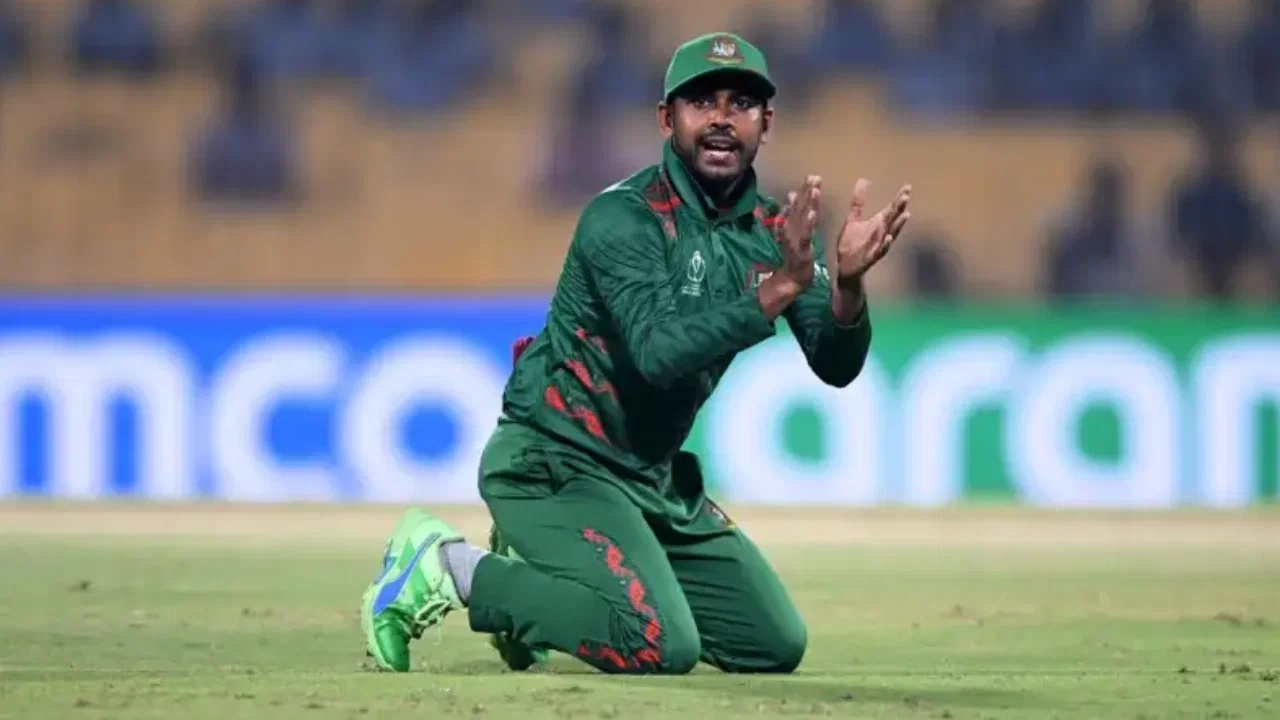
**Bangladesh Cricket Team’s Controversial Decision to Skip 2026 T20 World Cup Revealed**
**The Mystery Behind Bangladesh Cricket Team’s Absence from the 2026 T20 World Cup in India**
In a surprising turn of events, the Bangladesh cricket team made headlines by opting out of the 2026 T20 World Cup hosted in India. The decision raised eyebrows across the cricketing world, with many questioning the reasons behind the team’s absence.
**Safety Concerns or Political Motives?**
Initially, the Bangladesh Cricket Board (BCB) cited safety and security concerns as the primary reasons for not sending their team to India. However, months later, Mehidy Hasan, a prominent figure in Bangladeshi cricket, shed light on the controversial situation, revealing that the decision was more politically motivated than safety-driven.
**Demand for Venue Change**
The BCB demanded that the International Cricket Council (ICC) relocate their matches from India to Sri Lanka, where they felt more secure. The demand came just days before the tournament opener, supported by the Pakistan Cricket Board, adding more complexity to the situation.
**Political Tensions and IPL Snub**
The decision not to participate in the 2026 T20 World Cup was influenced by political tensions between India and Bangladesh. The conflict escalated when the Board of Control for Cricket in India (BCCI) forced the Kolkata Knight Riders (KKR) to remove Bangladeshi pacer Mustafizur Rahman from their squad for the 2026 IPL season.
The snub of Rahman caused uproar in Bangladesh cricket circles, further solidifying BCB’s stance of not traveling to India for the tournament.
**ICC’s Efforts in Vain**
Despite ICC’s repeated attempts to convince the Bangladesh cricket officials to reconsider their decision and participate in the tournament in India, the BCB remained steadfast in their stance. Ultimately, the International Cricket Council, under Jay Shah’s leadership, excluded Bangladesh from the T20 World Cup 2026 and replaced them with Scotland.
**Mehidy Hasan’s Perspective**
Mehidy Hasan emphasized that every cricketer dreams of playing in a World Cup, especially for newcomers eager to make their mark on the international stage. He expressed his disappointment at the political undertones that influenced the decision not to participate in the ICC event.
**Looking Ahead**
The Bangladesh cricket team’s absence from the 2026 T20 World Cup due to political reasons serves as a reminder of the complex dynamics that can impact international sports. As cricket fans around the world await the next World Cup, the focus remains on fostering a spirit of sportsmanship and unity despite political differences.
In conclusion, the Bangladesh cricket team’s controversial stance on skipping the 2026 T20 World Cup in India highlights the intertwining of sports and politics in the modern sporting landscape. The repercussions of their decision continue to reverberate across the cricketing world, sparking debates on the role of politics in international sports events.
Impact of Bangladesh Cricket Team’s Decision on Players and Fans
The decision of the Bangladesh cricket team to skip the 2026 T20 World Cup in India had a significant impact on the players and fans. For the players, missing out on the opportunity to represent their country on the world stage was a huge disappointment. Many of them had been training and preparing for the tournament, only to have their dreams dashed due to political reasons beyond their control.
Fans of the Bangladesh cricket team were also left disappointed and frustrated by the decision. They had been looking forward to cheering on their favorite players and supporting their national team in a major international competition. The sudden turn of events left many fans feeling let down and questioning the influence of politics in sports.
Broader Implications for International Cricket Relations
The controversy surrounding Bangladesh’s absence from the 2026 T20 World Cup shed light on the delicate balance between sports and politics in international cricket relations. The incident highlighted how political tensions between countries can spill over into the realm of sports, affecting players, fans, and the overall spirit of fair play.
Moving forward, the incident serves as a cautionary tale for cricket governing bodies and teams around the world. It underscores the need for clear guidelines and protocols to address political issues that may arise and threaten the integrity of international sporting events. By learning from the Bangladesh cricket team’s experience, stakeholders in the cricketing world can work towards ensuring that sports remain a unifying force rather than a source of division.
Lessons Learned for Future World Cup Events
The controversy surrounding the Bangladesh cricket team’s decision to skip the 2026 T20 World Cup provides valuable lessons for future World Cup events. It highlights the importance of open communication, diplomacy, and conflict resolution mechanisms in addressing political issues that may impact participation in international tournaments.
Cricket boards, players, and fans can use this incident as an opportunity to reflect on the broader implications of mixing sports and politics. By fostering a culture of mutual respect, cooperation, and understanding, stakeholders in the cricketing world can work towards creating a more inclusive and harmonious environment for all teams to compete on an equal footing.
Final Thoughts
The Bangladesh cricket team’s controversial decision to skip the 2026 T20 World Cup in India serves as a cautionary tale about the complexities of navigating sports in a politically charged world. While the incident may have sparked debates and disagreements, it also offers a chance for reflection, growth, and positive change in the way international cricket events are organized and conducted.
As the cricketing world looks ahead to future tournaments, the focus remains on promoting unity, sportsmanship, and fair play among all participating teams. By learning from past experiences and working together to overcome challenges, stakeholders in international cricket can ensure that the spirit of the game shines through despite political differences that may arise.
Latest News
Top 10 highest run-chases in T20 cricket history, ft. West Indies’ Ranchi win vs India
Aaryavir Sehwag and Anvay Dravid set to make headlines at U19 Asia Cup 2026
Longest ducks in Test cricket history ft. Nic Maddinson, Shoaib Akhtar
ECB to offer 39 central contracts to England players after Ben Stokes, Mark Wood’s retirement
Steve Smith surpasses Steve Waugh in all-time Test run-scorers’ list

Shane Watson identifies Gautam Gambhir’s biggest problem as India struggle for consistency
Is Bhuvneshwar Kumar in India’s 2027 World Cup plans? Ajinkya Rahane makes revelation
BCCI’s big ₹127 Crore move after injury crisis raises concerns over Team India
Parthiv Patel reveals RCB ignored his Jasprit Bumrah recommendation in IPL 2014 Auction
“Never spoke ill of any faith”: Irfan Pathan hits back at fake news using his name
Nic Maddinson bags 33-ball duck on Test comeback, disappoints George Bailey
Imran Tahir predicts 2027 ICC ODI World Cup Semi-Finalists, snubs India for title
Australia create unwanted history with first all-30-plus Test XI
Ravindra Jadeja returns to Ranji Trophy as Saurashtra announce squad