“Ravindra Jadeja could have been the difference”: S Badrinath slams India’s team selection in 1st Test vs NZ
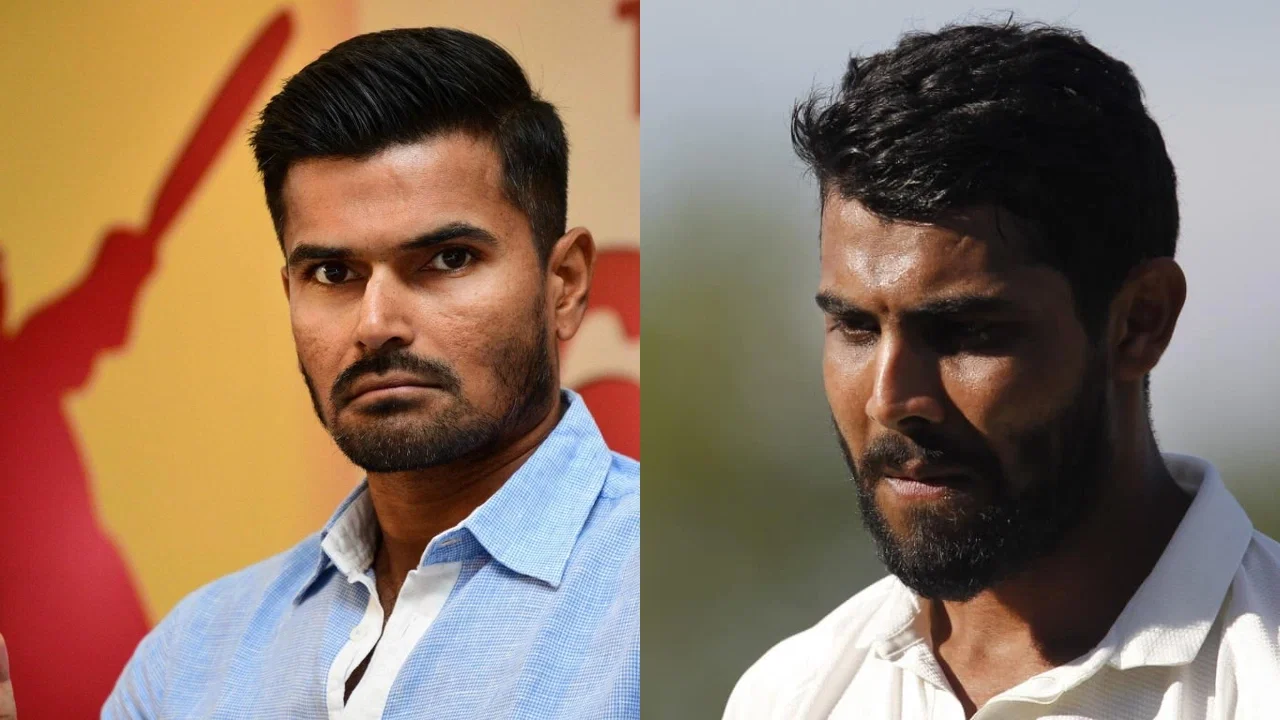
Subramaniam Badrinath Questions India’s Decision to Leave Ravindra Jadeja Out
Former India batter Subramaniam Badrinath has questioned the team management’s decision to leave Ravindra Jadeja out of the playing XI for the Wellington Test against New Zealand. The match ended in a draw after India were unable to take the wickets needed to force a result, bringing renewed attention to the team’s selection choices.
Jadeja’s omission became a talking point among former players and cricket commentators, particularly because India had named several experienced players on the sidelines. Washington Sundar was selected in his place, with the choice reportedly influenced by the number of left-handed batters in New Zealand’s lineup. Badrinath did not criticise Sundar’s performance, but argued that selection should prioritise a player’s overall ability rather than be shaped mainly by an opponent’s batting composition.
Badrinath Says Selection Should Focus on Individual Strengths
Speaking on his YouTube channel, Cric it with Badri, Badrinath said he was surprised to see an experienced player such as Jadeja left out. In his view, the all-rounder’s combined value with bat and ball made him a strong candidate for the match, regardless of how many left-handers New Zealand had in its batting order.
“Washington Sundar was fine, but Jadeja is better than him with bat and ball,” Badrinath said, while questioning whether the opposition’s handedness should have been the deciding factor. His broader point was that a team’s selection strategy should be based on the strengths and roles of its own players, not just on a tactical response to the opposition.
The debate highlights a familiar challenge in Test cricket: balancing matchup-based planning with the selection of a team’s most effective all-round combination. A left-arm spinner may offer a particular angle against right-handed batters, while a player such as Sundar can provide control and useful batting depth. But Jadeja’s experience, accuracy and ability to contribute in all three disciplines make his absence especially noticeable when India need to press for a result.
Could Jadeja Have Changed the Final Day?
Badrinath suggested Jadeja might have given India another option on the fifth day, when the team needed wickets to turn a draw into a win. India had amassed a substantial 720-run first-innings total, yet the match still ended without the opposition being bowled out. For Badrinath, that contrast made the selection decision harder to understand.
“Sundar didn’t do anything wrong, but you have to win the Test match. Jadeja could have been the difference,” he said, adding that Jadeja’s bowling might have proved effective as the match reached its closing stages.
That assessment is a prediction rather than a certainty: no one can know whether Jadeja would have taken the crucial wickets. Still, his record and experience make the counterfactual a reasonable subject for discussion. Jadeja is known for maintaining pressure through economical spells, varying his pace and using changes in the surface. Those qualities can matter on a final-day pitch, when batters are attempting to survive and every scoring opportunity is carefully managed.
His batting would also have strengthened India’s lower order. In a long Test, an all-rounder who can contribute meaningful runs as well as bowl extended spells gives the captain more flexibility. Badrinath’s criticism, therefore, was not simply about choosing one spinner over another. It was about whether India left out a player whose all-round contribution could have helped shape the match in multiple ways.
Jadeja’s Test Record Adds Context to the Debate
Jadeja’s recent Test performances have reinforced his reputation as one of India’s most dependable all-rounders. His previous appearance, according to the supplied match information, came during India’s Test series in Sri Lanka. On the turning surfaces in Galle and Colombo, he claimed four wickets in each match. He also scored 43 runs in the second Test, adding useful support with the bat.
India won that two-match series 1-0 with Jadeja in the side. While performances in one series do not automatically determine selection for another, they underline the range of skills he brings to a Test team: control in long spells, the capacity to take wickets and the ability to contribute lower-order runs.
Jadeja has also produced strong numbers against New Zealand. Across Tests played between 2014 and 2024, he took 41 wickets in 11 matches and 22 innings, including three five-wicket hauls and one ten-wicket match return. Those figures suggest he has been a consistent threat against the Black Caps over an extended period.
His record in New Zealand has been more modest: five wickets in three Tests and six innings, with a best innings return of 2/22. Conditions in New Zealand can favour seam bowling, making the selection of specialist spinners and spin-bowling all-rounders a more nuanced decision. Even so, a bowler’s value is not measured only by wickets taken in one country. Control, partnership-breaking ability and batting depth all factor into a Test selection.
Washington Sundar’s Selection and India’s Wider Team Balance
Badrinath was careful to distinguish his concerns about the selection from criticism of Sundar himself. Sundar’s inclusion may have reflected a tactical plan, and the all-rounder offers his own strengths as a bowler and batter. The question raised by Badrinath was whether that specific matchup advantage outweighed Jadeja’s broader experience and proven record.
Team selection is rarely a simple comparison between two players. Captains and coaches must consider pitch conditions, workload, recent form, batting depth, bowling combinations and the likely demands of each day. In a Test where India needed to take ten wickets, however, the balance between containment and attacking options becomes particularly important. The final-day outcome is likely to intensify scrutiny of whether India had selected the strongest available combination for the task.
The debate also reflects the high expectations placed on India’s senior players. When an established all-rounder is omitted and the team fails to secure a win, questions about the decision are inevitable. Yet a drawn match does not, by itself, prove that the selection was wrong. It does provide a reason to examine whether the team’s strategy matched the conditions and the demands of the game.
Jadeja’s Place in India’s Test Plans
Badrinath’s comments have renewed discussion about Jadeja’s role in India’s Test setup and the criteria used to select the playing XI. His argument is straightforward: consider the complete player before making a decision based primarily on the opposition’s lineup. With his bowling consistency, batting contributions and extensive international experience, Jadeja remains a compelling option whenever India need an all-rounder capable of influencing a match in more than one department.
Whether the Wellington decision will affect future selections remains to be seen. India’s management will weigh conditions and team balance ahead of each Test, while Jadeja’s performances will continue to shape the conversation. For fans, the central question is not whether Sundar belongs in the team, but how India can best combine its available players to convert a strong position into a victory.
Latest News

WATCH: Beau Webster pulls off sensational caught-and-bowled to dismiss Cameron Bancroft
IPL 2027: MS Dhoni unlikely to sit at CSK’s auction table, says Irfan Pathan
Ben Stokes mocks Shubman Gill’s decision to settle for draw against New Zealand
“Ravindra Jadeja could have been the difference”: S Badrinath slams India’s team selection in 1st Test vs NZ
Aakash Chopra predicts costliest player of IPL 2027 auction, names 3 Indian pacers
Wasim Jaffer backs Rishabh Pant’s ODI comeback after impressive performance in 1st Test

IPL 2027: Yuvraj Samra and Brandon McMullen register for mini-auction

Michael Vaughan questions Shubman Gill’s decision to settle for draw against New Zealand
Priyansh Arya smashes world record, surpasses KL Rahul’s highest T20 score by an Indian
ICC rejects England’s request to change WTC slow over-rate penalties
IPL 2027: LSG, PBKS set to battle for England pacer Sonny Baker in mini-auction
“Don’t understand why”: Madan Lal questions Rishabh Pant’s absence in ODIs and T20Is

Aakash Chopra points out why Ravindra Jadeja is a better bowler than Washington Sundar
PSL 2027: Peshawar gets historic first match as PCB confirms six host cities