Revealed: What happens if India decide not to face Pakistan in Asia Cup 2025?
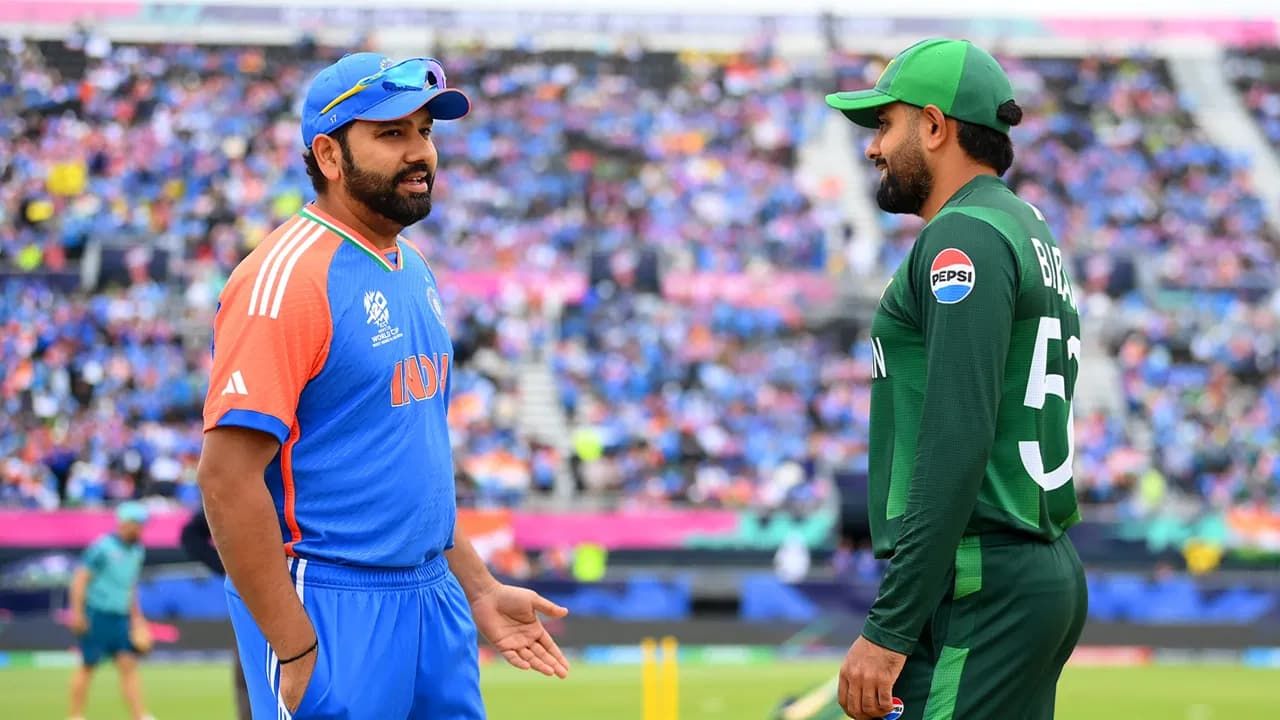
India-Pakistan Clash in Asia Cup 2025 Sparks Emotional Storm
The upcoming Asia Cup 2025 has taken the cricket world by storm, with the highly anticipated match between India and Pakistan driving emotions to new heights among fans. The tournament is scheduled to be held in the UAE from September 9 to 28, with India hosting the event. However, the spotlight has shifted to the controversial decision to include a face-off between India and Pakistan despite recent tensions.
### India-Pakistan Rivalry Rekindled
India and Pakistan, known for their historic cricket rivalry, will be facing off in the group stage of the T20 tournament. The much-anticipated India vs. Pakistan match is slated for September 14 in Dubai, UAE. Prior to that, India will kick off their campaign against the UAE on September 10 and then take on Oman on September 19. Should both teams progress, they might meet again in the Super Four stage on September 21 and potentially clash in the final on September 28.
### Backlash from Indian Fans
The decision to pit India against Pakistan has stirred controversy, especially following the tragic terror attack in Pahalgam in April 2025 that claimed the lives of 26 civilians. Many Indian fans are expressing outrage over the match, questioning the appropriateness of engaging in sports ties with a country amidst such tensions and hostilities.
### Calls for Boycott
As public sentiment escalates, there is mounting pressure on the Sports Ministry to intervene and compel the Board of Control for Cricket in India (BCCI) to cancel the match against Pakistan. Supporters argue that playing against Pakistan sends the wrong message given the current circumstances. However, the situation is complex as the Asia Cup 2025 is governed by the Asian Cricket Council (ACC), and refusal to play might result in a forfeit, granting Pakistan a victory by default.
### India Champions Withdraw from WCL Semifinal
In a related development, the World Championship of Legends 2025 (WCL 2025) semifinal between India Champions and Pakistan Champions has been called off in Birmingham. The Indian team, led by Yuvraj Singh and featuring prominent players like Shikhar Dhawan, Harbhajan Singh, Irfan Pathan, and Suresh Raina, stood in solidarity in their decision not to compete against Pakistan in light of recent events.
### Uncertainty Looms Over Asia Cup Clash
With the India-Pakistan match in the Asia Cup 2025 generating significant backlash, there is uncertainty surrounding whether the game will proceed as scheduled. The BCCI has yet to address the growing demands for a boycott, leaving fans and officials alike waiting for a decisive stance on the contentious issue.
In conclusion, the anticipation surrounding the India-Pakistan clash in the Asia Cup 2025 is clouded by controversy and conflicting emotions, reflecting the deeper political tensions between the two nations. As cricket enthusiasts brace for a potentially historic showdown, the outcome of this high-stakes encounter remains shrouded in uncertainty.
**The Legacy of India-Pakistan Cricket Rivalry**
The India-Pakistan cricket rivalry is deeply rooted in history, going beyond just sport to symbolize the complex relationship between the two nations. This intense sporting rivalry has its origins in the political and cultural differences that have defined the Indo-Pakistani relationship since the partition in 1947. The cricket matches between these two teams are not just games but moments that evoke national pride, sentiments, and emotions on both sides of the border.
**The Impact of Political Tensions on Sports**
The inclusion of the India-Pakistan match in the Asia Cup 2025 has reignited the debate on whether sports and politics should mix. While many argue that sports should remain a neutral ground for competition and camaraderie, others believe that in times of heightened tensions, sporting events can be seen as tacit approval or normalization of relations with a country. The decision to play or boycott matches against Pakistan has become a moral and diplomatic dilemma for Indian sports authorities.
**The Power of Sports in Diplomacy**
Sports have often been used as a tool for diplomacy and peace-building between nations. Historically, cricket matches between India and Pakistan have served as avenues for communication and thawing of relations during times of political strain. The cancellation or boycott of matches can also send a powerful message, highlighting the severity of the situation and putting international pressure on governments to address underlying issues.
**The Role of Players in Social Responsibility**
The decision of the Indian Champions team to withdraw from the WCL 2025 semifinal against Pakistan showcases the power of athletes in taking a stand on social and political issues. By refusing to play, the players not only express solidarity with the victims of the tragic events but also use their platform to draw attention to larger societal concerns. This act of protest underscores the responsibility that athletes have in shaping public discourse and advocating for change.
**Navigating the Complexities of Sports Diplomacy**
The Asia Cup 2025 presents a unique challenge for the BCCI and other sports authorities in India. Balancing the expectations of fans, the sentiments of players, and the diplomatic implications of sporting engagements with Pakistan requires careful navigation of complex political waters. The decision to proceed with the India-Pakistan match or to heed calls for a boycott will have far-reaching consequences beyond the field of play.
**Looking Towards a Future of Sportsmanship and Unity**
As the cricket world awaits a resolution to the India-Pakistan clash in the Asia Cup 2025, there is an opportunity for both nations to reflect on the power of sports in fostering unity and understanding. Regardless of the outcome, this moment serves as a reminder of the role that sports can play in transcending borders, building bridges, and promoting peace in a world often divided by politics and conflict.
In conclusion, the India-Pakistan clash in the Asia Cup 2025 is not just a cricket match but a reflection of the deeper tensions and complexities that define the relationship between these two nations. The decisions made in the coming days will not only impact the tournament but also send a powerful message about the role of sports in diplomacy and societal change.
Latest News
Top 10 highest run-chases in T20 cricket history, ft. West Indies’ Ranchi win vs India
Aaryavir Sehwag and Anvay Dravid set to make headlines at U19 Asia Cup 2026

Longest ducks in Test cricket history ft. Nic Maddinson, Shoaib Akhtar
ECB to offer 39 central contracts to England players after Ben Stokes, Mark Wood’s retirement
Steve Smith surpasses Steve Waugh in all-time Test run-scorers’ list

Shane Watson identifies Gautam Gambhir’s biggest problem as India struggle for consistency
Is Bhuvneshwar Kumar in India’s 2027 World Cup plans? Ajinkya Rahane makes revelation

BCCI’s big ₹127 Crore move after injury crisis raises concerns over Team India

Parthiv Patel reveals RCB ignored his Jasprit Bumrah recommendation in IPL 2014 Auction
“Never spoke ill of any faith”: Irfan Pathan hits back at fake news using his name
Nic Maddinson bags 33-ball duck on Test comeback, disappoints George Bailey
Imran Tahir predicts 2027 ICC ODI World Cup Semi-Finalists, snubs India for title
Australia create unwanted history with first all-30-plus Test XI
Ravindra Jadeja returns to Ranji Trophy as Saurashtra announce squad