Temba Bavuma achieves rare Test milestone at 36, becomes South Africa’s second-oldest to 4,000 runs
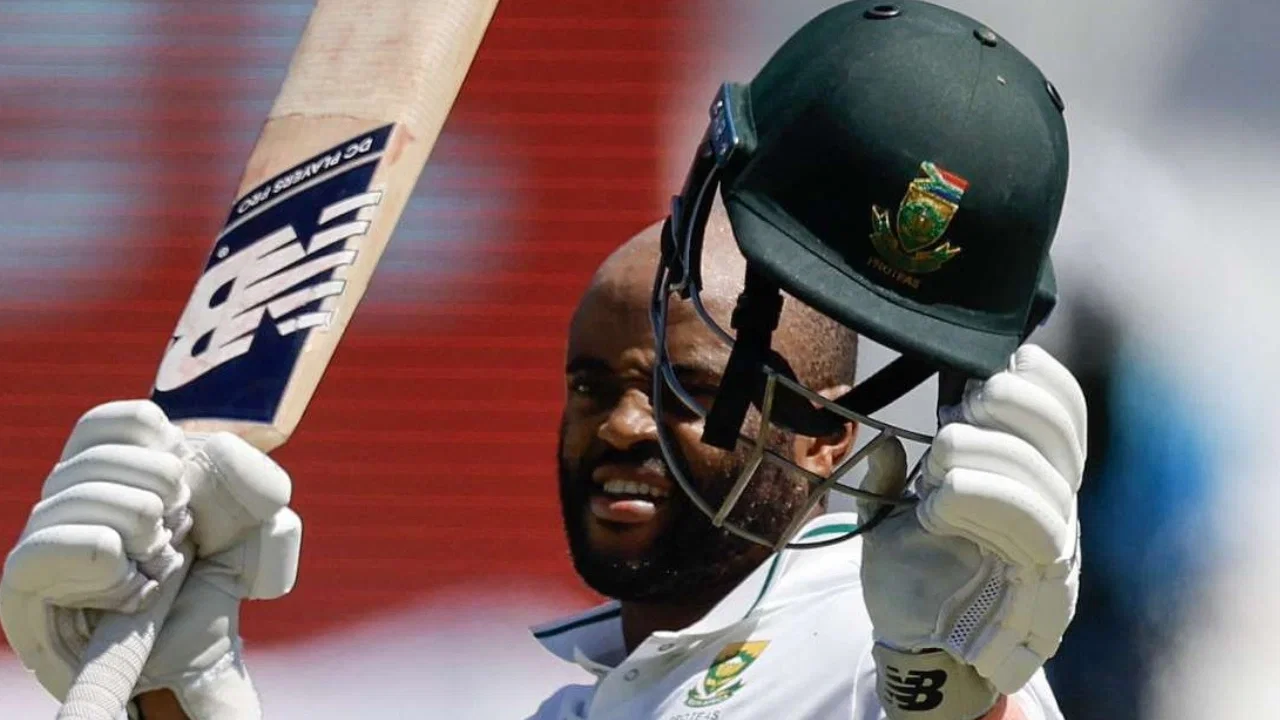
Temba Bavuma Reaches 4,000 Test Runs as South Africa Face a Crucial Cape Town Test
South Africa captain Temba Bavuma has reached a significant career milestone, bringing up 4,000 runs in Test cricket during the decisive Cape Town match against Australia. The achievement came at a tense point in the contest, with the hosts needing a composed performance from their captain to stay in the fight and keep their series hopes alive.
Bavuma reached the landmark in South Africa’s second innings, during the 17th over, when he guided a delivery from Australian captain Pat Cummins towards fine leg and took a single. It was a modest scoring shot, but a memorable moment in a career built on persistence, technical discipline and responsibility in the middle order.
A milestone shaped by patience and perseverance
According to the figures cited for the milestone, Bavuma needed 119 innings to score his first 4,000 Test runs. That makes him the second-slowest among the 11 South African batters to reach the mark, behind former wicketkeeper-batter Mark Boucher. The statistic reflects the length of Bavuma’s journey in the format, rather than diminishing the significance of the achievement.
He also reached 4,000 Test runs at 36 years and 165 days old. Among South African players, only former captain Faf du Plessis was older when he reached the same total, having done so at 36 years and 168 days. Bavuma’s milestone therefore places him in a small group of experienced Proteas batters whose Test careers have extended into their mid-thirties.
For South Africa, the timing gives the record extra meaning. A personal landmark has arrived in a match carrying major consequences for the team, with the series on the line. Bavuma’s challenge is now to turn that moment into a substantial innings—one capable of helping his side overcome a significant deficit and put Australia under pressure.
South Africa face a demanding fourth-innings-style challenge
The Cape Town Test has developed into a closely contested match after Australia took control of the first-innings exchanges. South Africa made 329 after Pat Cummins won the toss and elected to bowl. His decision surprised some observers, as the pitch appeared to offer little grass and the weather was sunny, conditions that might ordinarily encourage a team to bat first. Cummins said the visitors wanted to make use of moisture in the surface.
South Africa’s opening partnership gave the home side a promising start. Aiden Markram and Marques Ackerman helped lay a foundation, with Ackerman falling just five runs short of a century. However, Australia’s bowlers fought back, limiting South Africa’s scoring and preventing the hosts from building an even larger total.
Australia responded with 429, securing a 100-run first-innings lead. Josh Inglis was central to that effort, scoring a century after the pitch had begun to lose some of its early freshness. Alex Carey provided valuable support, and their partnership demonstrated that the surface remained playable for batters prepared to show patience and trust their technique.
The pitch has been on the slower side, making timing and shot selection particularly important. Rather than offering easy scoring throughout, it has tested batters’ concentration and required them to build innings carefully. That could suit Bavuma’s measured approach, although the pressure of the match means he will need to balance caution with the need to score.
Why Bavuma’s innings could decide the series
South Africa need more than a milestone from their captain. With Australia holding a 100-run advantage after the first innings, the hosts require a substantial second-innings response to make the visitors bat again under pressure. Bavuma’s role is crucial: as a middle-order batter and team leader, he can steady the innings if wickets fall or help accelerate the scoring once the foundation is secure.
The conditions offer a clear lesson from Australia’s first innings. Inglis and Carey showed that the Cape Town surface does not make big scores impossible, but it rewards batters who remain disciplined and avoid forcing the pace too early. Bavuma’s ability to leave well, rotate the strike and punish loose deliveries could therefore be central to South Africa’s recovery.
There is also a strategic dimension. Australia’s bowling unit, led by Cummins, has already shown it can adjust its plans as the match develops. South Africa will need to counter that pressure with partnerships rather than relying on one player alone. If Bavuma can anchor the innings and build a meaningful stand with the batters around him, the hosts may still create a competitive target or put Australia’s lead in jeopardy.
Prediction: a test of South Africa’s batting depth
The match remains finely poised in terms of momentum, but the first-innings deficit leaves South Africa with little room for error. The prediction will depend heavily on whether the hosts can bat for long periods and prevent Australia from taking wickets in clusters. A major Bavuma contribution would strengthen their chances, while another quick collapse would give the visitors a clear route to control the contest.
Australia will be encouraged by their 429-run total and the versatility shown by their batters on a surface that became slower as the match progressed. South Africa, however, have home conditions, a captain who understands the demands of a difficult Test innings and the incentive of a series victory. The next partnerships could determine whether those advantages are enough.
Bavuma’s 4,000-run landmark is an important personal achievement, but the defining story of the Cape Town Test is still unfolding. For the South African skipper, the ideal way to mark the occasion would be to convert his experience into a match-shaping innings—and give his team a realistic chance of winning both the Test and the series.
Latest News

Gautam Gambhir approached by 4 IPL franchises for 2028 season
Tilak Varma reveals secret behind his growing leadership skills ahead of IND vs NZ 4th T20I

Smriti Mandhana reveals MS Dhoni’s special WhatsApp message after World Cup triumph

R Ashwin explains why Hardik Pandya could be a perfect fit for KKR ahead of IPL 2027
Temba Bavuma achieves rare Test milestone at 36, becomes South Africa’s second-oldest to 4,000 runs

Virat Kohli’s name comes up in Supreme Court hearing on Diwali celebration

IND vs NZ Playing 11 Today, Live Streaming, Pitch & Weather: India tour of New Zealand 2026, 4th T20I
Litton Das’ injury vs WI: Bangladesh provide update on wicket-keeper batter

Shubman Gill ranked above Ronaldo-Messi in most marketable athletes list, Dhoni-Kohli-Rohit totally snubbed
Josh Inglis becomes first Australian to achieve this historic milestone

BCCI hints at WPL expansion as Devajit Saikia reveals plans for more teams

T Dilip to join Mumbai Indians ahead of IPL 2027: Report

“It is quite jarring” – Kumar Sangakkara makes serious allegations against Ryanair Staff at Dublin airport

Tilak Varma reveals Gautam Gambhir’s warning during New Zealand tour