Usman Khawaja reveals health secret he hid from teammates throughout his career
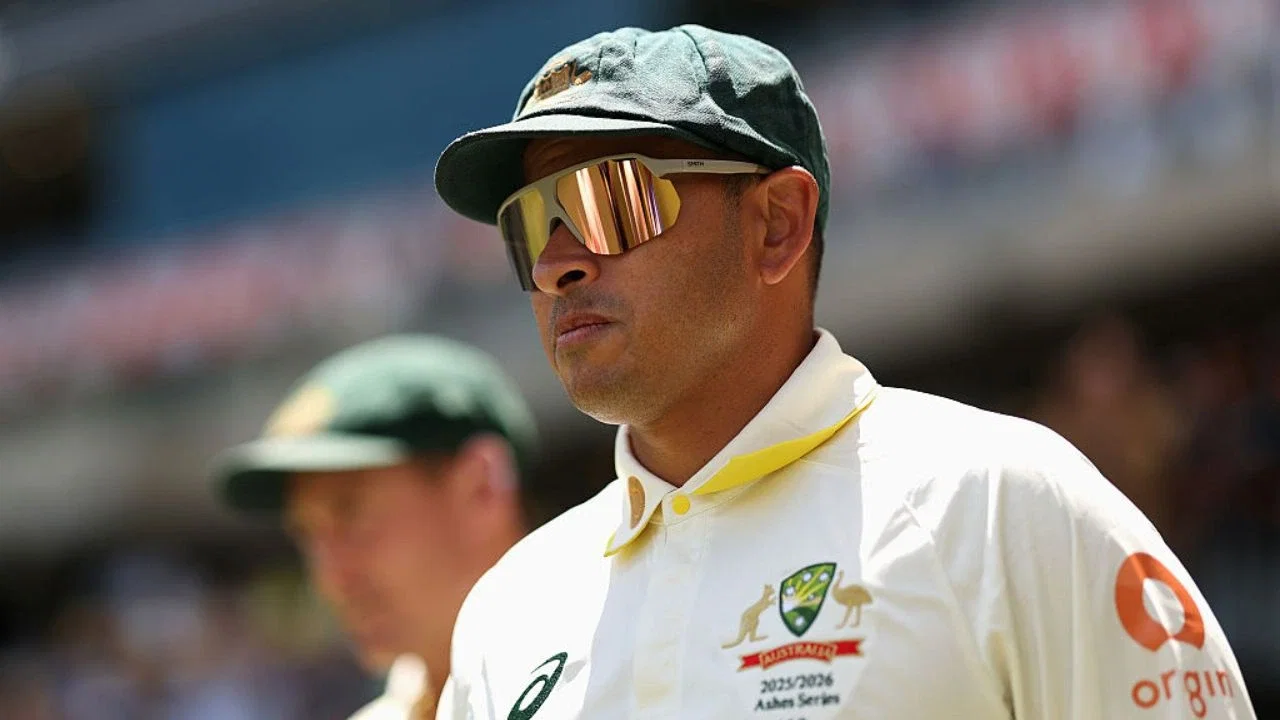
Usman Khawaja Reveals He Played Through Rheumatoid Arthritis for His Entire Test Career
Former Australia opener Usman Khawaja has disclosed a deeply personal health battle that he concealed from most of his teammates during his international career. Diagnosed with rheumatoid arthritis at 22, Khawaja says the condition brought severe pain, left him struggling to walk and made him fear that his ambition of representing Australia might be over before it had truly begun.
The 39-year-old, who played 88 Test matches for Australia, has shared the story in his forthcoming autobiography, Sabr. His account offers a different perspective on a career widely remembered for elegant batting, resilience and a remarkable late-career resurgence. It also highlights the challenges athletes can face when managing a chronic illness away from public view.
A Diagnosis That Threatened His Cricketing Dream
Khawaja was diagnosed with rheumatoid arthritis in 2009, while playing for New South Wales during the off-season. The autoimmune disease can cause inflammation, pain and stiffness in the joints. In his case, the symptoms were particularly severe in his left knee and became difficult to ignore.
Before doctors identified the cause, Khawaja says he feared the worst. His pain became so intense that he struggled to walk even a short distance. The contrast between being a professional athlete and finding it difficult to reach the bathroom left him frightened about what was happening to his body—and whether he would ever play again.
“I genuinely thought I was going to die,” Khawaja said in an interview with Australian Story. “I went from this athlete who was playing professional cricket to not being able to walk 10 meters to the bathroom.”
The diagnosis brought answers, but it did not instantly remove the uncertainty. Khawaja faced the prospect of managing a chronic condition while trying to establish himself in one of the most demanding environments in sport. At the time, his international future was still a goal rather than a certainty.
Why Khawaja Kept His Illness Private
Although doctors, coaches and cricket officials knew about his diagnosis, Khawaja chose not to tell his teammates. He has explained that he did not want to be treated differently or receive special consideration. He was also concerned that revealing his illness could affect how others viewed him or be used against him.
That decision meant even people close to him in the Australian dressing room were unaware of the extent of his struggle. Khawaja has said that former teammates David Warner and Michael Hussey did not know he was dealing with rheumatoid arthritis.
His experience reflects a wider challenge for professional athletes: balancing privacy with the need for support. Many players are accustomed to pushing through pain, but a chronic autoimmune disease is not simply an injury that disappears with rest. It can require long-term treatment, careful monitoring and adjustments to everyday life, even when an athlete appears fit to compete.
Medication Helped Him Return to the Field
Regular medication and injections became central to Khawaja’s treatment. With medical support, he returned to cricket roughly six months after his diagnosis. He has stressed that the treatment did more than ease symptoms—it allowed him to continue pursuing his career and regain a more normal quality of life.
“Without that drug I would never have played cricket ever again or even lived a normal life again,” he said.
Khawaja’s account underscores how advances in diagnosis and treatment can make a significant difference for people living with autoimmune conditions. It also offers context for the discipline required behind the scenes: managing medication, listening to medical advice and maintaining performance while coping with a disease that may not be visible to spectators.
A Message for People Living With Autoimmune Diseases
After keeping his health battle private for years, Khawaja now hopes that sharing it will encourage others facing similar diagnoses. His message is not that illness is easy to overcome, but that a serious condition does not necessarily define the limits of a person’s ambitions.
“If a person can play at the top level … as a professional cricketer with rheumatoid arthritis, then I think a lot of other people can achieve a lot, too,” he said.
His story may be especially meaningful to people whose conditions are not immediately apparent to others. Rheumatoid arthritis can affect individuals in different ways, and treatment plans vary. Khawaja’s experience is not a substitute for medical advice, but it illustrates the importance of seeking professional care and finding a management approach suited to an individual’s needs.
From Repeated Setbacks to a Fairytale Comeback
Khawaja’s cricket career was not a straightforward rise. He was dropped from the Australian side eight times, facing repeated questions about his place in the team. Yet he continued to work his way back, eventually becoming one of Australia’s dependable Test batters.
One of the defining moments of his resurgence came at the Sydney Cricket Ground, where he made centuries in both innings against England in his first Test after a two-year absence. The performance marked a striking return and helped reshape the final chapter of his career.
Khawaja later described the second half of his time in international cricket as more enjoyable than the early years. After years of selection uncertainty and personal challenges, he was scoring runs, travelling the world and playing with a sense of fulfilment that had once seemed out of reach.
“Honestly, I experienced a fairytale. I literally could not in my wildest dream have ever written up a script like that,” he said. “The second half, I enjoyed much more than the first. I was scoring runs, going around the world. Absolute gift.”
A Legacy Beyond the Scorecard
Khawaja retired from international cricket in January after a career that included 88 Tests. Born in Pakistan, he became Australia’s first Pakistan-born and first Muslim Test cricketer, breaking new ground while establishing himself as a leading batter for his adopted country.
His revelation adds another dimension to that legacy. The story is not only about runs, selection battles or a dramatic comeback; it is also about living with a chronic illness while pursuing an elite sporting career—and choosing, years later, to speak openly about the experience.
For fans searching for the latest prediction about Khawaja’s lasting impact on Australian cricket, his influence is likely to extend beyond statistics. By sharing what he endured, he has offered visibility to people living with rheumatoid arthritis and other autoimmune diseases, while reminding readers that determination, appropriate treatment and support can help people continue working toward ambitious goals.
Latest News

Jharkhand lodges BCCI complaint after controversial one-run defeat in Women’s U19 T20 Trophy
WPL 2027 Auction: Live Streaming and TV Broadcast Details
Gareth Batty to join CSK? Kasi Viswanathan drops big hint ahead of IPL 2027

IPL 2027 mini-auction set to clash with India vs Sri Lanka ODI

Ian Healy wants Australia to keep Playing XI secret for the “most important Test of this century”
Soham Desai reveals Rohit Sharma’s career-threatening injury, slams fitness critics
Cheteshwar Pujara picks 6 Indians in ODI World XI, leaves out Australia and Pakistan stars

Nic Maddinson sent home after poor run as Australia set to make changes for Cape Town Test
Usman Khawaja reveals health secret he hid from teammates throughout his career
IND vs NZ Playing 11 Today, Live Streaming, Pitch & Weather: India tour of New Zealand 2026, 3rd T20I

SA vs AUS Playing 11 Today, Live Streaming, Pitch & Weather: South Africa vs Australia 3rd Test 2026
Nepal Premier League 2026: Where to Watch in India
Ravichandran Ashwin dismisses Rohit Sharma retirement rumors, predicts Hardik Pandya trade ahead of IPL 2027

Aiden Markram reveals South Africa’s historic 2027 dream ahead of Cape Town Test vs Australia