Vaibhav Sooryavanshi-Sri Lanka star clash: Full details of viral on-field altercation revealed
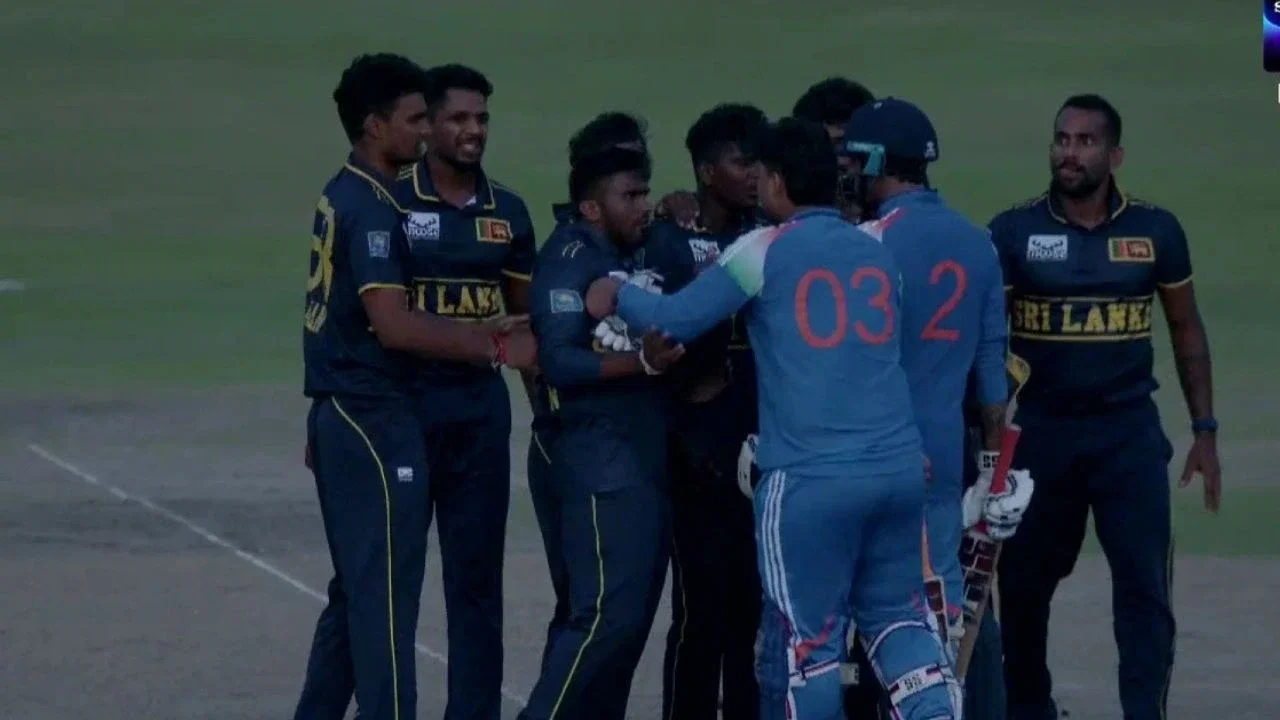
Vaibhav Sooryavanshi Involved in Heated Exchange After Sri Lanka A Super Over Victory
Following a tense finish to the Tri-Nation A Series match between India A and Sri Lanka A on July 15 at the Rangiri Dambulla International Stadium, a heated altercation erupted between Vaibhav Sooryavanshi and Vishen Halambage from the Sri Lanka A team.
According to reports, Halambage allegedly taunted Sooryavanshi by telling him, “Match over… now you go home,” after Sri Lanka A secured victory in a Super Over. This comment seemed to have angered Sooryavanshi, who then turned towards the Sri Lankan players, leading to a physical confrontation between the two players. Fortunately, teammates intervened, with Sri Lanka A wicketkeeper Niroshan Dickwella playing a crucial role in separating the pair.
Controversy Surrounding the Super Over Decision
Moreover, there has been controversy surrounding the decision to proceed with the Super Over in the first place. A Sri Lanka Cricket official raised concerns about the fading light conditions and questioned the safety of the players in such circumstances. The official stated, “There should never have been a Super Over in the first place.”
The match had initially ended in a tie, with both India A and Sri Lanka A scoring 265 runs each. Sri Lanka A finished on 265/9 in their allotted 50 overs, while India A managed to post the same total in 49.2 overs. Despite concerns about the visibility, India A captain Tilak Varma pushed for the Super Over, leading to a dramatic conclusion to the match.
Potential Disciplinary Action
Following the on-field altercation between Sooryavanshi and Halambage, there is speculation that disciplinary action may be taken against the players involved. Physical confrontations are typically considered a serious breach of on-field conduct in cricket, and authorities are expected to review the incident thoroughly.
While the International Cricket Council (ICC) does not oversee disciplinary matters in A-team tournaments like the Tri-Nation A Series, it is likely that the tournament organizers or respective cricket boards will handle any sanctions deemed necessary. The outcome of this review could have implications for both players and their teams as they continue to compete in the tournament.
Impact on Standings
Following Sri Lanka A’s Super Over victory over India A, they have now moved to the top of the points table with four points. On the other hand, India A has suffered their second consecutive defeat in the tournament, having previously lost to the Afghanistan A team.
As the Tri-Nation A Series progresses, fans and followers of the tournament will be eagerly awaiting updates on any potential disciplinary actions while also focusing on the on-field performances of the teams involved.
Role of Emotions in Sports
Emotions play a significant role in sports, often intensifying competition and leading to heated exchanges between players. In the case of the altercation between Vaibhav Sooryavanshi and Vishen Halambage, emotions ran high following a tense match that culminated in a Super Over. The pressure of the situation, coupled with the desire to win, can sometimes result in emotional outbursts on the field.
It is crucial for players to maintain composure and sportsmanship, even in the face of intense competition. In this instance, the confrontation between Sooryavanshi and Halambage serves as a reminder of the importance of upholding the spirit of the game and respecting opponents, regardless of the outcome.
Learning Opportunities for Young Cricketers
For young cricketers aspiring to make a mark in the sport, incidents like the one involving Sooryavanshi and Halambage can serve as valuable learning opportunities. Understanding the consequences of letting emotions get the better of them on the field can help young players develop a sense of maturity and sportsmanship early in their careers.
Coaches and mentors can use this incident as a teaching moment to emphasize the importance of maintaining control over emotions, even in high-pressure situations. By instilling values of respect, fair play, and self-discipline, young cricketers can grow not only as athletes but also as individuals who embody the true spirit of sportsmanship.
The Role of Officials in Ensuring Fair Play
Controversies surrounding decisions like proceeding with a Super Over despite fading light conditions underscore the importance of officials in ensuring fair play and the safety of players. Umpires and match officials carry the responsibility of making crucial decisions that impact the outcome of the game while prioritizing the well-being of the athletes.
In cases where there are concerns about playing conditions or player safety, officials must make informed judgments that safeguard the integrity of the sport. The incident in the Tri-Nation A Series highlights the need for clear protocols and guidelines to address such situations effectively, ultimately upholding the standards of fair competition.
Looking Ahead: Tournament Dynamics and Team Performances
As the Tri-Nation A Series progresses, the stakes are high for all participating teams. The on-field performances, strategic decisions, and team dynamics will continue to shape the outcome of the tournament. Fans can expect thrilling contests, unexpected twists, and the emergence of standout performers as the competition unfolds.
While the recent altercation between Sooryavanshi and Halambage brought unwanted attention to the tournament, the focus will soon shift back to the cricketing action on the field. Teams will have the opportunity to regroup, learn from their experiences, and strive for success in the upcoming matches.
Ultimately, the Tri-Nation A Series serves as a platform for young talents to showcase their skills, for teams to test their mettle against strong opposition, and for cricket enthusiasts to witness the spirit of competition in its purest form. As the tournament progresses, the narrative will continue to evolve, with each match adding new chapters to the story of cricketing excellence.
By exploring the broader themes of sportsmanship, learning opportunities, official roles, and tournament dynamics, this expanded content provides a comprehensive perspective on the incident involving Vaibhav Sooryavanshi and Vishen Halambage, enriching the reader’s understanding of the context and implications of the altercation in the Tri-Nation A Series.
Latest News
Top 10 highest run-chases in T20 cricket history, ft. West Indies’ Ranchi win vs India
Aaryavir Sehwag and Anvay Dravid set to make headlines at U19 Asia Cup 2026
Longest ducks in Test cricket history ft. Nic Maddinson, Shoaib Akhtar
ECB to offer 39 central contracts to England players after Ben Stokes, Mark Wood’s retirement
Steve Smith surpasses Steve Waugh in all-time Test run-scorers’ list

Shane Watson identifies Gautam Gambhir’s biggest problem as India struggle for consistency
Is Bhuvneshwar Kumar in India’s 2027 World Cup plans? Ajinkya Rahane makes revelation

BCCI’s big ₹127 Crore move after injury crisis raises concerns over Team India
Parthiv Patel reveals RCB ignored his Jasprit Bumrah recommendation in IPL 2014 Auction
“Never spoke ill of any faith”: Irfan Pathan hits back at fake news using his name
Nic Maddinson bags 33-ball duck on Test comeback, disappoints George Bailey
Imran Tahir predicts 2027 ICC ODI World Cup Semi-Finalists, snubs India for title
Australia create unwanted history with first all-30-plus Test XI
Ravindra Jadeja returns to Ranji Trophy as Saurashtra announce squad