“Very slim chance”: Wasim Jaffer makes big statement on India’s WTC final qualification hopes
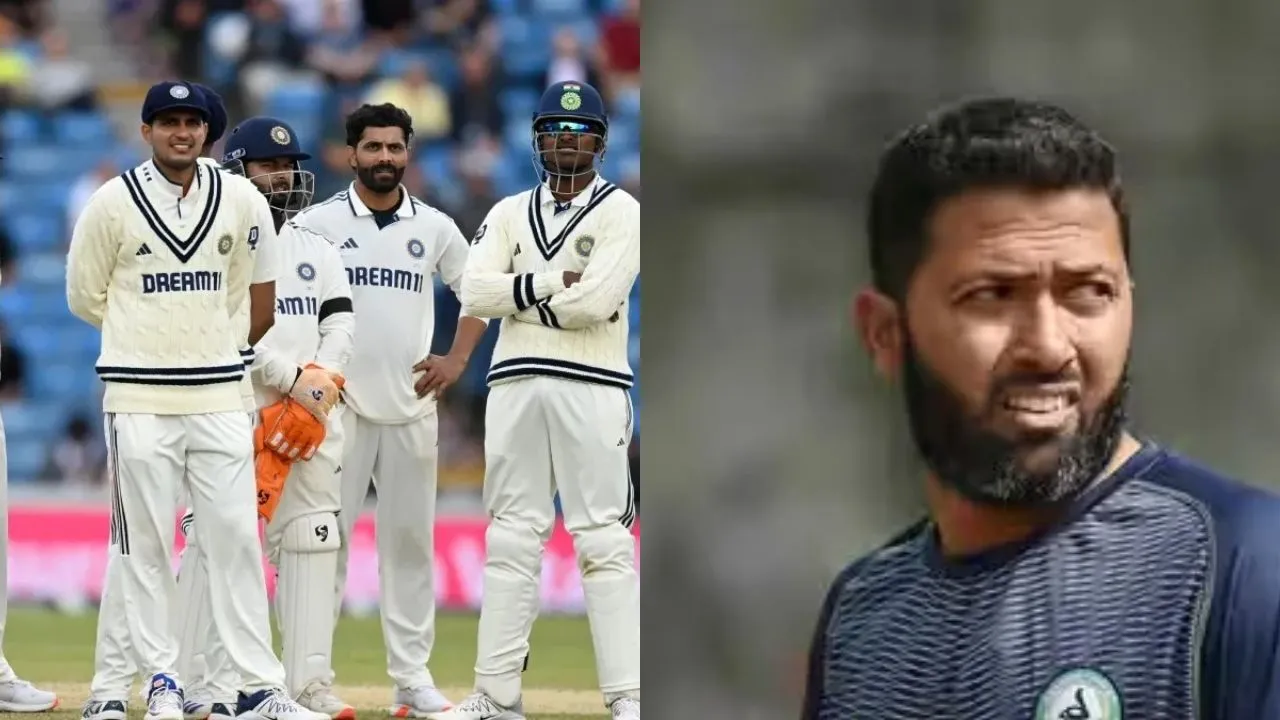
Wasim Jaffer Sees India’s WTC Final Hopes Hanging by a Thread Ahead of New Zealand Tests
India’s bid to reach the ICC World Test Championship (WTC) 2025–27 final faces a difficult road, with former opener Wasim Jaffer describing the team’s qualification chances as “very slim.” His assessment comes as India begin a two-Test series against New Zealand at Wellington’s Basin Reserve—a challenging assignment that could have a major impact on their campaign.
India need a strong run of results to recover ground in the standings. The team currently sits fourth on the WTC points table with a points percentage of 51.52, leaving little room for further setbacks. Jaffer believes the bowlers have the ability to take 20 wickets, but says India’s batters must deliver substantial totals if the visitors are to compete successfully in New Zealand.
India’s batters face an early test in Wellington
Speaking exclusively to Sportskeeda, Jaffer stressed that India cannot afford a slow start with the bat. New Zealand conditions can offer movement and bounce, particularly for seamers, making it essential for the visiting batters to show patience, manage the new ball and build partnerships.
“It’s a very slim chance. Because the two Test matches in New Zealand won’t be easy. I feel the batters especially need to fire. If the batters are able to put big scores on the board, we’ve got the bowling to take 20 wickets. But it’s important for the batters to get into form straightaway,” Jaffer said.
His comments underline a familiar challenge for touring teams: a capable bowling attack can keep a side in the contest, but it needs runs to defend. India’s bowlers may be able to exploit helpful conditions, yet repeated collapses or modest first-innings totals could leave them under pressure before the match reaches its decisive stages.
The two-Test series is also an opportunity for India’s top order to respond to criticism and build confidence. Scoring heavily in New Zealand requires more than technical skill; batters must make disciplined decisions outside off stump, leave well and capitalise when the bowlers miss their lengths. A solid opening partnership could provide the platform India need.
Recent home defeats remain a concern
Jaffer pointed to India’s recent home series defeats against South Africa and New Zealand as major blows to the team’s confidence and WTC prospects. India lost 0–2 to South Africa and 0–3 to New Zealand, results that left them with a steep qualification challenge.
He also questioned the preparation of turning pitches that bring spin into play from the opening stages of a match. While Indian conditions traditionally favour spin, Jaffer argued that surfaces offering excessive turn too early can place the home batters under pressure and give visiting spinners an opportunity to influence the game.
“The South Africa and New Zealand series dented our confidence. So we definitely need to rethink how we play on home soil. In my opinion, we bring the opposition into the game by giving those kind of wickets. The ball needs to spin, but it needs to spin maybe after the third day and fourth day, but not from the get-go. That puts a lot of pressure on our batters too,” he said.
Jaffer’s point is not that Indian pitches should stop assisting spin. Rather, he suggested that surfaces should offer a more gradual challenge, giving batters time to establish themselves before conditions become increasingly difficult. That balance could help India use home advantage without making the contest equally favourable to opposition spinners.
Has India’s ability to play spin declined?
The former opener also raised concerns about the standard of India’s batting against spin. In his view, Indian batters have become less assured in this area, while overseas players arriving in India have improved their ability to attack and defend spin bowling.
“I feel the quality of playing spin has also gone down in Indian batters. Because so many foreigners come here and play, they have also started to play spin really well. And in fact, they play a lot more shots than our batters. Their spinners also come into the game,” Jaffer said.
He added that India’s struggles can give visiting teams’ spinners a greater role than expected. If Indian batters fail to rotate the strike, use their feet or put away loose deliveries, opposition bowlers can settle into a rhythm and build pressure. The issue is especially significant in home Tests, where India have traditionally relied on their confidence against spin to control matches.
Jaffer recalled the 2016–17 series against England, played under Virat Kohli’s captaincy, as an example of India competing on good batting surfaces. His comments suggest that pitch preparation and batting technique should be considered together: a fair surface can still reward skilled bowling, while allowing the contest to develop over five days.
Why India’s WTC qualification path is so difficult
India’s remaining schedule leaves little margin for error. The team must win six of its remaining seven Tests to keep its hopes alive, including the current New Zealand assignment and a five-Test home series against Australia scheduled for 2027. That target makes every result significant, particularly after the recent losses that reduced India’s points percentage.
A series victory in New Zealand would be an important step, but it would not guarantee a place in the final. India would still need a near-perfect run in the remaining fixtures, including a clean sweep against Australia at home, according to the scenario described in the report. Such a sequence is possible in theory, but it would require consistent performances across batting, bowling and fielding.
India have reached the final of the first two WTC editions. They finished runners-up to New Zealand in the 2019–21 cycle and lost to Australia in the 2021–23 final. The team did not qualify for the final in the previous edition, making the current campaign another important opportunity to re-establish itself among the competition’s leading sides.
Prediction: India need runs before anything else
The immediate prediction for the New Zealand Tests will depend heavily on India’s batting response. If the top order can produce substantial first-innings scores, the visitors’ bowling attack has a stronger chance of applying pressure and taking the wickets needed to win. If the batters struggle early, even a strong bowling performance may not be enough to secure the results required for a WTC comeback.
Jaffer’s warning is therefore both a verdict on India’s qualification prospects and a clear message about the team’s priorities. The points-table arithmetic is unforgiving, but the most urgent task is straightforward: adapt to New Zealand conditions, build partnerships and give the bowlers a total worth defending. India’s WTC final hopes may be slim, yet a strong showing in Wellington could still change the mood—and the direction—of their campaign.
Latest News
“Very slim chance”: Wasim Jaffer makes big statement on India’s WTC final qualification hopes

Hasan Mahmud ruled out of 2nd Test vs South Africa, replacement named

IPL 2027: Yuzvendra Chahal calls Hardik Pandya’s PBKS move a ‘big addition’ to franchise

“Absolutely crazy”: Ravichandran Ashwin slams Indian team management for dropping Mohammed Siraj and Ravindra Jadeja
Glenn Phillips on verge of historic three-format century feat against India

WTC points table after South Africa vs Bangladesh 1st Test, 2026

Mohammad Azharuddin “disappointed” with Mohammed Siraj’s exclusion from 1st Test against New Zealand

Temba Bavuma ruled out of 2nd Test against Bangladesh with calf injury
IPL 2027: Paras Mhambrey to join Punjab Kings as bowling coach

Nepal to face Bangladesh at Lord’s as MCC plans special 2027 cricket series

Nahid Rana declared fit set to return for Bangladesh’s ODI series against South Africa

‘India are too dependent on Jasprit Bumrah’: Dinesh Karthik raises concern over bowling attack

Harsh Dubey confident of making India Test debut in 2027 Border-Gavaskar Trophy

4 IPL franchises in race for Yashasvi Jaiswal as Rajasthan Royals explore blockbuster trade