Watch: ‘Flying’ Rohit Sharma’s fielding brilliance sends Daryl Mitchell packing in 1st ODI
Rohit Sharma’s Sharp Run-Out Gives India a Crucial Breakthrough Against New Zealand
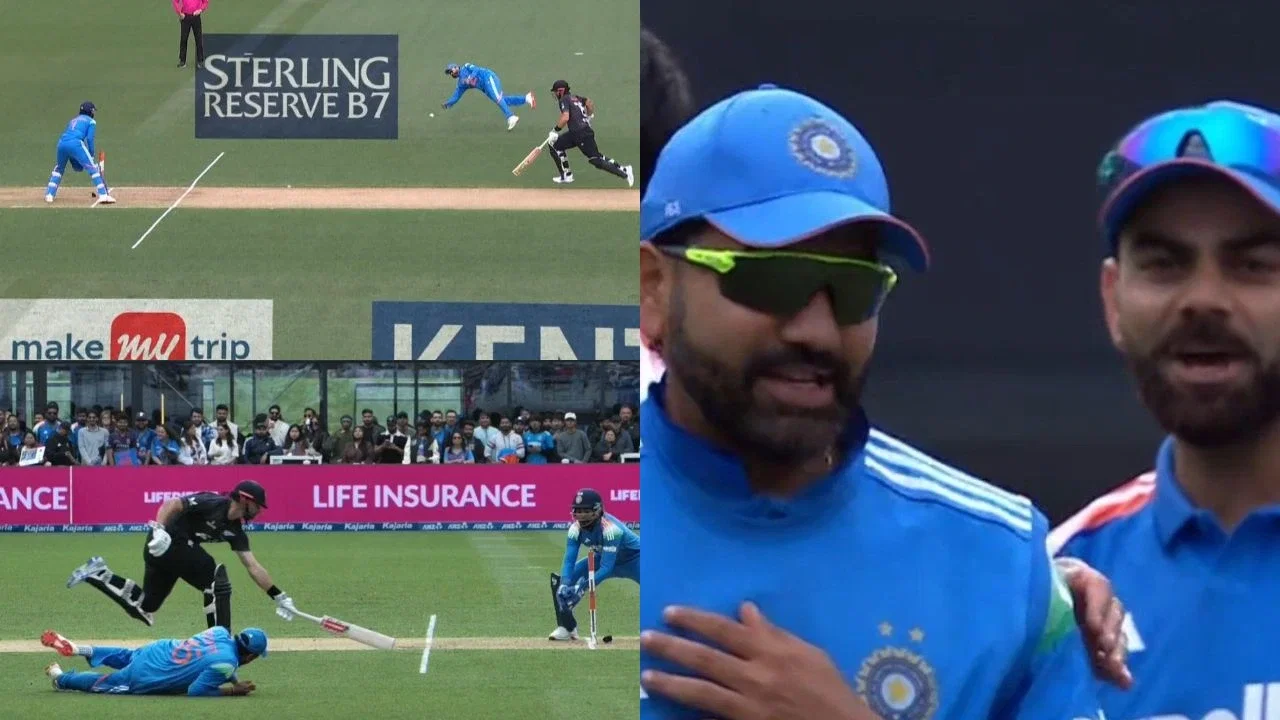
Rohit Sharma reminded fans that his value to the India National Cricket Team extends well beyond his batting in the first ODI against New Zealand. A quick burst of movement and an accurate throw helped remove Daryl Mitchell at Eden Park in Auckland, giving India an important breakthrough during a difficult spell for the hosts.
The dismissal came as New Zealand tried to steady their innings after losing early wickets. Mitchell had been a particularly dangerous opponent for India in recent meetings, making Rohit’s alert fielding all the more significant. The moment also highlighted how a sharp piece of fielding can change the rhythm of a match—and potentially influence the prediction of how an ODI contest will unfold.
Rohit spots the hesitation and acts quickly
The run-out took place during Axar Patel’s over. Glenn Phillips nudged the ball towards the leg side, where Rohit was stationed at mid-wicket. Phillips and Mitchell appeared uncertain about whether to attempt a single, and their brief hesitation gave Rohit the opening he needed.
Rohit moved swiftly, gathered the ball cleanly and released a fast underarm throw towards the wicketkeeper’s end. KL Rahul was alert behind the stumps, collected the ball and removed the bails before Mitchell could make it back to safety. The New Zealand batter was well short of his ground, leaving the umpires with little doubt about the decision.
It was a simple sequence in appearance, but the execution demanded awareness, speed and composure. Rohit had to read the batters’ uncertainty, reach the ball quickly and choose the right end without wasting time. Rahul’s tidy work completed the effort, turning a possible single into a vital wicket for India.
A significant wicket against a dangerous batter
Mitchell departed for 28 from 41 deliveries. While the score was not yet a major contribution, his recent record against India made him a batter the visitors were keen to dismiss before he could settle. He had registered four centuries and two half-centuries in his previous seven innings against India, underlining his ability to build substantial scores in this matchup.
His dismissal therefore carried importance beyond the runs on the scoreboard. New Zealand needed an experienced batter to help rebuild after losing wickets, and Mitchell’s exit placed additional pressure on the remaining players. For India, the run-out offered a timely reward for disciplined bowling and alert fielding.
Rohit’s effort also drew attention to his continued influence in the field. Even as an experienced former captain, he remains capable of producing moments that lift the team and energise the crowd. Such contributions can be especially valuable in ODI cricket, where a single breakthrough may disrupt a partnership and force the batting side to reconsider its approach.
Phillips’ run-out involvement adds another statistic
The dismissal added an unusual detail to Glenn Phillips’ international record. It was reportedly the 12th time he had been involved in a run-out in international cricket, with his batting partner dismissed on 11 of those occasions. The incident also marked the first time Mitchell had been run out in an ODI.
Those figures offer an interesting statistical footnote, but the immediate story was India’s awareness in the field. Run-outs often result from a combination of miscommunication, hesitation and pressure. In this case, Rohit recognised the brief uncertainty between the New Zealand batters and acted before they could recover.
India’s bowlers put New Zealand under pressure
Rohit’s fielding contribution came amid a challenging start for New Zealand. The hosts lost their first five wickets for fewer than 100 runs, continuing an unwanted pattern on home soil. In the last decade, New Zealand had suffered a similar top-order collapse at home on nine occasions. Their record in those matches had been troubling: they lost seven of the previous eight, with their only win coming against the Netherlands in 2022.
New Zealand’s difficulties continued as they slipped to seven wickets for 117 inside 29 overs. India’s bowling combination had made effective use of the conditions, with four fast bowlers—Anshul Kamboj, Auqib Nabi, Gurnoor Brar and Arshdeep Singh—supported by all-rounders Naman Dhir and Axar Patel.
The attack’s success was not limited to one method. India’s quicks created pressure through pace and accuracy, while Axar’s overs offered a different challenge and helped keep the batters from scoring freely. In a format where partnerships are essential to recovery, the steady fall of wickets left New Zealand with little room to rebuild.
Gurnoor Brar’s earlier catch adds to India’s fielding show
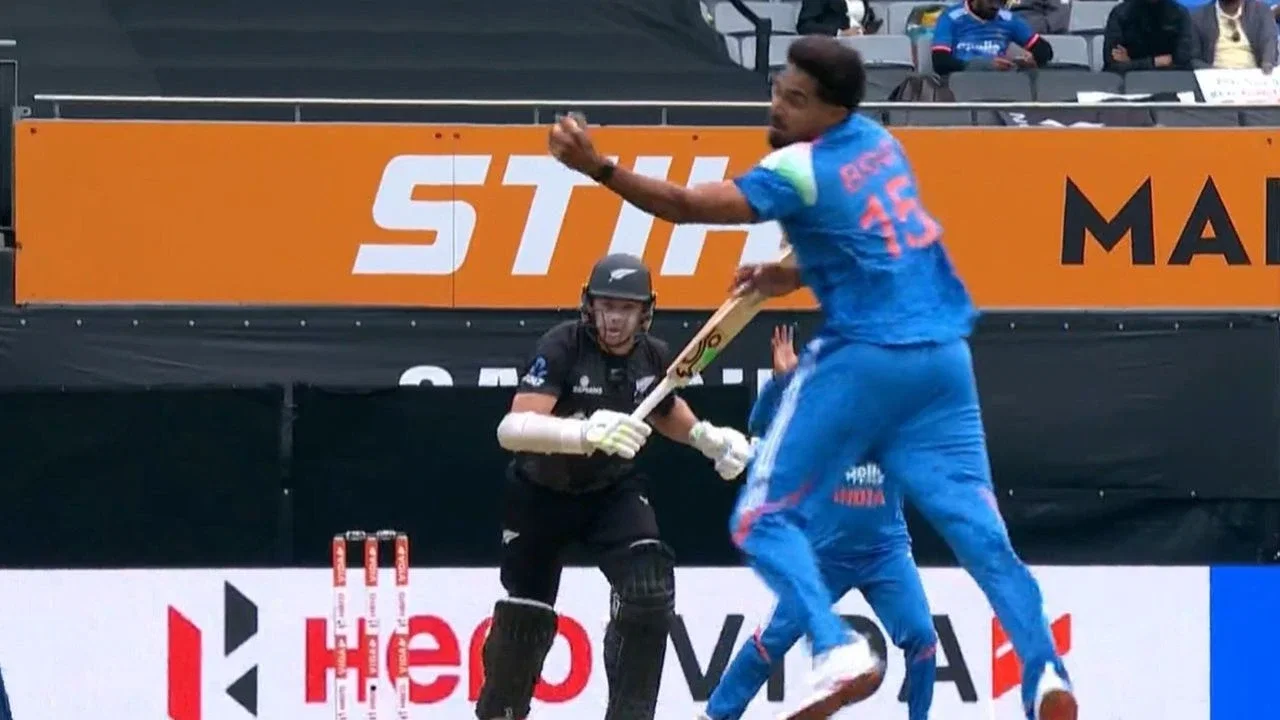
Rohit was not the only Indian player to produce a memorable fielding moment. Earlier in the innings, Gurnoor Brar took a one-handed catch to dismiss Tom Latham. The spectacular effort gave India another early breakthrough and set the tone for a sharp performance in the field.
Taken together, Brar’s catch and Rohit’s run-out showed how India’s fielders backed up the bowlers. In a match where the batting side was already under pressure, those moments made it harder for New Zealand to find a foothold. They also gave India’s bowlers the confidence to attack rather than simply contain the scoring.
What the early collapse could mean for the match
New Zealand’s position left the first ODI finely poised, with the outcome depending on whether the lower order could add enough runs to make the total competitive. India’s early success strengthened its position, but a strong finish with the bat would still be required to turn the advantage into a result.
For supporters weighing up a match prediction, the opening phase offered clear signs of India’s momentum: disciplined bowling, timely wickets and high-quality fielding. However, ODI contests can shift quickly, particularly if the lower order produces a late partnership or the chasing side loses wickets in a cluster. The first innings therefore remained important despite New Zealand’s difficult start.
Rohit’s run-out was a standout moment because it combined experience with instinct. His quick decision helped remove a batter with a strong record against India, while the broader team performance kept New Zealand from building meaningful partnerships. At Eden Park, India’s sharpness in the field became a major part of the story—and a reminder that decisive contributions do not always come with the bat.
Latest News
Watch: Gurnoor Brar takes one-handed blinder to dismiss Tom Latham in IND vs NZ 1st ODI
Watch: ‘Flying’ Rohit Sharma’s fielding brilliance sends Daryl Mitchell packing in 1st ODI

Simon Harmer reveals why Jack Leach should be picked for the SA vs ENG Test series
Sadagopan Ramesh questions CSK’s decision to not appoint a batting coach

Shubman Gill warns New Zealand, says India can beat any team in any conditions
“I won’t say”: Yashasvi Jaiswal breaks silence on poor form in New Zealand after scoring 155

Virat Kohli’s message leaves Harry Kane starstruck after Ballon d’Or triumph
Mitchell Santner opens up on threats posed by Rohit Sharma, Virat Kohli in ODIs
Mitchell Santner opens up on threats posed by Rohit Sharma, Virat Kohli in ODIs

IPL 2027: CSK explore bizarre Liam Livingstone-Khaleel Ahmed swap with SRH

PCB demands $10,000 from Pakistani players for Abu Dhabi T10 2026 NOCs

Prasidh Krishna declared fit for India vs New Zealand Test series after ODI snub

Hardik Pandya’s IPL future uncertain as Mumbai Indians hold talks with multiple franchises

Suryakumar Yadav to become Mumbai Indians captain? Instagram video sparks speculation