Yuvraj Singh breaks silence on Jantar Mantar protests; sends powerful message for Indian Govt
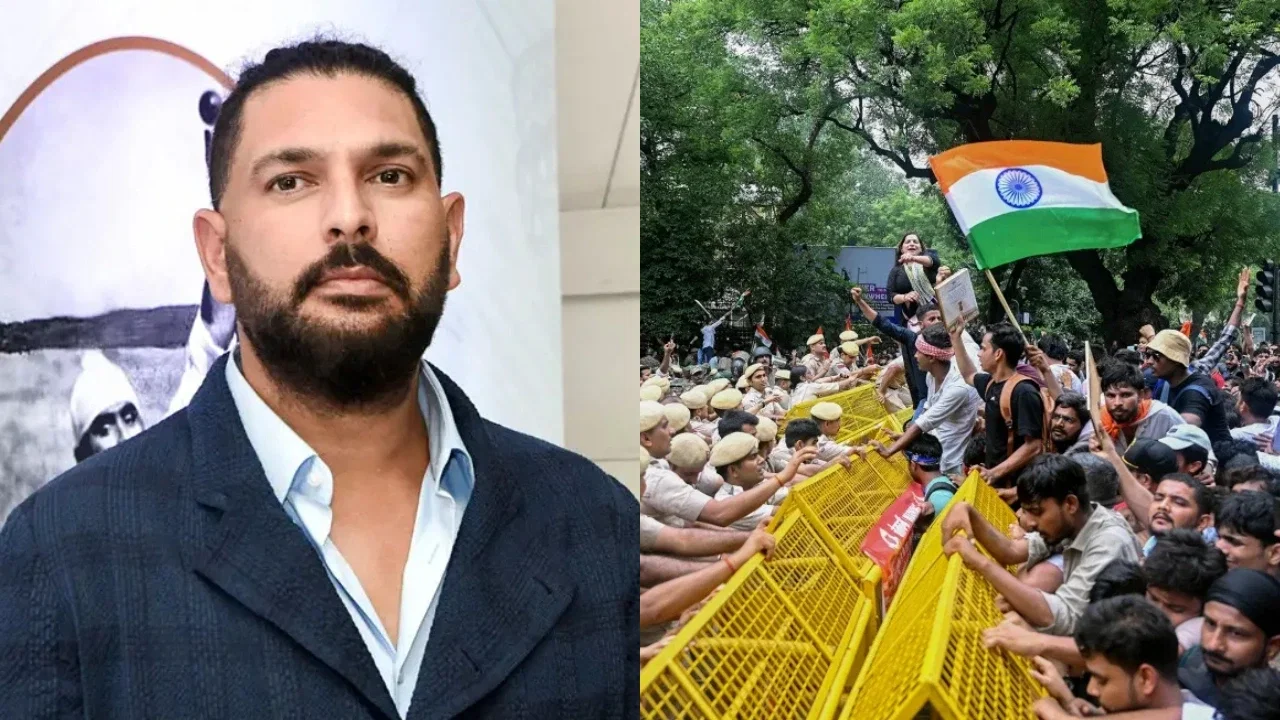
Yuvraj Singh Reacts to Nationwide Student Protests Over NEET-UG Paper Leak
Amidst the ongoing student protests led by the Cockroach Janta Party (CJP) and Sonam Wangchuk regarding the alleged NEET-UG paper leak, legendary Indian all-rounder Yuvraj Singh has finally broken his silence. The protests have sparked massive unrest across the country, with thousands of students and young people taking to the streets in Delhi, Mumbai, Pune, and other cities.
Yuvraj Singh, a two-time World Cup-winning cricketer from Punjab, shared a heartfelt message urging everyone to choose peace and seek solutions through dialogue. His response comes after Punjab Kings co-owner Preity Zinta also called for peaceful discussions amidst the student protests.
A Call for Peace and Dialogue
Yuvraj Singh’s message emphasized the importance of providing India’s young generation with a safe and peaceful environment to pursue their education, dreams, and aspirations. The ongoing student protests have evolved into a significant youth movement, demanding accountability in the education system, better job opportunities for the youth, and the resignation of Education Minister Dharmendra Pradhan over the NEET paper leak controversy.
The protests, centered around Delhi’s Jantar Mantar and Parliament Street, have garnered widespread attention and support. However, the Indian government, under Prime Minister Narendra Modi, has faced criticism for its handling of the situation. The Delhi police were ordered to take harsh actions against the protesting students, leading to mass detentions at Chhatrasal Stadium.
Support from Sporting Fraternity
Amidst the turmoil, cricketer Danish Kaneria expressed his backing for PM Modi’s stance on the protests. However, the police’s actions drew sharp condemnation from prominent personalities in the sports and entertainment industry. Yuvraj Singh chose to use his platform to advocate for peace and dialogue, rather than engaging in political discourse or blame games.
In his Instagram story, Yuvraj Singh emphasized the fundamental right of every individual, regardless of age or gender, to study in peace, live safely, and pursue their dreams without fear. He called for unity and dialogue as the path towards finding amicable solutions to the current crisis.
Manu Bhaker’s Call for Accountability
Joining the chorus of voices speaking out against the ongoing situation, double Olympic medallist Manu Bhaker highlighted the importance of prioritizing the future of the nation’s youth. She stressed that every child deserves access to education, safety, and equal opportunities, emphasizing that these should never be viewed as privileges.
Bhaker expressed her anguish at witnessing students suffer and called for greater accountability to safeguard their future. The collective voices of Yuvraj Singh, Manu Bhaker, and other prominent figures underscore the importance of addressing the concerns of the youth and ensuring a secure and conducive environment for their growth and development.
Overall, the nationwide student protests have sparked a renewed conversation on education, youth empowerment, and the need for peaceful resolutions to societal challenges, with calls for dialogue and unity resonating across various sections of society.
Government Response and Future Predictions
As the student protests continue to gain momentum, the government’s response remains a critical factor in shaping the outcome of the situation. With demands for accountability and reforms in the education system growing louder, all eyes are on how the authorities will address these concerns. The government’s handling of the protests will likely impact its relationship with the youth and shape future policies regarding education and employment opportunities.
Experts predict that the ongoing protests could influence upcoming elections and political dynamics, as the youth constitute a significant portion of the electorate. The government’s ability to effectively address the students’ grievances and provide tangible solutions may determine its standing among young voters in the future.
The Role of Social Media in Mobilizing Youth
Social media platforms have played a crucial role in mobilizing and amplifying the voices of the youth during the protests. From organizing demonstrations to sharing information and garnering support, social media has enabled students to connect, coordinate, and express their demands on a larger scale. This digital activism has proven to be instrumental in shaping public discourse and holding authorities accountable.
Going forward, it is likely that social media will continue to be a powerful tool for grassroots movements and activism, allowing individuals to voice their concerns, raise awareness, and rally support for causes they believe in. The influence of online platforms in driving social change and political engagement is expected to grow as more young people harness the power of digital communication.
Implications for Education Policy and Reform
The protests over the NEET-UG paper leak have reignited conversations about the need for comprehensive education reforms in India. Calls for transparency, accountability, and fair access to educational opportunities have underscored the deep-rooted issues in the current system. It is evident that there is a pressing need for structural changes to ensure a level playing field for all students.
Moving forward, policymakers will likely face mounting pressure to address the systemic flaws in the education sector, including issues related to exam security, resource distribution, and quality of instruction. The student protests have brought these challenges to the forefront, forcing stakeholders to confront the realities of an education system in need of significant transformation.
Conclusion
In conclusion, the nationwide student protests over the NEET-UG paper leak have sparked a wave of activism, dialogue, and calls for change. From the support of sporting icons like Yuvraj Singh to the impassioned pleas of Olympic medalist Manu Bhaker, the collective voice of the youth is demanding accountability, justice, and a better future. As the protests continue to unfold, all stakeholders must heed these calls for reform and work towards creating an inclusive and equitable education system that empowers every young Indian to realize their full potential.
By engaging in constructive dialogue, fostering unity, and prioritizing the well-being of the youth, India can navigate through this challenging period and emerge stronger, more resilient, and more responsive to the needs of its future leaders.
Latest News
Top 10 highest run-chases in T20 cricket history, ft. West Indies’ Ranchi win vs India
Aaryavir Sehwag and Anvay Dravid set to make headlines at U19 Asia Cup 2026
Longest ducks in Test cricket history ft. Nic Maddinson, Shoaib Akhtar
ECB to offer 39 central contracts to England players after Ben Stokes, Mark Wood’s retirement
Steve Smith surpasses Steve Waugh in all-time Test run-scorers’ list
Shane Watson identifies Gautam Gambhir’s biggest problem as India struggle for consistency
Is Bhuvneshwar Kumar in India’s 2027 World Cup plans? Ajinkya Rahane makes revelation
BCCI’s big ₹127 Crore move after injury crisis raises concerns over Team India
Parthiv Patel reveals RCB ignored his Jasprit Bumrah recommendation in IPL 2014 Auction
“Never spoke ill of any faith”: Irfan Pathan hits back at fake news using his name
Nic Maddinson bags 33-ball duck on Test comeback, disappoints George Bailey
Imran Tahir predicts 2027 ICC ODI World Cup Semi-Finalists, snubs India for title
Australia create unwanted history with first all-30-plus Test XI
Ravindra Jadeja returns to Ranji Trophy as Saurashtra announce squad