Babar Azam-starrer Pakistan fold for 110 in ODI as India chase 199 in 13.2 overs in T20I on same day

Sri Lanka Rout Pakistan for 110 to Keep England’s Tri-Series Hopes Alive
Sri Lanka’s bowlers produced a commanding performance against Pakistan in the fifth match of the tri-series at Lahore’s Gaddafi Stadium, dismissing the hosts for just 110 in 25.3 overs. The collapse put Pakistan under pressure ahead of the final and left England watching closely as the tournament’s qualification picture shifted.
Pakistan had already secured a place in the final after winning each of their first three matches. Sri Lanka, meanwhile, needed a victory to strengthen their own position and keep England’s route to the title match in doubt. The result also set up a decisive finish to the league stage, with Sri Lanka and England scheduled to meet before the final.
Pakistan’s Batting Collapse Leaves Little to Defend
After winning the toss, Sri Lanka chose to field first, backing their bowlers to exploit the conditions in Lahore. The visitors retained the side that had recently completed a remarkable 430-run chase against England. Pakistan made two changes, bringing in Maaz Sadaqat and Naseem Shah while leaving out Saim Ayub and Razaullah.
Pakistan began steadily, but the innings quickly unravelled after Fakhar Zaman was dismissed for five with the score at 11. Sri Lanka kept taking wickets, preventing the home side from building partnerships or settling into a rhythm. At one point, Pakistan had slipped to 61 for six, leaving the lower order with a difficult task.
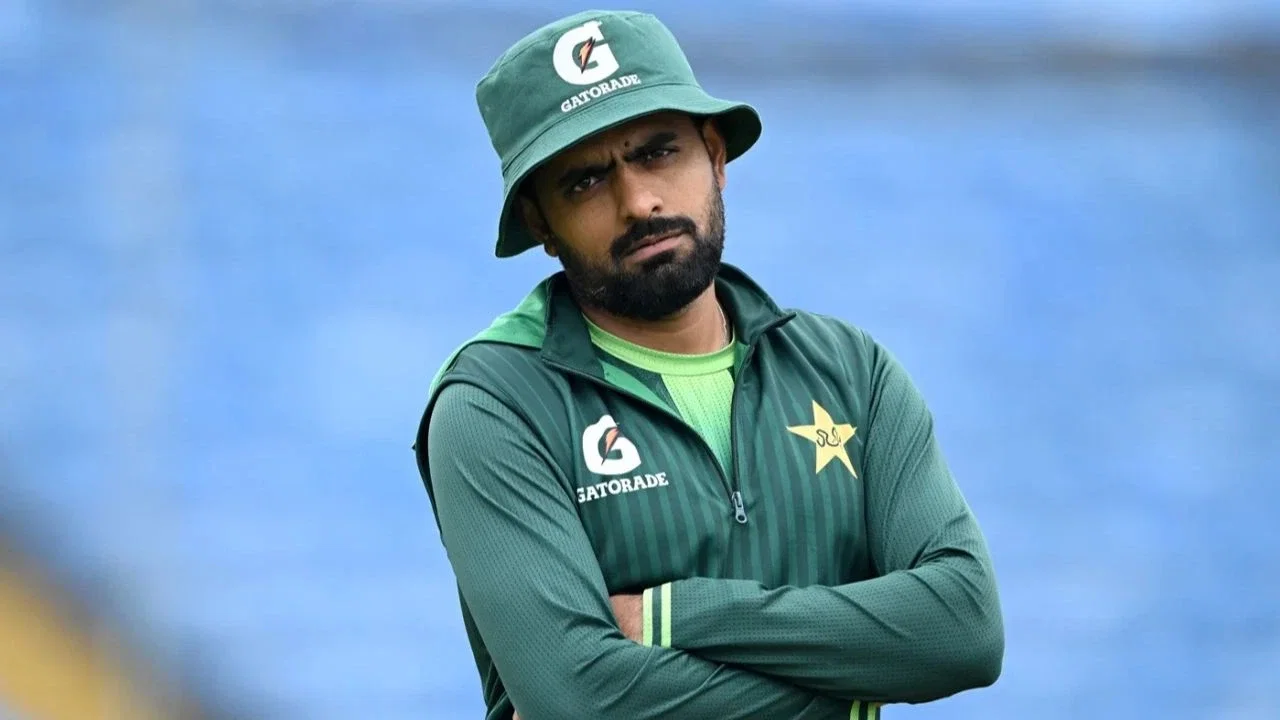
Babar Azam offered some resistance, making 29, but he was unable to turn his start into a substantial innings. No other Pakistan batter reached 20, and the team was eventually bowled out for 110. The total became Pakistan’s second-lowest against Sri Lanka, underlining the scale of the batting failure.
The collapse was particularly striking given Pakistan’s strong position in the series. A side that had won its opening three matches was suddenly forced to confront questions about its batting depth and ability to respond when early wickets fall. For Sri Lanka, the performance was a timely reminder of how effective disciplined, attacking bowling can be in a one-day match.
Dilshan Madushanka Leads Sri Lanka’s Bowling Attack
Dilshan Madushanka was the standout performer, claiming five wickets in 8.3 overs for 34 runs. His spell set the tone for Sri Lanka, as he repeatedly broke through Pakistan’s batting order and ensured that no recovery partnership could develop.
Sahan Arachchige supported him with two wickets, while Eshan Malinga, Dunith Wellalage and Asitha Fernando took one apiece. Sri Lanka’s attack combined early pressure with consistent wicket-taking, completing the job in just 25.3 overs. Rather than allowing Pakistan to rebuild after the first breakthrough, the bowlers maintained their intensity throughout the innings.
Madushanka’s five-wicket haul was also a significant individual contribution in a match where Sri Lanka needed a strong result. His performance could prove important for the team’s confidence heading into the final, particularly after the side’s successful chase against England in its previous outing.
Sri Lanka Make a Fast Start in the Chase
Chasing a target of 111, Sri Lanka came out with clear intent to finish the match quickly. They reached 50 for one inside six overs, putting themselves within touching distance of victory before the innings had developed into a contest.
Avishka Fernando was dismissed for 16, but his departure did little to slow the scoring. Kamindu Mendis was unbeaten on 31 as Sri Lanka moved towards the modest target. With so few runs required, Pakistan needed a cluster of wickets in quick succession to create any meaningful pressure.
The rapid start reflected the difference between the two innings. Pakistan had struggled to form partnerships, while Sri Lanka’s batters were able to approach the chase with freedom and a clear target. A small total can still demand care, but Sri Lanka’s early scoring made the task appear straightforward.
What the Result Means for England
The match had major implications for England’s chances of reaching the final. Sri Lanka’s need for a win had made the Pakistan fixture a key part of the qualification race, while England’s remaining match against the Islanders was set to determine whether the Three Lions could stay in contention.
With Pakistan already through, the final league match between Sri Lanka and England was expected to carry significant weight. A Sri Lanka victory over Pakistan would strengthen the Islanders’ position and put England’s hopes under pressure. Depending on the competition’s points and tie-break rules, the result could leave England with little or no chance of reaching the title match.
England, led by Harry Brook, still had an opportunity to finish its campaign with a positive performance. Even if qualification became impossible, a strong showing against Sri Lanka would offer a chance to restore momentum after the team’s heavy defeat in the previous meeting, when the Islanders chased down 430 runs.
Tri-Series Final: Pakistan and Sri Lanka Set for a Showdown
Pakistan’s earlier run of three consecutive victories had already secured its place in the final, scheduled for Saturday, 31 October, at the same Lahore venue. Sri Lanka’s performance against Pakistan provided a strong indication that the Islanders could be a serious threat in the title match, especially if their bowlers continue to take wickets at regular intervals.
Before the final, Sri Lanka were due to face England on 29 October. The match’s importance depended on the result of the Pakistan fixture and the tournament standings, but England were expected to approach it with the aim of ending their campaign on a high. For Sri Lanka, it offered a final opportunity to fine-tune combinations before the championship game.
Prediction: Sri Lanka Carry Momentum Into the Final
Based on this performance, Sri Lanka appear to have the momentum heading into the closing stages of the tri-series. Their bowlers showed they can dismantle a strong batting lineup, while the top order began the chase aggressively. Pakistan remain a formidable opponent, particularly after their unbeaten start to the tournament, but the Islanders have demonstrated that they can challenge the hosts when their bowling attack is firing.
The final prediction will depend on whether Pakistan can recover from this batting setback and whether Sri Lanka can reproduce the same discipline under pressure. One match does not erase Pakistan’s earlier achievements, but the 110-run total gives Sri Lanka a confidence boost and offers England a reminder that the tournament remains unpredictable until the qualification picture is settled.
Latest News

New Zealand suffer another injury blow! Lockie Ferguson ruled out of India T20Is
Babar Azam’s family issues made public and linked to poor form

Yuzvendra Chahal set to make India comeback: Report

R Ashwin names Bhuvneshwar Kumar’s replacement for 4th T20I vs New Zealand

Ajinkya Rahane hails Team India’s move to send Vaibhav Sooryavanshi back as opener

Jos Buttler provides injury update, reveals when he could return to action

WPL 2027: Complete players’ list of all teams after the mini auction

Kyle Jamieson stunned by Vaibhav Sooryavanshi’s talent and predicts an exciting future

Mohammed Siraj set to play for India A in 2nd unofficial Test against New Zealand A

Marnus Labuschagne becomes Australia’s worst batter in 147 years with 48-innings century drought

Faf du Plessis recalls shock decision to remove MS Dhoni as RPSG captain before IPL 2017

Musheer Khan achieves rare double after 35 years as Mumbai dominate Haryana in Ranji Trophy

Andrew McDonald set for fresh contract extension as Australia head coach

Nathan Lyon faces sandpaper taunt as 2018 ball-tampering scandal returns in Cape Town