Ben Stokes’ Ashes 2027 comeback on the cards, feels Chris Woakes
Chris Woakes Says Ben Stokes’ England Comeback Is Still Possible
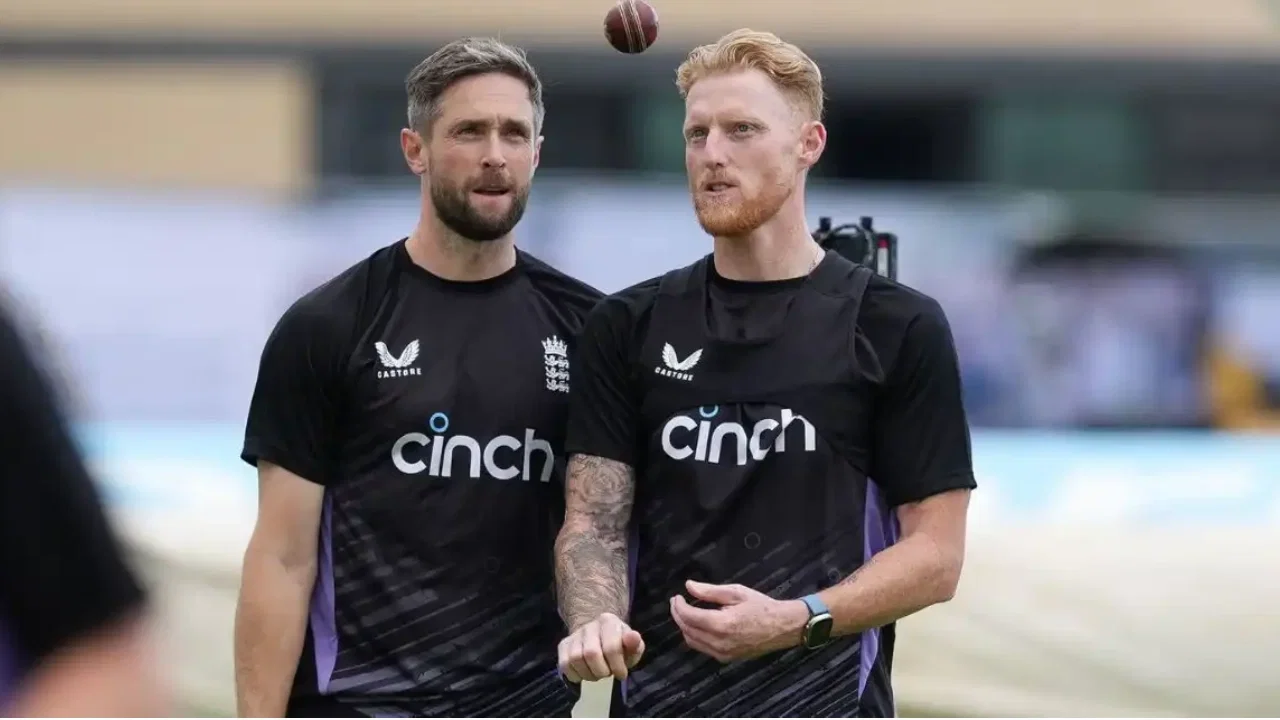
Ben Stokes may have stepped away from international cricket, but former England fast bowler Chris Woakes believes a return cannot be ruled out. Reflecting on his long career alongside Stokes, Woakes has suggested that the former captain could yet be tempted back—particularly if Joe Root asked him to play one more major series.
In a recent interview with The Guardian, Woakes also discussed the toll of England’s 2025–26 Ashes defeat, the evolution of the team’s aggressive “Bazball” approach and the contrasting coaching styles of Brendon McCullum and Andy Flower. His comments offer a revealing perspective on the pressures of elite cricket and the decisions that could shape England’s next Test chapter.
Could Ben Stokes Return Before the 2027 Ashes?
Stokes’ future remains a compelling question for England supporters, especially with the next Ashes series against Australia on the horizon in 2027. Woakes stopped short of predicting a comeback, saying he believes Stokes may be finished with international cricket. Still, he stressed that the all-rounder has never been easy to second-guess.
Woakes said that if anyone could persuade Stokes to reconsider, it might be Root. The two former England teammates share a close friendship and have played together for many years. A personal appeal from Root, perhaps asking Stokes to return for one final Ashes campaign, could carry more weight than a formal request from the England setup.
“When it comes to Ben, I genuinely think anything is possible,” Woakes said. “A large part of me says it won’t happen. I think he’s done. But if there’s one person that could talk Ben Stokes round to playing again, it would be Joe Root.”
Woakes added that a Stokes return would attract enormous attention, as it always does when the dynamic all-rounder is involved. However, any comeback would depend on Stokes’ own motivation, physical condition and willingness to take on the demands of international cricket again. The 2027 Ashes prediction debate is therefore likely to continue, but there is no confirmation that Stokes is considering a return.
The Ashes Defeat and the Weight of Leadership
Woakes said he was struck by how exhausted Stokes appeared after England’s 2025–26 Ashes loss to Australia. The defeat was a major disappointment for the side and was followed by further setbacks in subsequent series. For a captain who had carried significant responsibility on and off the field, the cumulative strain may have influenced his thinking about retirement.
Stokes’ role has often extended beyond his performances with bat and ball. As captain, he has been central to England’s identity, decision-making and efforts to maintain an ambitious style of play. That workload can be especially demanding when results are poor, injuries and selection questions arise, and expectations remain high.
Even so, a possible return should not be treated as a certainty. Retirement decisions are personal, and a single high-profile series may not be enough to change a player’s mind. Woakes’ comments instead underline the affection and respect Stokes continues to command among his former teammates.
Chris Woakes on Bazball’s Rise and Its Limits
Woakes also reflected on England’s Bazball era under former head coach Brendon McCullum. The approach encouraged positive, attacking cricket and helped make England’s Test matches more entertaining. At its best, it put opponents under immediate pressure and gave the team a clear identity.
But, according to Woakes, aggression was not always matched by the flexibility needed to manage different phases of a match. England could sometimes seize control, only to give the opposition an opening by continuing to attack when a more measured approach might have been more effective.
“There were times where we had the opposition pretty much by the balls and could have played a little more conservatively,” Woakes explained. “There were too many occasions where we let them back in.”
His central criticism was not that England should abandon attacking cricket. Rather, he suggested the team needed to become better at changing tempo. A fast scoring rate can be valuable, but Test matches also demand patience, risk management and the ability to protect an advantage. In Woakes’ view, England often moved up the gears but did not shift back down when circumstances called for it.
That balance remains a key lesson for any side seeking to play modern, aggressive Test cricket. A strong strategy must be adaptable: conditions, the state of the game and the opposition’s response should all influence how a team bats. The future prediction for England’s Test identity may therefore depend less on choosing between attack and caution, and more on learning when to use each.
Andy Flower and Brendon McCullum: Two Different Coaching Styles
Woakes described his early experience under Andy Flower as intense. Training was demanding, and as a young player he sometimes felt apprehensive about taking part. With time, however, he came to see that the discipline and high standards helped prepare him for international cricket.
“He was ridiculously hard. I was almost scared to train, but that was also what I needed at the time,” Woakes said. He added that Flower’s approach suited him early in his career, while McCullum’s style was a better fit later on.
The contrast highlights how coaching is not simply a matter of one method being right and another wrong. Flower’s demanding environment helped establish discipline and technical habits, while McCullum’s approach gave experienced players greater freedom and encouraged them to express themselves. Different stages of a career can call for different kinds of support.
For Woakes, both coaches played a role in his development. His reflections also offer a broader lesson for England: successful teams need clear standards, but they must also create an environment in which players can adapt, communicate and make smart decisions under pressure.
What Woakes’ Comments Mean for England
Woakes’ interview touches on three questions that will continue to shape discussion around the England men’s Test team: whether Stokes could return, how England should refine its attacking approach, and what kind of coaching environment will help players perform consistently.
For now, Stokes’ comeback remains speculation rather than a confirmed plan. Woakes believes the possibility is not entirely closed, with Root potentially able to make a persuasive case. Whether that prediction becomes reality will depend on Stokes himself—and on how he feels as the 2027 Ashes approach.
In the meantime, England’s challenge is to take the lessons of recent results seriously. The team can preserve the energy and ambition that made Bazball distinctive while improving its ability to control games. As Woakes’ comments suggest, the most effective cricket is not always the most aggressive; it is the cricket that responds intelligently to the moment.
Latest News
Vaibhav Sooryavanshi’s reaction goes viral when PM Narendra Modi says ‘whose age was only 15 to 17…’
Dinesh Karthik names top 5 T20 batters, Virat Kohli at top, Abhishek Sharma snubbed
“There’s scope to make pitches flatter”: Sanjay Manjrekar takes a dig at Indian tracks
Bhuvneshwar Kumar gets surprise India selection vs WI after Arshdeep Singh’s shoulder injury

Suryakumar Yadav reveals biggest attraction of his Dubai property with Shah Rukh Khan connection
Ben Stokes’ Ashes 2027 comeback on the cards, feels Chris Woakes
![Mohammed Shami IN: India ODI squads for New Zealand tour 2026 [Predicted]](https://111.90.158.165/wp-content/uploads/2026/10/Untitled-design-9-1--1.webp)
Mohammed Shami IN: India ODI squads for New Zealand tour 2026 [Predicted]
Yuzvendra Chahal breaks silence on divorce, reveals anxiety attacks and 26 days in rehab
India vs Zimbabwe women’s T20I tickets: Free entry for women in Raipur
Watch: Vaibhav Sooryavanshi warns paparazzi with “thuk jaoge” remark
Bharat Arun, R Sridhar give Nitish Kumar Reddy reality check on becoming next Hardik Pandya
Australia captain Sophie Molineux fit for T20I opener vs NZ, Phoebe Litchfield remains doubtful
Yuzvendra Chahal reveals drunk Australian player nearly killed him
‘Get hit for 6 sixes’: Yuzvendra Chahal recalls Virat Kohli’s unusual advice