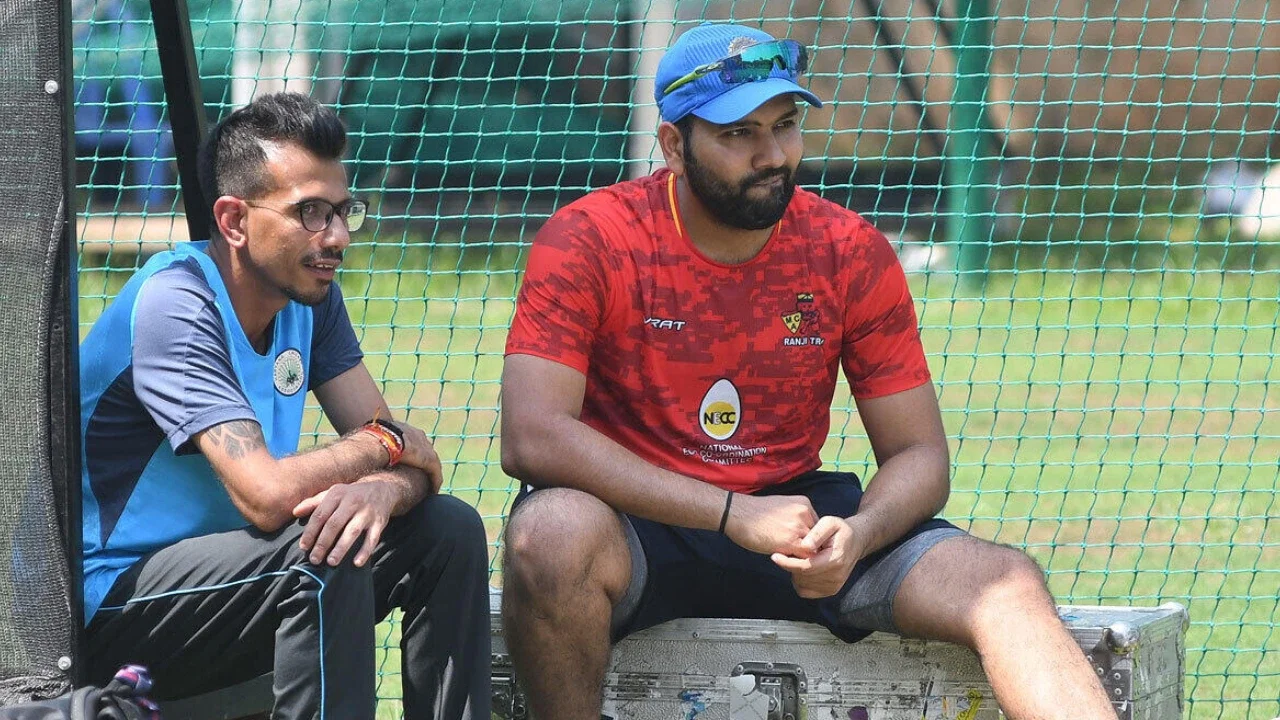
“There’s scope to make pitches flatter”: Sanjay Manjrekar takes a dig at Indian tracks

India vs West Indies T20I Series Sparks Debate Over Batting-Friendly Pitches
Big totals have become the defining feature of the India-West Indies T20I series. India posted 249 runs in the second match before adding 223 in each of the next two games, while West Indies chased down the 249-run target and produced totals of 252 and 247 in their other recent innings. With the fifth and final match approaching, the run-heavy contest has revived a familiar question: are modern T20 pitches giving batters too much of an advantage?
Former India cricketer Sanjay Manjrekar weighed in with a pointed post on X, suggesting that cricket could make 300-run innings a regular event by flattening pitches, shortening boundaries and introducing more rules that restrict bowlers. His comment was sarcastic, but it captured the concern of viewers who have watched bowlers struggle to contain powerful batting on surfaces offering little assistance.
A series transformed by explosive scoring
The opening match was the only contest in the series so far in which an innings finished below 200. West Indies made 171 at the Ekana Cricket Stadium B Ground in Lucknow, and India chased the target successfully. Since then, the scoring has surged. India’s totals of 249, 223 and 223 have been matched by West Indies’ 252, 209 and 247, turning the series into a showcase of aggressive batting and high-pressure run chases.
For much of T20 cricket’s history, reaching 200 in 20 overs was considered a major achievement. Teams now approach that mark with greater confidence, supported by deeper batting line-ups, improved power-hitting techniques and a willingness to attack from the first over. The latest results suggest that even 220 or 240 may not guarantee safety when conditions favour stroke-making and a side has wickets in hand.
The series has also highlighted how quickly a match can change. A total that once looked decisive can become a chaseable target if the pitch stays true, the outfield is quick and the batting side has several players capable of clearing the boundary. That makes the final match more than a contest for series bragging rights: it is also a test of whether either team can find a better balance between attack and control.
Shai Hope leads the run-scoring charts
West Indies captain Shai Hope has been the standout batter, scoring 260 runs in four innings at an average of 130.50. His consistency has been especially valuable in a series where one major contribution can set up a daunting total or keep a chase on course. Sherfane Rutherford is next among the leading run-scorers, with 221 runs from four innings.
The numbers underline the challenge facing both bowling attacks. When top-order batters are scoring at a high rate and the middle order can maintain the momentum, captains have fewer opportunities to slow the game down. A missed length or a fielding error can quickly become costly, while even a well-executed over may not be enough to change the direction of a high-scoring innings.
Bowling figures reveal the pressure on attack
Keemo Paul leads the wicket-takers with six dismissals, but taking wickets has not necessarily meant controlling the scoring. Gudakesh Motie has the best economy rate in the series at 8.88, while India’s best economy rate among the cited bowlers belongs to fast bowler Prince Yadav at 9.13.
Economy rates above eight runs an over are not unusual in modern T20 cricket, particularly on batting-friendly surfaces. Still, the figures help explain why the matches have produced such large totals. Bowlers have had limited room for error, and the conditions have offered few obvious ways to build pressure through movement or unpredictable bounce. In that environment, teams often rely on variations, changes of pace and disciplined plans at the death rather than expecting the pitch to do the work.
Manjrekar’s prediction about 300-run T20 totals
Before the fifth T20I, Manjrekar posted: “I really think there is scope to make pitches flatter, boundaries smaller, more rules against bowlers… for us to regularly get 300 in 20 overs.” The remark was framed as a jab at the conditions and the broader direction of the game, rather than a straightforward proposal for changing cricket’s laws.
A 300-run innings remains an extraordinary target in international T20 cricket. Reaching it would require sustained acceleration across almost the entire innings, with batters maintaining a high scoring rate while losing very few wickets. Yet the totals in this series make the possibility feel less distant than it once did. The prediction that teams may eventually approach 300 more often is rooted in the sport’s continuing evolution: batting power has improved, tactical risk-taking has become standard, and teams increasingly build line-ups around players who can score boundaries under pressure.
That evolution is not simply about stronger hitters. Data-led planning helps batters identify match-ups and target specific bowlers, while modern training has made it easier to generate power without sacrificing balance. At the same time, flatter surfaces and shorter boundaries can magnify those advantages, leaving bowlers with a narrow margin for error.
The balance between entertainment and competition
High-scoring matches can be thrilling, especially when a chase remains alive until the final overs. But the appeal of T20 cricket depends on competition between bat and ball. If every delivery appears to favour the batter, bowlers may have fewer opportunities to influence a game and close finishes could become less about tactical skill than who can hit the most boundaries.
That does not mean every pitch should be difficult to bat on. Surfaces that offer a fair contest can reward good shot-making while still giving bowlers options through pace, spin or movement. Boundary dimensions, ground conditions and playing regulations also shape the contest, so the discussion is broader than simply making pitches flatter or livelier.
As the series reaches its final match, the key prediction is not necessarily whether a team will score 300. The more immediate question is whether the conditions will continue to produce huge totals—or whether bowlers can adapt with smarter variations, tighter fields and better execution. Either outcome will add another chapter to a series that has turned run-scoring into its central talking point.
Latest News

Vaibhav Sooryavanshi’s reaction goes viral when PM Narendra Modi says ‘whose age was only 15 to 17…’
Dinesh Karthik names top 5 T20 batters, Virat Kohli at top, Abhishek Sharma snubbed
“There’s scope to make pitches flatter”: Sanjay Manjrekar takes a dig at Indian tracks

Bhuvneshwar Kumar gets surprise India selection vs WI after Arshdeep Singh’s shoulder injury

Suryakumar Yadav reveals biggest attraction of his Dubai property with Shah Rukh Khan connection

Ben Stokes’ Ashes 2027 comeback on the cards, feels Chris Woakes
![Mohammed Shami IN: India ODI squads for New Zealand tour 2026 [Predicted]](https://111.90.158.165/wp-content/uploads/2026/10/Untitled-design-9-1--1.webp)
Mohammed Shami IN: India ODI squads for New Zealand tour 2026 [Predicted]
Yuzvendra Chahal breaks silence on divorce, reveals anxiety attacks and 26 days in rehab
India vs Zimbabwe women’s T20I tickets: Free entry for women in Raipur
Watch: Vaibhav Sooryavanshi warns paparazzi with “thuk jaoge” remark

Bharat Arun, R Sridhar give Nitish Kumar Reddy reality check on becoming next Hardik Pandya

Australia captain Sophie Molineux fit for T20I opener vs NZ, Phoebe Litchfield remains doubtful
Yuzvendra Chahal reveals drunk Australian player nearly killed him
‘Get hit for 6 sixes’: Yuzvendra Chahal recalls Virat Kohli’s unusual advice