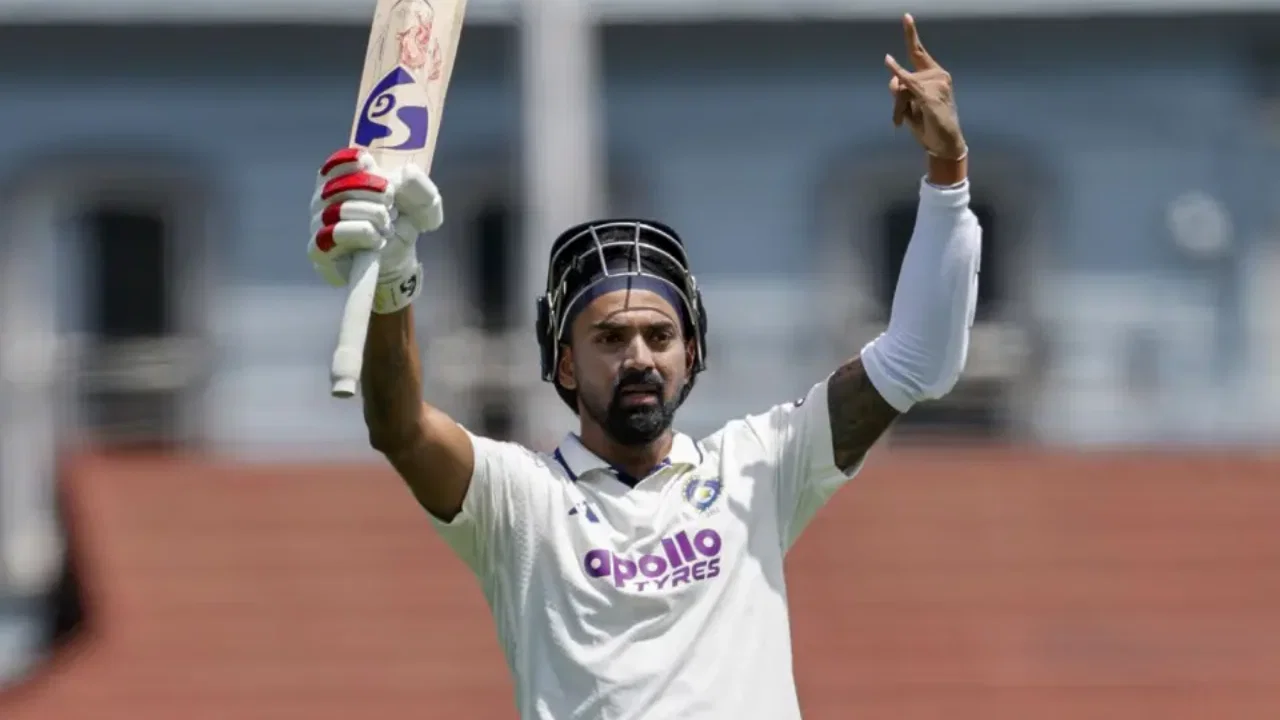
IND vs PAK: Tilak Varma and Abdul Samad skip handshake in Rising Stars Asia Cup clash
India A vs Pakistan Shaheens: No-Handshake Moment Adds Tension to Rising Stars Asia Cup 2026 Clash
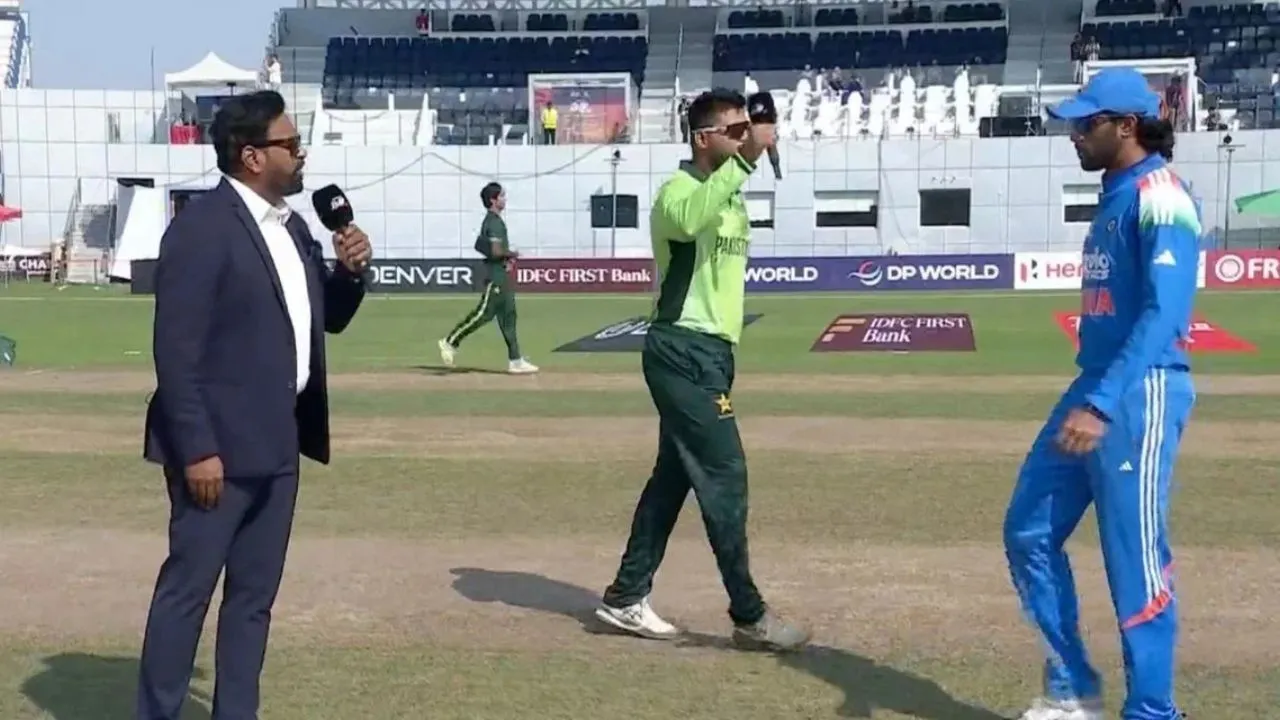
The rivalry between India and Pakistan was on display before a ball was bowled in their ACC Men’s Asia Cup Rising Stars 2026 match in Doha. At the toss on Sunday, India A captain Tilak Varma and Pakistan Shaheens skipper Abdul Samad did not shake hands, continuing a practice that has become a striking feature of recent meetings between the two sides.
The moment unfolded at West End Park International Cricket Stadium, where India A arrived with powerful momentum after a record-breaking opening victory. With a place in the tournament final potentially at stake, the match carried sporting importance as well as the familiar attention that accompanies an India-Pakistan contest. The pre-match exchange—or lack of one—quickly became a talking point of its own.
Awkward toss exchange draws attention
The no-handshake moment was not the only unusual scene during the toss. Samad called heads, but after the coin landed, the presenter announced that it had come down tails. Both captains leaned forward to inspect it, and Samad pointed towards the coin, repeating, “It’s a head, it’s a head,” into the microphone.
There was also a brief mix-up with the microphones. Samad walked away with one after the toss, leaving Varma without a microphone when he began speaking. The small, awkward incidents added an unscripted edge to the pre-match proceedings and drew attention online, even as the focus soon shifted to the cricket.
India A carry huge momentum into the match
India A entered the contest after a remarkable 306-run win over Nepal. Their bowlers dismissed Nepal for just 26, with the pace attack leading a dominant performance. Harshit Rana and Prince Yadav were especially impressive, setting the tone with an aggressive display that left Nepal unable to build a meaningful response.
The victory gave India A a major boost in confidence and strengthened their position in the competition. Against Pakistan Shaheens, the challenge was to carry that intensity into a much more closely watched fixture. A win could move India A closer to securing a place in the final, while Pakistan had the opportunity to disrupt their progress and make a statement of its own.
For India, the key would be to avoid treating the previous result as a guarantee. Nepal’s low total highlighted the effectiveness of the bowling attack, but Pakistan’s batters presented a different test. The contest also offered India A’s top order a chance to set a strong platform after Varma said his side had been keen to bat first.
Why has the no-handshake policy continued?
The absence of a handshake reflects the wider strain in relations between India and Pakistan. The practice became prominent during the 2025 Asia Cup, when India’s senior men’s captain, Suryakumar Yadav, did not exchange the customary greeting with Pakistan’s players following the Pahalgam attack, in which several Indian citizens were killed.
Since then, the gesture has remained absent across several high-profile cricket meetings, including matches involving different age groups and women’s teams. The sporting tradition of shaking hands at the toss or after a match has therefore become closely associated with the broader political climate between the neighbouring countries.
The tension has also been visible in formal cricket-related moments. During the 2025 Asia Cup presentation, India’s players declined to accept the trophy from Asian Cricket Council president Mohsin Naqvi, who also serves as Pakistan’s interior minister. A similar refusal was reported during the Women’s Asia Cup 2026, underscoring how the strained relationship has continued to affect cricket events.
While players and officials have not always offered lengthy explanations for each incident, the repeated pattern has made the lack of a handshake a symbol that audiences now expect to notice. It is a reminder that India-Pakistan matches are rarely viewed as ordinary fixtures, even when the players themselves try to keep their attention on the game.
Tilak Varma: “For us, it’s just another game”
Speaking at the toss, Varma said India A wanted to bat first and noted that the pitch appeared slightly dry. He also praised Rana and Prince for their performances against Nepal, describing their bowling as a treat to watch. For players returning from injury, he added, a strong performance can be valuable both personally and for the team.
Varma acknowledged the intense interest surrounding the fixture but played down the pressure from the players’ perspective. “For us it’s just another game, but for spectators it’s an interesting match; they always look forward to it,” he said, according to Cricbuzz. He also confirmed that India A would field the same team as in their opening match.
His comments reflected a familiar approach to high-profile rivalry games: recognise the attention, but focus on preparation and execution. As captain, Varma’s challenge was to keep his side composed while managing expectations after such a one-sided opening win.
India A vs Pakistan Shaheens prediction: what could decide the contest?
Any prediction for the match must account for India A’s commanding form and Pakistan Shaheens’ ability to respond under pressure. India’s pace attack had already shown it could exploit conditions and take wickets in clusters. If Rana and Prince found early movement again, Pakistan’s top order could face a demanding start.
The pitch, described by Varma as slightly dry, may also influence team strategy. A surface that slows as the match progresses could reward batters who build carefully and bowlers who vary their pace. India’s decision to bat first suggests they were prepared to put runs on the board and then use their attack to defend a target.
However, the scale of India A’s win over Nepal should not be treated as a direct measure of how the Pakistan match will unfold. Rivalry fixtures often bring a different intensity, and Pakistan Shaheens will be eager to prevent India from carrying its momentum into the final. The outcome could depend on which side handles the opening overs better and adapts most effectively to the conditions.
Beyond the result, the match again showed how cricket between India and Pakistan can carry several layers of meaning. The toss, the team selections and the tactical contest all matter, but even a brief moment between captains can become part of the story. With qualification hopes on the line, the focus now turns to whether India A can extend its winning run or Pakistan Shaheens can change the tournament’s direction.
Latest News
Will Jacks ruled out of Australia vs England T20I series with broken hand
Harshit Rana involved in heated on-field exchanges with Pakistan batters in Doha
Vaibhav Sooryavanshi leaves field after collision with Vipraj Nigam in IND vs PAK game
Jasprit Bumrah scripts special Test record after dismissing Tom Latham in 1st Test vs New Zealand
Yuzvendra Chahal makes political debut, gets special role in BJP
“None of them are bad guys”: David Warner’s manager offers solution to Australia’s Sandpapergate row
Irfan Pathan picks SIX Indians in World Test XI, leaves out several big names
Dinesh Karthik backs Anshul Kamboj for ODI World Cup squad after impressive nightwatchman knock
Saba Karim explains why Rishabh Pant is “required in international cricket”
Jacob Bethell undergoes second knee surgery, reveals comeback timeline
Jamshed Alam creates history with stunning five-wicket haul on T20 debut in SMAT
Noor Ahmad reveals two things CSK players will miss most about MS Dhoni
“Spend some time in the house:” Usman Khawaja’s childhood coach hits back over Sandpaper Gate claims
IND vs PAK: Tilak Varma and Abdul Samad skip handshake in Rising Stars Asia Cup clash