Vaibhav Sooryavanshi leaves field after collision with Vipraj Nigam in IND vs PAK game
Vaibhav Sooryavanshi Leaves Field After Collision With Vipraj Nigam in India A–Pakistan Shaheens Clash
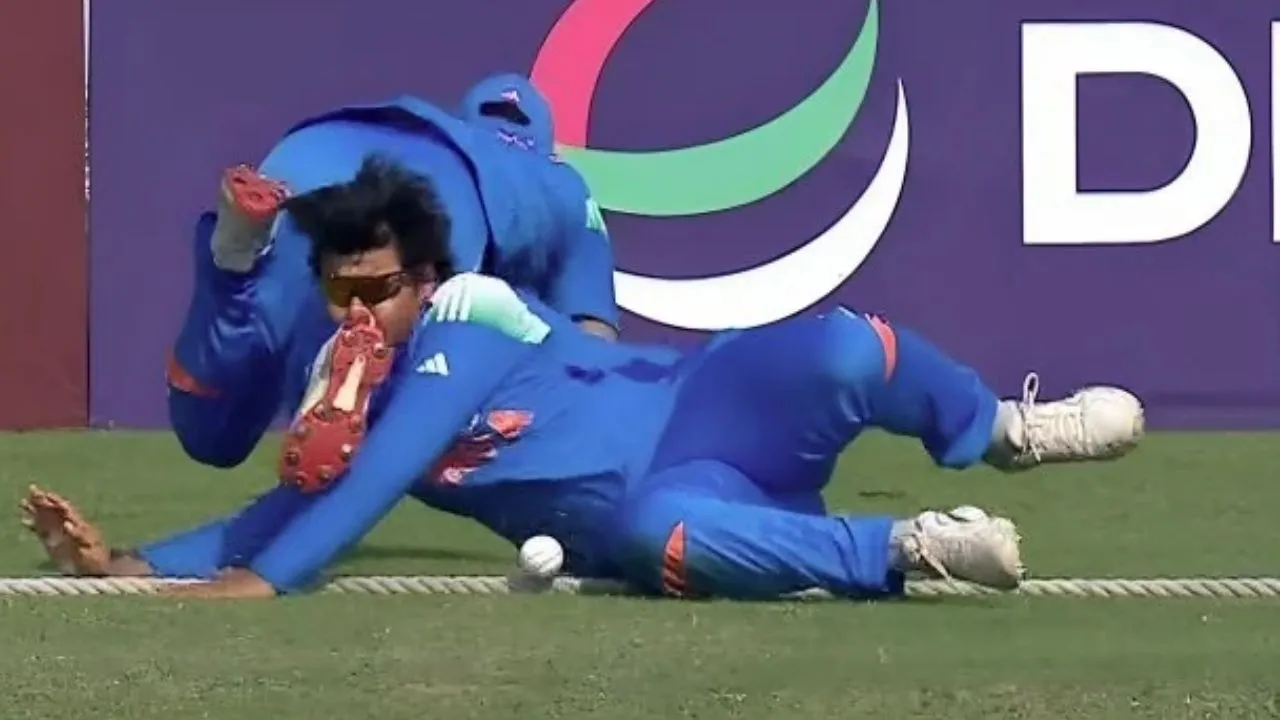
India A opener Vaibhav Sooryavanshi left the field after a collision with teammate Vipraj Nigam during the ACC Men’s Asia Cup Rising Stars 2026 match against Pakistan Shaheens in Doha. The incident occurred as the pair tried to prevent a boundary at West End Park International Cricket Stadium, briefly raising concern among players and spectators.
Sooryavanshi appeared to be struck around the shoulder and jaw when Nigam’s leg made contact with him during a dive. The young batter was seen holding his neck and shoulder before leaving the field. Tanush Kotian came on as a substitute fielder. At the time, there was no immediate indication that the injury was serious, but the team’s medical staff were expected to assess him before any decision about his return.
How the fielding collision happened
The incident took place in the third over, with Pakistan opener Maaz Sadaqat driving the ball towards the deep square-leg boundary. Sooryavanshi moved across to cut it off, while Nigam also launched himself towards the ball. Their paths converged, and the two India A fielders collided as they attempted to save runs.
Sooryavanshi initially got back to his feet and appeared to try to continue fielding. He was later taken off, however, after showing signs of discomfort. In a fast-moving cricket match, players often have only a moment to judge a ball’s direction and their teammates’ positions. The episode underlined the risks of high-speed boundary fielding, where communication and awareness can be just as important as athleticism.
India A will be keen to avoid rushing the teenager back into action. Any decision about his participation later in the match will depend on how he responds to medical checks, particularly given the contact around his shoulder and jaw. His availability could matter in the second innings, but player safety will remain the priority.
India A and Pakistan Shaheens meet with a semi-final place at stake
The high-profile fixture brought together two teams that had both won their previous matches. India A arrived in strong form after a dominant performance against Nepal, bowling their opponents out for just 26 and securing a 306-run victory. Pakistan Shaheens also entered the contest with momentum, setting up a significant group-stage meeting.
The winner of the match would become the first team to qualify for the tournament’s semi-finals. That added importance to every phase of play: a strong start with the bat, disciplined bowling through the middle overs, and sharp fielding could all shape the outcome. The Sooryavanshi–Nigam collision therefore came at a tense point in a match where both sides were looking to build an advantage.
Pakistan make an aggressive start after choosing to bat
Pakistan won the toss and elected to bat first, and openers Shamyl Hussain and Maaz Sadaqat began positively. They attacked India A’s early bowling, including Harshit Rana and Prince Yadav, putting pressure on the fielding side and giving Pakistan a quick start.
India responded with two wickets, slowing the initial surge and creating an opportunity to regain control. Sadaqat then looked to steady the innings alongside Hasan Nawaz, with the opener reaching a half-century as the pair worked to establish a partnership. India’s challenge was to contain the scoring rate without allowing the batters to settle into a rhythm during the middle overs.
For Pakistan, the developing stand offered a chance to turn a brisk opening into a substantial total. For India, the key was likely to be disciplined lines, well-placed fielders and pressure that could produce another breakthrough. In a limited-overs contest, a partnership at this stage can influence both the final score and the tactical approach to the chase.
Vaibhav Sooryavanshi’s rapid rise
Sooryavanshi has attracted attention for his aggressive batting and remarkable rise at a young age. He first became widely known through his performances in the Indian Premier League, where his fearless stroke play drew interest from fans and cricket observers. His progress has been unusually rapid, bringing opportunities at both domestic and representative levels while also placing him under intense public scrutiny.
He has had mixed opportunities in international cricket, where competition for opening positions is fierce. Established options such as Abhishek Sharma and Sanju Samson have featured at the top of India’s T20 batting order, limiting Sooryavanshi’s chances. When selected, however, he has shown that he can perform on a larger stage, including earning Player of the Series recognition during India’s tour of Zimbabwe.
Sooryavanshi was included in India A’s squad for the 50-over competition and made a start against Nepal, scoring 26 before being dismissed. While that innings did not become a major score, the tournament offers him valuable experience against strong opposition and in pressure situations. His role in the India–Pakistan fixture was especially notable because of the match’s stakes and the attention surrounding the young batter.
What the incident could mean for India A
Sooryavanshi’s departure was an unsettling moment, but it also highlighted the depth and adaptability required in a tournament squad. A substitute fielder can cover his position in the field, although the team may need to reassess its batting options if he is unable to take part later. Any update on his condition is likely to be closely followed by supporters of India A and fans tracking his development.
As the match continued, the focus returned to the contest between bat and ball. India needed to break the developing partnership and restrict Pakistan’s scoring, while the Shaheens aimed to capitalise on their promising start. With a semi-final berth on the line, the fixture remained finely poised.
For fans seeking a prediction on the match, the early momentum favoured Pakistan, but India’s pair of quick wickets showed that the innings could still shift quickly. The eventual result would depend on whether Pakistan could convert its start into a commanding total—and whether India could maintain pressure through the middle overs. Above all, supporters will hope Sooryavanshi’s injury proves minor and that he is able to return safely when cleared by the team’s medical staff.
Latest News
Will Jacks ruled out of Australia vs England T20I series with broken hand
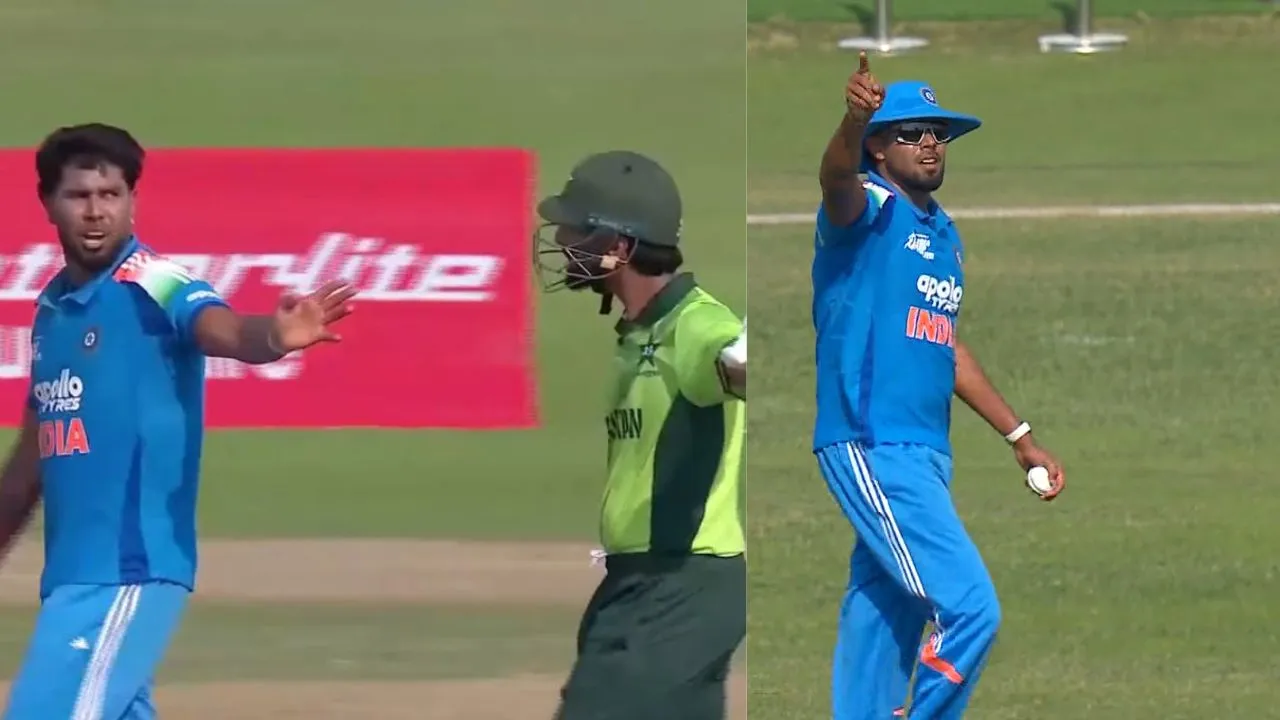
Harshit Rana involved in heated on-field exchanges with Pakistan batters in Doha
Vaibhav Sooryavanshi leaves field after collision with Vipraj Nigam in IND vs PAK game
Jasprit Bumrah scripts special Test record after dismissing Tom Latham in 1st Test vs New Zealand
Yuzvendra Chahal makes political debut, gets special role in BJP
“None of them are bad guys”: David Warner’s manager offers solution to Australia’s Sandpapergate row
Irfan Pathan picks SIX Indians in World Test XI, leaves out several big names
Dinesh Karthik backs Anshul Kamboj for ODI World Cup squad after impressive nightwatchman knock
Saba Karim explains why Rishabh Pant is “required in international cricket”
Jacob Bethell undergoes second knee surgery, reveals comeback timeline
Jamshed Alam creates history with stunning five-wicket haul on T20 debut in SMAT
Noor Ahmad reveals two things CSK players will miss most about MS Dhoni
“Spend some time in the house:” Usman Khawaja’s childhood coach hits back over Sandpaper Gate claims
IND vs PAK: Tilak Varma and Abdul Samad skip handshake in Rising Stars Asia Cup clash