Mike Hesson set to continue as Pakistan Test head coach until end of current WTC cycle
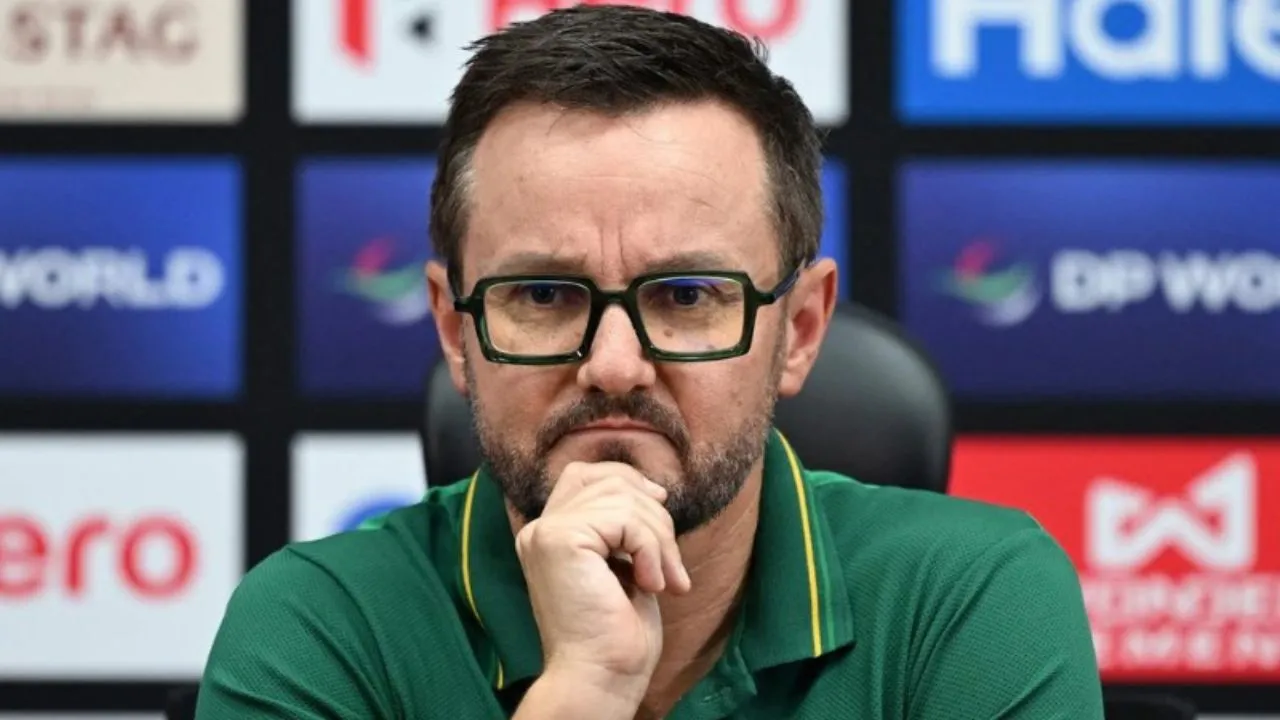
Mike Hesson Set to Continue as Pakistan’s Interim Test Head Coach
Pakistan are expected to keep Mike Hesson in charge of their Test team through the remainder of the current World Test Championship (WTC) cycle, according to reports. The New Zealander, who originally joined the Pakistan Cricket Board (PCB) as head coach of the white-ball sides, has taken on additional red-ball duties and is now likely to guide the team in its upcoming Test assignments as well.
The reported arrangement reflects the PCB’s preference for continuity while it considers its longer-term coaching structure. Hesson is understood to have accepted the interim role, with the board and coach said to have informed the players of the plan. His immediate responsibilities are expected to include Pakistan’s Test series against New Zealand next year.
How Hesson Took Charge of Pakistan’s Test Team
Hesson joined Pakistan cricket in May 2025 as head coach of the national team’s white-ball formats. He was initially asked to oversee the Test side on an interim basis during a difficult tour of England. His role expanded after Sarfaraz Ahmed was removed as Test head coach midway through that series, leaving Hesson to manage the red-ball team alongside his existing responsibilities.
A report by news agency PTI quoted a source as saying that Hesson would also lead Pakistan in next year’s Test series against New Zealand. The source added that the decision had been communicated to both the players and the head coach. If the reported plan holds, Pakistan will enter the next phase of their Test schedule with a familiar coaching setup rather than making an immediate appointment.
That continuity could be valuable for a side navigating a demanding international calendar. Test cricket requires a distinct approach to preparation, selection and match strategy, even when the same coach is involved across formats. Hesson will therefore need to balance the fast-moving demands of white-ball cricket with the longer-term planning required to build a competitive red-ball team.
PCB’s Long-Term Decision Expected After the 2027 ODI World Cup
Although Hesson is expected to remain involved for now, his long-term future with Pakistan is not settled. The PCB is reportedly planning to review his position after the 2027 ICC Men’s ODI World Cup, which will be hosted jointly by South Africa, Zimbabwe and Namibia.
That review is also expected to shape the board’s decision on a permanent Test head coach for the next WTC cycle. Until then, Hesson could continue to serve as the interim coach, giving the PCB time to assess the team’s progress and decide whether one coach should oversee multiple formats or whether the Test side needs a dedicated specialist.
The timing of the review gives Pakistan an extended period to evaluate Hesson’s impact. Results will matter, but the assessment is likely to involve more than wins and losses. The team’s consistency, development of younger players, performance away from home and ability to compete across a full Test series may all influence the board’s eventual prediction of what coaching structure will best serve Pakistan cricket.
Hesson’s Growing Influence Prompts Questions
Hesson’s increasing presence in Pakistan’s cricket setup has also sparked discussion about how authority is divided between the head coach, captain, selectors and PCB officials. Those questions came into sharper focus after Test captain Babar Azam said he does not take part in selection decisions.
Babar explained that squad selection is handled by the selection committee and team management. His responsibility, he indicated, is to work with the 15 or 16 players made available to him and help them perform as effectively as possible. The comments offer a glimpse into the current decision-making structure, though they do not establish how much influence Hesson has over individual selection calls.
In any national team, the balance between a captain’s input and the selectors’ authority can become a point of debate, particularly when results are under scrutiny. A clearly defined process can help players understand their roles and reduce uncertainty. At the same time, supporters and former players may continue to ask how decisions are reached when a coach is responsible for several formats and has a visible role across the setup.
What Hesson’s Continued Role Could Mean for Pakistan
The PCB is reportedly comfortable with Hesson handling responsibilities across both white-ball and Test cricket, and he is said to have the confidence of chairman Mohsin Naqvi. That support may provide stability in the short term, but it also places greater attention on the New Zealander’s results and working relationship with the players.
For Pakistan, the immediate priority will be turning that continuity into stronger performances. A settled coaching arrangement can help establish consistent preparation and communication, especially as the team works toward its WTC objectives. However, managing two distinct formats brings practical challenges: Test cricket calls for patience, technical discipline and sustained tactical planning, while limited-overs cricket often demands quicker adjustments and different player combinations.
The coming Test series against New Zealand should offer an important measure of how the arrangement is working. It will not, by itself, determine Hesson’s long-term future, but it could provide useful evidence for the PCB as it considers the next WTC cycle. For now, the reported prediction is that Hesson will remain Pakistan’s interim Test coach until the current cycle concludes, with a broader decision on his future likely to follow the 2027 ODI World Cup.
Latest News
“I liked looking at the mirror” – Kane Williamson on conversation with Virat Kohli before retirement
Scott Boland contradicts Usman Khawaja over ball tampering in Victorian cricket

Lance Morris suffers fresh injury setback hours after cricket comeback
Mike Hesson set to continue as Pakistan Test head coach until end of current WTC cycle
Mushfiqur Rahim creates world record, becomes first Bangladeshi to reach 7,000 Test runs
“A lot of coaches are scared”: Ryan ten Doeschate reveals how he approached Virat Kohli over batting struggles
‘We don’t want to rush’: Bangladesh provide official update on Nahid Rana’s return
Babar Azam equals Misbah-ul-Haq’s Pakistan captaincy record during 1st Test against Sri Lanka
Prasidh Krishna to DC, Ashutosh Sharma to GT? IPL 2027 trade talks underway
Usman Khawaja names Victoria the best at ball tampering in Australian domestic cricket
Axar Patel teases Arshdeep Singh with Mumbai Indians’ “Duniya Hila Denge” slogan

Hardik Pandya’s Mumbai Indians exit: Four options discussed before Punjab Kings deal
Steve Smith targets Sheffield Shield comeback after New York specialist visit
Bangladesh Test squad for South Africa tour announced, Mominul Haque returns