

“100 per cent accurate”: David Warner backs Usman Khawaja’s Sandpapergate claims
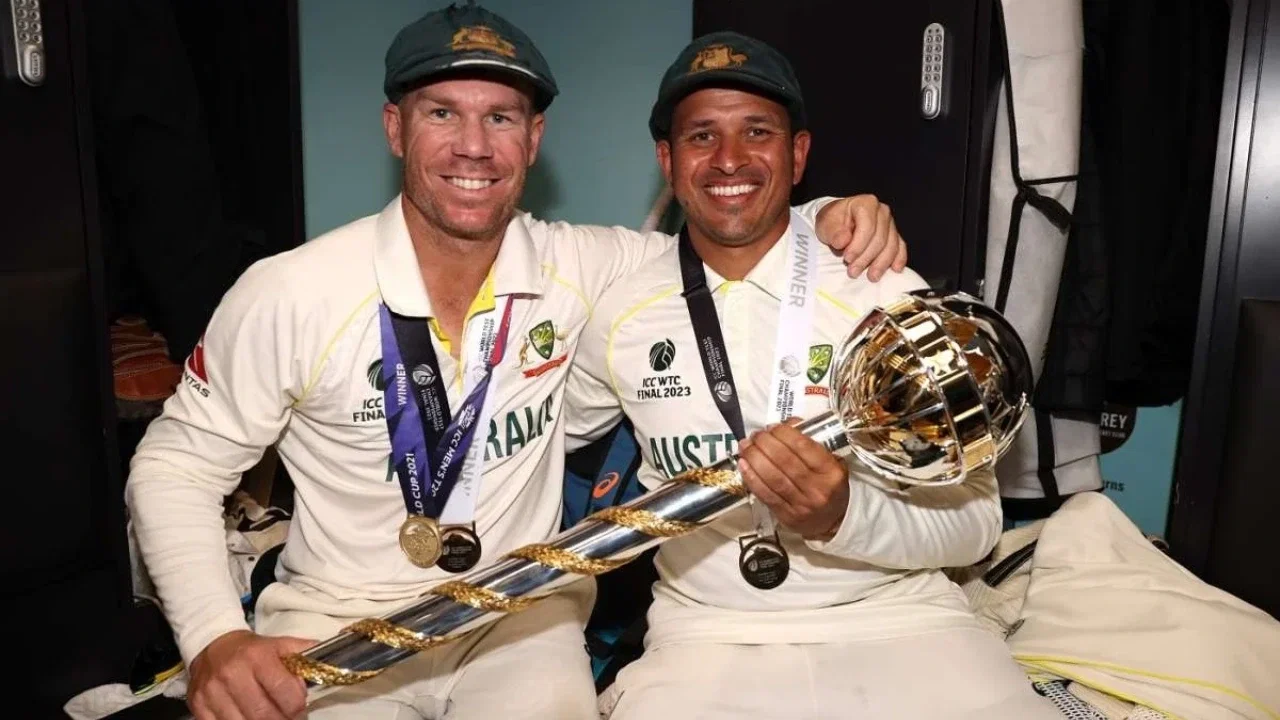
David Warner Backs Usman Khawaja’s Sandpapergate Claims, Renewing Questions Over 2018 Investigation
David Warner has publicly supported Usman Khawaja’s account of the 2018 ball-tampering scandal, saying his former Australia teammate’s claims are “100% accurate.” Warner’s comments have revived debate about Sandpapergate, the Cricket Australia investigation that followed the Cape Town Test, and whether the punishment fell on only a small number of players while broader questions went unanswered.
Warner made the remarks in an Instagram video, ending years of relative silence on the controversy. He thanked Khawaja for putting his recollections on record and criticised the original inquiry as rushed and incomplete. The renewed discussion has drawn attention not only to the events of the South Africa tour, but also to the standards of transparency and accountability expected in elite sport.
What Khawaja Has Said About Sandpapergate
In his autobiography, Sabr, Khawaja disputes the widely accepted account that placed primary responsibility for the ball-tampering episode on Warner, then captain Steve Smith, and Cameron Bancroft. Khawaja alleges that awareness of sandpaper being used to alter the ball’s condition extended beyond those three players and involved others within the team environment.
He has also claimed that the practice was not limited to the infamous Cape Town Test. According to Khawaja, sandpaper had been used during the preceding Test in Gqeberha, then known as Port Elizabeth. These are Khawaja’s recollections and allegations; they have renewed scrutiny of the episode but do not, by themselves, establish that every member of the team participated in or knew about the conduct.
Khawaja has said he wanted responsibility to be addressed collectively from the outset rather than allowing a small group to bear the full weight of the consequences. The scandal led to intense public criticism and long suspensions for the three players at its centre, while the extent of any wider knowledge became a lasting point of debate.
Warner Questions the Cricket Australia Inquiry
One of Khawaja’s most pointed criticisms concerns the investigation conducted by Cricket Australia. He has said that although he was seated beside Bancroft in the dressing room during the Cape Town Test, investigators did not interview him. The inquiry was led by then head of integrity Iain Roy, with team performance manager Pat Howard also involved.
Warner echoed Khawaja’s concern in his Instagram video, asking how the investigation could be considered thorough if a player in such a position was not questioned. “Uzzi was sitting next to Cameron Bancroft. Uzzi was not interviewed. How is that a thorough investigation? It baffles me,” Warner said.
The sanctions imposed at the time were severe: Smith and Warner received 12-month bans from international and domestic cricket, while Bancroft was suspended for nine months. The penalties became a defining chapter in each player’s career. Khawaja’s account and Warner’s endorsement have now prompted fresh questions about how investigators gathered evidence, whose testimony was considered, and whether the inquiry fully examined the team’s wider environment.
Warner Says the Focus Should Be on Accountability
Warner said the latest discussion should not become another cycle of personal attacks. Instead, he argued, attention should turn to whether the original investigation was sufficiently transparent and whether those responsible for overseeing it should answer questions about its process.
“We’re not here to point fingers and we’re not opening our wounds,” Warner said. “It’s about accountability, transparency, ensuring that the truth is properly examined.” He added that public debate should include scrutiny of the people responsible for the investigation, rather than concentrating only on the players who received suspensions.
His comments also revealed how the scandal affected his family. Warner said his daughters had asked him about the emotional scenes and television coverage surrounding the controversy. He described having to explain the events to them, including his 12-year-old daughter Ivy, and said the episode had been difficult for the families of Smith and Bancroft as well.
Warner’s remarks underline that Sandpapergate was more than a sporting disciplinary case. It became a public crisis that shaped reputations, strained families, and challenged confidence in the governing body’s handling of a major integrity issue. His view that “lies will eventually get out” reflects his belief that the full story has not yet been adequately examined.
Why the Sandpapergate Debate Has Returned
Khawaja’s book has brought the controversy back into the news because it offers a first-person account from a player who says he was close to the events but was not interviewed during the inquiry. Warner’s support gives that account added visibility, particularly because he was one of the players most directly affected by the sanctions.
Still, the renewed claims should be considered carefully. Khawaja and Warner are sharing their perspectives years after the event, and their statements raise questions rather than provide a new independent investigation. A fuller assessment would require examining the original inquiry’s records, the evidence available at the time, and any responses from Cricket Australia or other people named in the discussion.
For cricket fans, the episode also offers a broader lesson about how sporting institutions respond to misconduct. A credible investigation needs to be thorough, impartial, and clear about how conclusions were reached. When key witnesses are allegedly not interviewed, doubts can persist long after penalties have been served—even when the underlying misconduct itself is not in dispute.
What Could Happen Next?
Warner’s endorsement does not automatically change the findings or sanctions from 2018, but it increases pressure for a clear response to Khawaja’s allegations. Whether Cricket Australia revisits the inquiry, releases further information, or publicly explains its interview process remains to be seen.
For now, the Sandpapergate prediction is that debate will continue as readers engage with Khawaja’s book and former players revisit the events. The central issue is no longer only who handled the sandpaper. It is whether the investigation captured the full context, whether accountability was applied consistently, and what steps sporting bodies should take to ensure that future inquiries earn public trust.
Latest News

SA vs BAN Playing 11 Today, Live Streaming, Pitch & Weather: South Africa tour of Bangladesh 2026, 2nd Test

AUS vs ENG Playing 11 Today, Live Streaming, Pitch & Weather: England tour of Australia 2026, 2nd T20I

Blair Tickner ruled out of 2nd Test vs India, replacement named

Tim Paine and Justin Langer face fresh questions over Australia’s ball-tampering scandal

India tour of Bangladesh gets fresh hope as BCB confirms talks with BCCI

Tom Latham opens up on soft ball problem and saliva ban after draw against India

Ajinkya Rahane slams Tilak Varma for publicly criticising Shahbaz Ahmed after India A’s defeat

ICC to introduce IPL-style bat checks in international cricket

“Smiling Laughing doesn’t happen”: R Ashwin’s dig at India’s approach after draw vs New Zealand

“Not good enough for Test cricket”: Scott Styris, Sunil Gavaskar slam Wellington pitch

Dodda Ganesh declares India ‘out of WTC final race’ after Wellington Test draw

Ajinkya Rahane criticises Shubman Gill for abusing Akash Deep in 1st Test vs New Zealand

‘Why so many boundary riders?’ Dinesh Karthik questions Shubman Gill’s captaincy after Wellington Test

“I just want to enjoy my life”: Yash Dayal reflects on his return to cricket


