

21.5 average! Virat Kohli endures second-worst ODI series of his career
Virat Kohli’s New Zealand ODI Tour Ends on a Low Note as India Look Ahead
Virat Kohli’s reputation has been built on consistency, composure under pressure and an ability to adapt to challenging conditions. But India’s five-match ODI tour of New Zealand proved unusually difficult for the former captain. Kohli struggled to find his timing across the series, finishing with 86 runs from four innings at an average of 21.5.
The result was the second-lowest average of his career in a bilateral ODI series in which he played at least four innings. With the ICC ODI World Cup 2027 on the horizon, the dip will attract attention from fans and analysts. However, one difficult tour does not erase Kohli’s long record of success—and the more useful question is how he and India respond from here.
Another Early Dismissal in the Fifth ODI
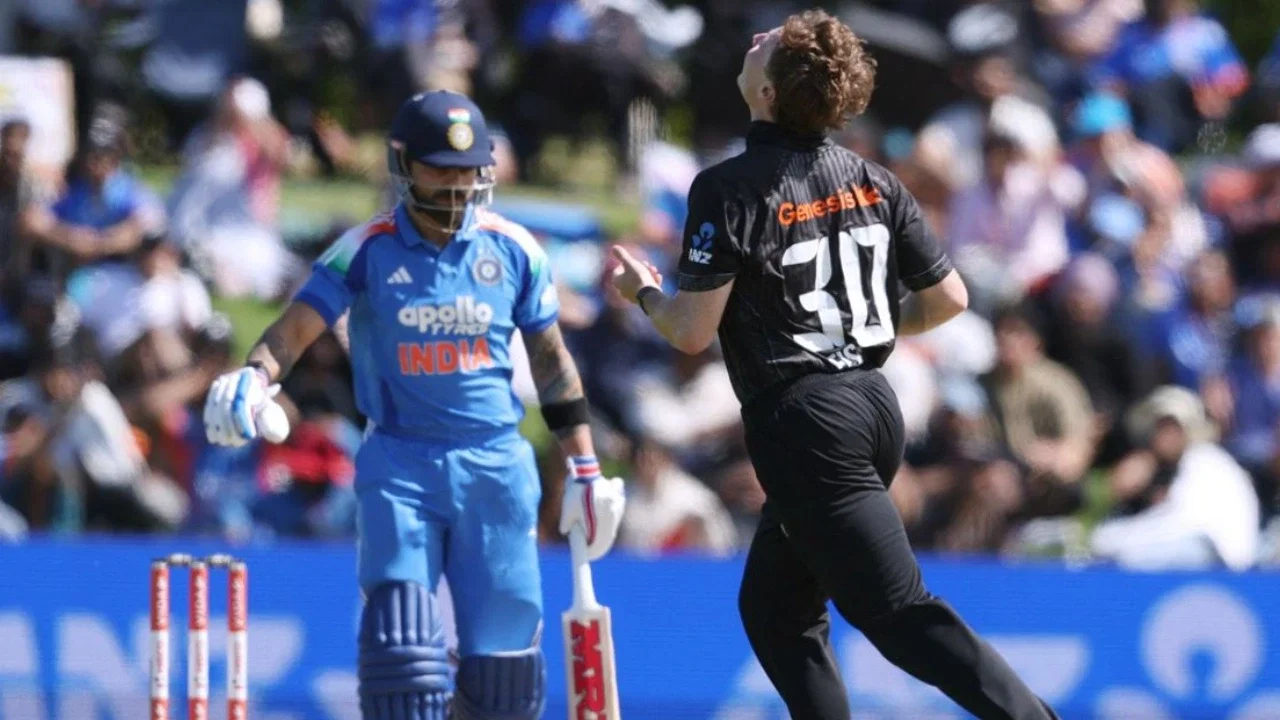
Kohli’s final innings of the tour offered little relief. In the fifth ODI at Bay Oval in Mount Maunganui on Sunday, November 15, he made just five runs from seven deliveries before Matthew Fisher dismissed him.
Looking to take on a short delivery outside off stump, Kohli attempted an attacking shot but got a top edge. New Zealand wicketkeeper Tim Seifert moved across to his right and completed a straightforward catch, bringing an abrupt end to the batter’s already disappointing series.
The dismissal was a familiar frustration for India: Kohli showed intent, but the execution did not match it. Across the tour, he was unable to turn promising starts—or opportunities to impose himself—into the substantial innings that have defined so much of his ODI career.
A Rarely Difficult Series by Kohli’s Standards
Before this visit, Kohli had an outstanding ODI record in New Zealand, averaging 51.53 in the country. His performances during the series brought that figure down to 42.62. The updated number remains strong by most standards, but the change underlines how sharply this particular tour contrasted with his previous success in New Zealand.
His 21.5 average for the series ranks as the second-lowest of his career in a bilateral ODI contest featuring at least four innings. His lowest such average came against England in 2014, when he averaged 18. His next-lowest was 31.8 against Sri Lanka in 2008.
Kohli’s lowest averages in bilateral ODI series with at least four innings:
- 18 against England in 2014
- 21.5 against New Zealand in 2026
- 31.8 against Sri Lanka in 2008
Three Single-Digit Scores Equal an Unwanted Record
The New Zealand series also brought Kohli an unwanted statistical milestone. He recorded three single-digit scores across his four innings, making this only the second bilateral ODI series in which he has done so. His scores were 74, 7, 0 and 5; the fourth ODI was abandoned because of rain.
The only previous instance came during Pakistan’s tour of India in 2012–13, when Kohli scored 0, 6 and 7 in three innings. Across his career, he has also recorded three single-digit scores in other multi-team or tournament settings, including a World Cup and the Carlton Mid ODI Tri-Series in Australia. The distinction is that the New Zealand tour joins the Pakistan series as a bilateral example.
These figures tell a story of a batter who was unable to establish consistency during the tour, but they should be viewed in context. A series average is shaped by a small number of innings, and the abandoned match further limited Kohli’s opportunities to reset. Even so, the repeated early dismissals make the tour a clear setback rather than a routine statistical fluctuation.
What the Struggles Could Mean for India
India will be keen to assess the reasons behind Kohli’s lack of fluency before the next phase of ODI cricket. New Zealand’s bowlers found ways to challenge him, while the conditions and match situations offered limited room for error. His fifth-ODI dismissal, in particular, highlighted the risk of trying to force the pace when timing is not quite there.
For the team management, the immediate priority is likely to be balance: giving an experienced batter the space to regain rhythm while ensuring the middle order remains prepared to handle difficult passages. Kohli’s experience remains valuable, especially in high-pressure matches, but India will want the entire batting unit to contribute consistently as preparations for the 2027 World Cup continue.
It is also worth remembering that Kohli has repeatedly responded to poor patches with strong performances. His career has included demanding tours and difficult stretches, followed by periods in which he has returned to run-scoring form. The next assignments against Zimbabwe and Sri Lanka will therefore provide an important opportunity to rebuild confidence and sharpen his approach.
Prediction: Can Kohli Bounce Back?
Any prediction about Kohli’s next ODI performances should be cautious. His record suggests that a difficult series is unlikely to define his long-term form, but a quick return to big scores is never guaranteed. The key signs to watch will be whether he settles at the crease, trusts his timing and converts starts into longer innings.
For supporters, the New Zealand tour is a reminder that even elite players can endure a lean run. For India, it is a chance to learn from the series and strengthen preparations ahead of future ODI challenges. Kohli will now be expected to respond with the same discipline and determination that have made him one of the format’s most accomplished batters.
Latest News

SA vs BAN Playing 11 Today, Live Streaming, Pitch & Weather: South Africa tour of Bangladesh 2026, 2nd Test

AUS vs ENG Playing 11 Today, Live Streaming, Pitch & Weather: England tour of Australia 2026, 2nd T20I

Blair Tickner ruled out of 2nd Test vs India, replacement named

Tim Paine and Justin Langer face fresh questions over Australia’s ball-tampering scandal

India tour of Bangladesh gets fresh hope as BCB confirms talks with BCCI

Tom Latham opens up on soft ball problem and saliva ban after draw against India

Ajinkya Rahane slams Tilak Varma for publicly criticising Shahbaz Ahmed after India A’s defeat

ICC to introduce IPL-style bat checks in international cricket

“Smiling Laughing doesn’t happen”: R Ashwin’s dig at India’s approach after draw vs New Zealand

“Not good enough for Test cricket”: Scott Styris, Sunil Gavaskar slam Wellington pitch

Dodda Ganesh declares India ‘out of WTC final race’ after Wellington Test draw

Ajinkya Rahane criticises Shubman Gill for abusing Akash Deep in 1st Test vs New Zealand

‘Why so many boundary riders?’ Dinesh Karthik questions Shubman Gill’s captaincy after Wellington Test

“I just want to enjoy my life”: Yash Dayal reflects on his return to cricket


